
Cockroaches · Broward County, FL
Why You Keep Seeing Roaches After You Spray
The short answer
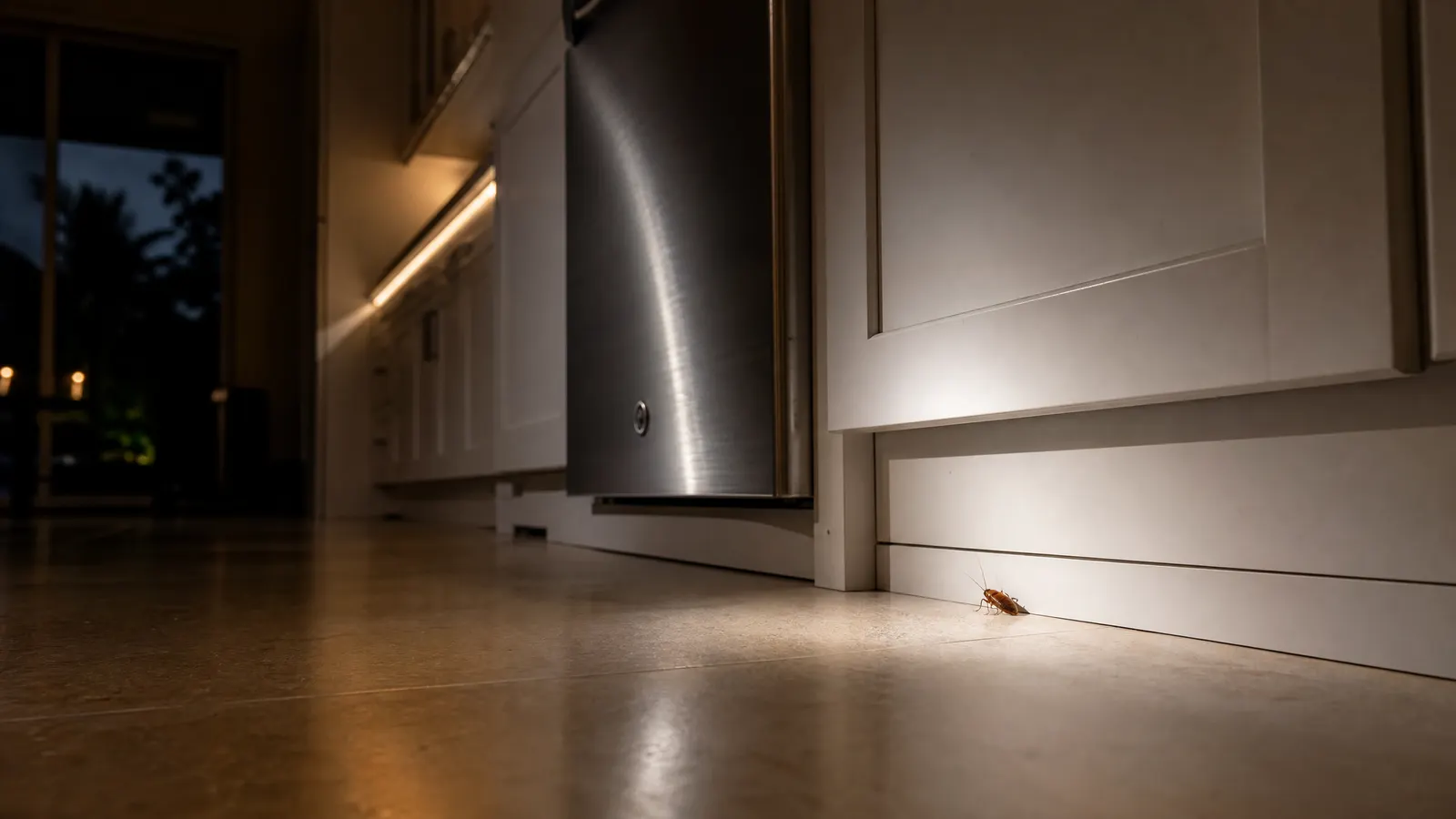
Roaches can return after spraying because the product reaches exposed insects but not the colony, egg cases or entry point behind them. Repellent spray can also push roaches deeper into walls and appliances. The next step is to identify the species, map the activity and treat the source rather than repeating the same surface application.
You spray the baseboard, wipe the counter and finally stop seeing roaches in the kitchen. Then, a few nights later, one appears beside the dishwasher. A week after that, there are droppings behind the coffee maker.
That pattern feels like the product failed. More often, the spray handled the visible part of the problem while the colony, egg cases or entry route remained untouched. The first useful question is not which bottle to try next. It is what kind of roach you have and where it is actually living.
Spray kills what you see
Surface spray is strongest where it lands. A roach crossing the wet area can be affected, but a roach inside a wall void, appliance motor or cabinet hinge is not standing on the treated surface. Neither are the egg cases tucked into a protected seam.
That distinction explains why a treatment can look successful for two days. The exposed adults disappear, the room feels normal and the underlying source keeps producing activity. New nymphs emerge, adults move along the same plumbing or cabinet route, and the homeowner concludes that the roaches somehow survived everything.
The return pattern is information. If activity keeps reappearing at the same appliance, under the same sink or beside the same plumbing opening, the source is probably close to that route. If the sightings move from room to room after spraying, the treatment may have changed where the roaches are visible without changing where the colony is established.
The colony is somewhere else
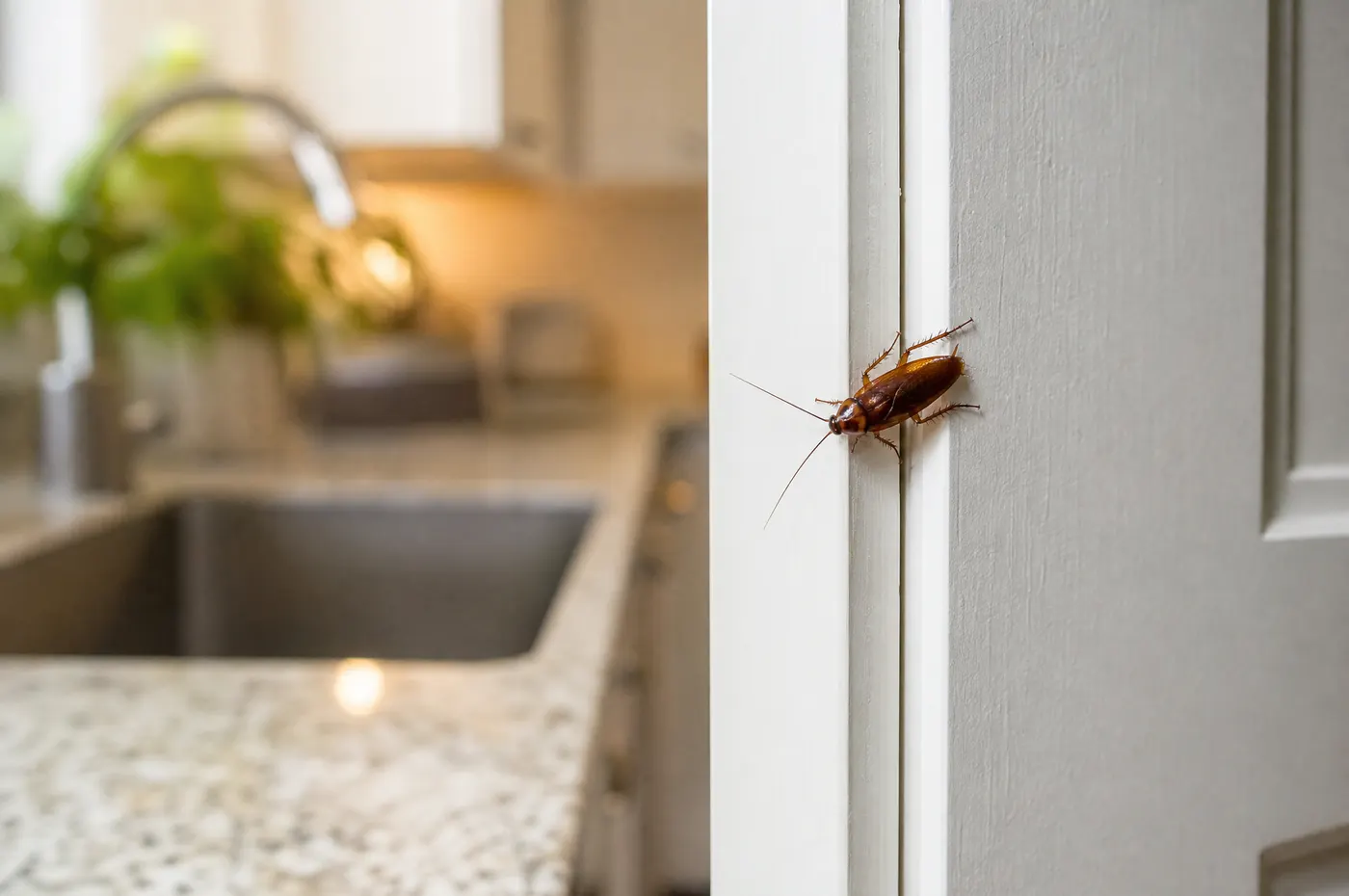
Different roaches use different shelter. A large American cockroach may be an outdoor visitor that followed moisture through a drain, door sweep or utility opening. A small German cockroach is more likely to be established indoors, near heat, water and food inside a kitchen or laundry area.
That is why the phrase "roach treatment" is incomplete. A perimeter and entry problem calls for a different inspection from a reproducing colony in an appliance. The visible insect is only the last step of the route it took.
Look for the evidence that survives after the insect disappears:
- Droppings in cabinet hinges, drawer corners, behind appliances or along wall edges.
- Egg cases tucked into protected seams, especially near warm equipment.
- Nymphs rather than only large adults, which suggests reproduction nearby.
- Repeated timing in the same room, such as activity after the kitchen is dark or when a bathroom has been unused.
- Moisture around plumbing, condensation, drains or a leaking appliance.
No single sign proves the whole story. Together, the location, species and timing tell you whether you are looking at an outdoor visitor or an indoor colony.
Why repellent spray can scatter roaches
Some sprays are designed to repel insects from the treated area. That can make the baseboard look clear while moving activity into a neighboring cabinet, wall void or appliance space. It does not create a colony from nothing, but it can scatter the trail a technician needs to follow.
This is especially frustrating in apartments and attached homes. A roach can move through plumbing chases, utility penetrations and shared wall voids. If one route is treated without understanding the building, the next sighting may appear in a different room or unit and look like a brand-new problem.
Repeated spraying also leaves less useful evidence. The active trail gets interrupted, dead insects are removed and the remaining population changes its route. A quiet counter is not the same thing as an empty structure.
What the return pattern tells you
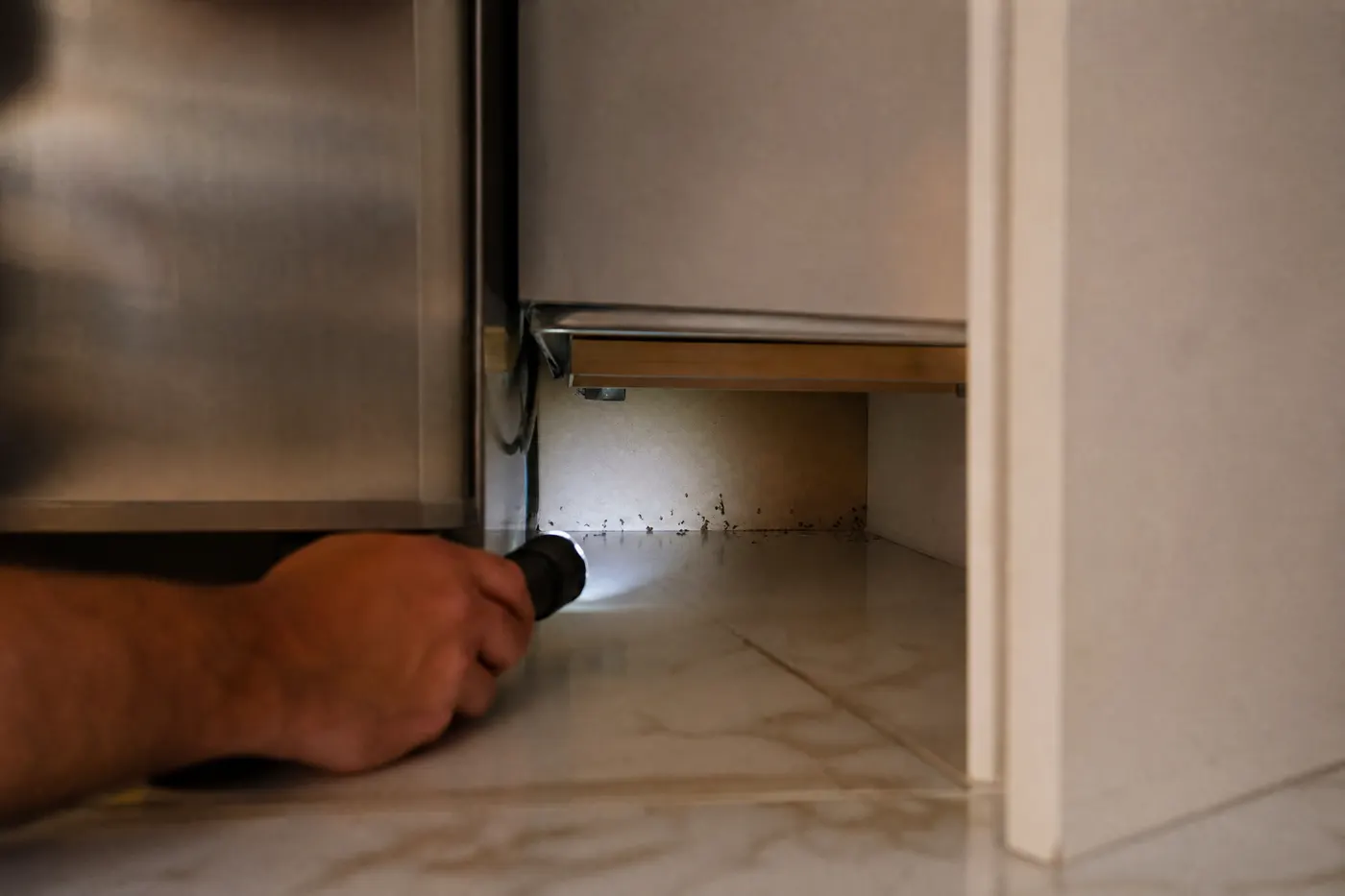
The first sighting is often less useful than the second and third. Write down the room, approximate size, time and direction of travel. A large reddish-brown roach near a patio door suggests a different route from several small tan roaches behind a refrigerator.
Daytime activity is also worth recording. Roaches are more likely to be hidden during the day, so repeated daytime sightings can mean the shelter is crowded or the population is being disturbed. That is not a stand-alone diagnosis, but it raises the value of an inspection.
In a condo, ask whether a neighbor or common area has seen the same thing. In a single-family home, check drains, garage sweeps, roof returns and utility penetrations. The goal is not to blame a person or a room. It is to find the route that keeps replacing the insects you removed.
What to do instead
Stop adding a new spray long enough to observe the pattern. Clean food residue and standing water as ordinary maintenance, but do not erase every piece of evidence before an inspection. Save a specimen or clear photograph if you can.
A species-first visit should answer four questions:
- Is this an outdoor roach entering from the perimeter or an indoor colony?
- Where are the active routes, droppings and protected harborages?
- Is moisture, construction or a shared wall helping the problem continue?
- Which treatment category fits the species and the extent of activity?
That is how professionals can get rid of roaches instead of repeating a surface application that only resets the visible part of the problem. HONEX serves Broward County; book online and a technician calls you back with the exact price during business hours (Mon–Fri 9am–5pm), before any work starts.
Frequently asked questions
Surface spray can kill the roaches that contact it without reaching the colony, egg cases or entry point. If the source remains active, new roaches replace the ones you saw. Repellent products can also push activity into wall voids and appliances, making the pattern harder to read.
It can. A repellent spray may drive roaches away from the treated area and into adjacent rooms, wall voids or appliances. That does not create a new colony by itself, but it can scatter the visible activity and interfere with a baiting plan.
The timeline depends on species, colony location and how far activity has spread. A stray outdoor roach and an indoor German-roach colony are different jobs. The inspection establishes which pattern you have before a technician recommends the next step.
Do not fog or add another spray. Note the rooms, times and number of roaches you see, and leave droppings or egg cases where they are if possible. That evidence helps distinguish an outdoor visitor from an indoor colony and makes the inspection more useful.
HONEX handles cockroach service across Broward County. Book online and a Broward technician calls you back with the exact price during business hours (Mon–Fri 9am–5pm), before any work starts.
Still dealing with it?
Cockroach Control across Broward County, FL, backed by a 30-day guarantee.
Book online in a few minutes and a Broward tech calls you back with your exact price (Mon–Fri 9am–5pm) — before any work starts.
Get rid of cockroaches todayKeep reading
Cockroach Droppings: What They Look Like and What They Mean
What roach droppings look like by species, how to tell them from mouse droppings, where to check first, and what the amount tells you about the infestation.
Palmetto Bug vs Cockroach: What South Florida Homeowners Are Actually Seeing
A palmetto bug is a cockroach — here's which one, how to tell it from the kitchen roach, whether they fly, and what each one means for your home.
Ghost Ants: The Tiny Kitchen Invader You Can't Kill With Spray
Ghost ants are the #1 kitchen ant in South Florida. What they look like, why spraying multiplies them, and what actually ends the colony.