
Cockroaches · Broward County, FL
Cockroach Droppings: What They Look Like and What They Mean
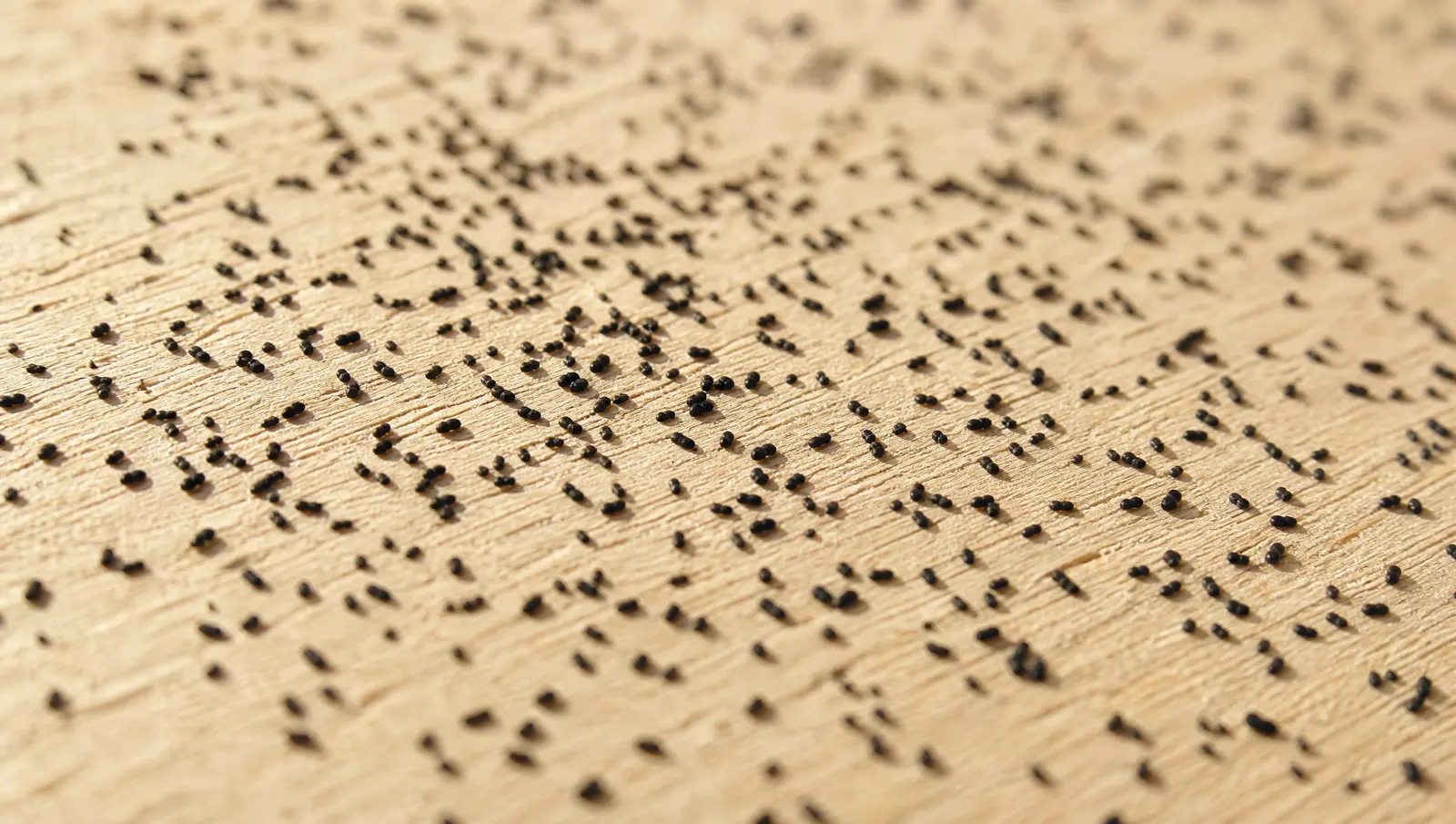
The short answer
Cockroach droppings look different by species. German roach droppings are tiny black specks like coarse pepper or coffee grounds, found in drawers and cabinet hinges. American cockroach droppings are larger — roughly 2mm, blunt on both ends, with ridges down the sides. Finding either inside means an active population.
Most people find the droppings before they ever see a roach. A dark smear in the corner of a drawer, black specks along a cabinet hinge, something that looks like spilled coffee grounds behind the toaster.
It is worth learning to read, because the droppings tell you which roach you have, roughly how long it has been there, and where the nest is likely sitting.
What do cockroach droppings look like?
It depends entirely on the size of the roach.
Small roaches produce specks. German roach droppings look like coarsely ground black pepper or fine coffee grounds — irregular granules under a millimeter, usually clustered rather than scattered.
Large roaches produce something people mistake for rodent droppings. American cockroach droppings are roughly 2mm long, cylindrical, blunt at both ends, with distinct ridges running lengthwise down the sides.
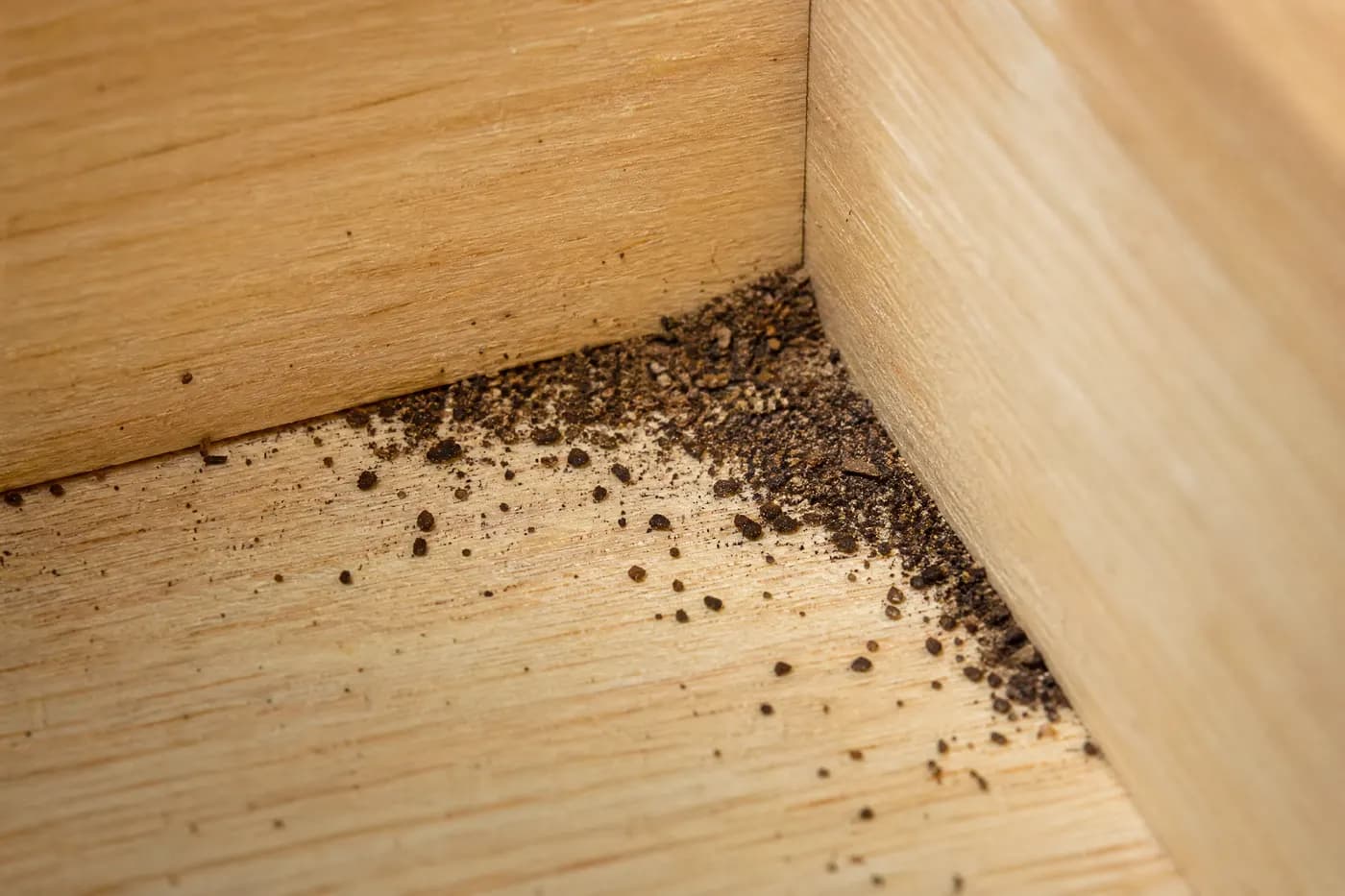
German roach vs American roach droppings
| German roach | American cockroach (palmetto bug) | |
|---|---|---|
| Size | Under 1mm — specks | About 2mm — visible pellets |
| Shape | Irregular granules | Cylindrical, blunt at both ends |
| Surface | Smooth, powdery when dry | Ridged lengthwise |
| Where you find it | Drawers, hinges, under-sink cabinets, appliance seams | Attics, garages, behind appliances, along baseboards |
| What it tells you | An interior colony is nesting within a few feet | Traffic from an outdoor harborage, or an attic population |
The distance rule is the useful part. German roaches don't travel far from harborage — rarely more than a few feet from food and water. So the droppings are effectively a map. Where you find the heaviest concentration, the nest is close.
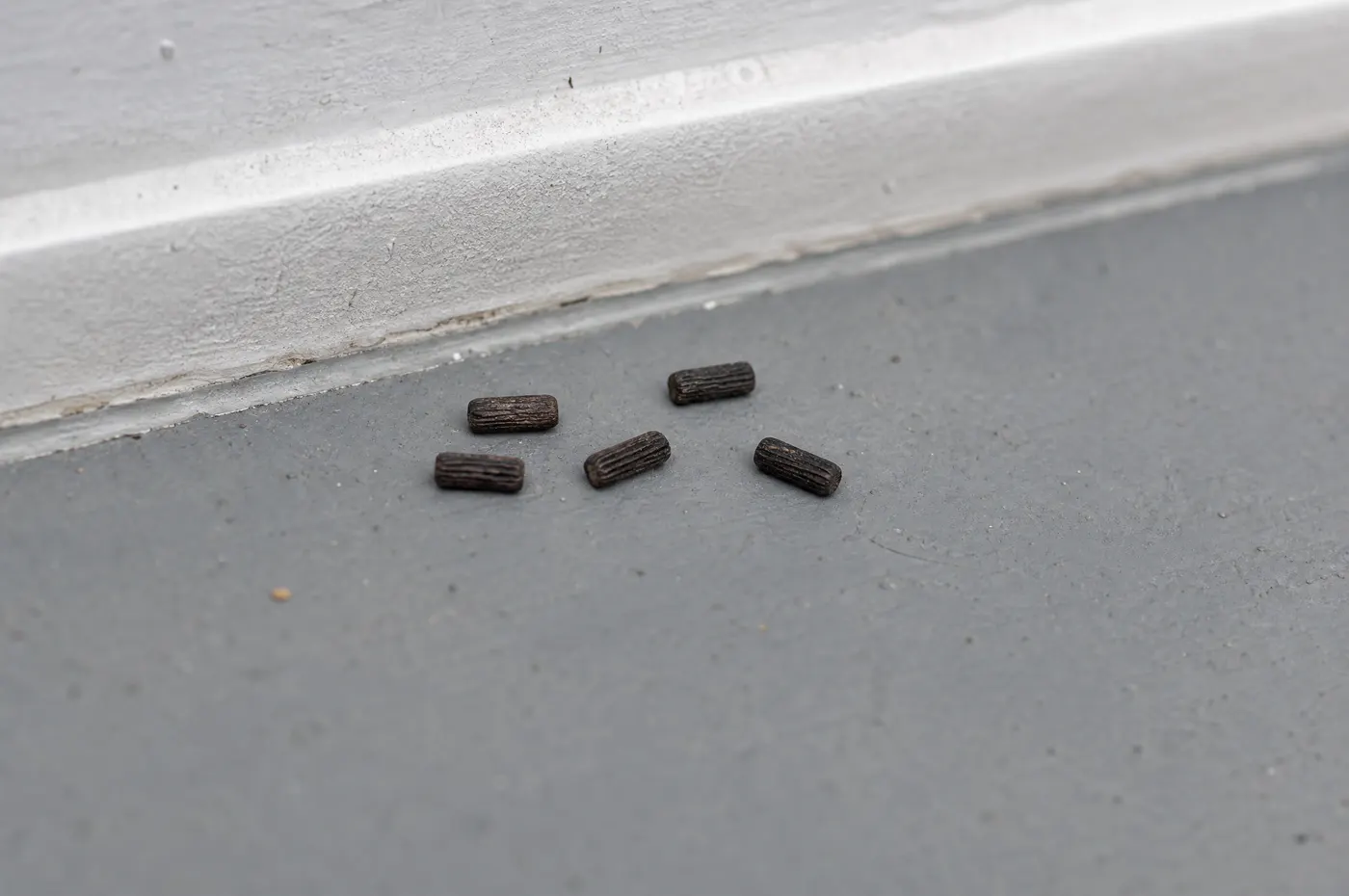
Roach droppings vs mouse droppings
This mix-up sends a lot of people down the wrong path, and two details settle it: size first, then the ends.
| American cockroach | Mouse | |
|---|---|---|
| Size | About 2mm | 3–6mm, noticeably longer |
| Ends | Blunt on both ends | Tapered to a point on one or both ends |
| Surface | Ridged lengthwise | Smooth |
| Texture | Smears when pressed | Dries hard, crumbles |
| Other signs nearby | Shed skins, egg cases, a musty odor | Gnaw marks, shredded nesting material, urine staining |
If you're finding tapered, smooth droppings plus gnaw marks on a stored box, you have a rodent problem, and that is a different visit with a different plan — trapping plus sealing every entry point.
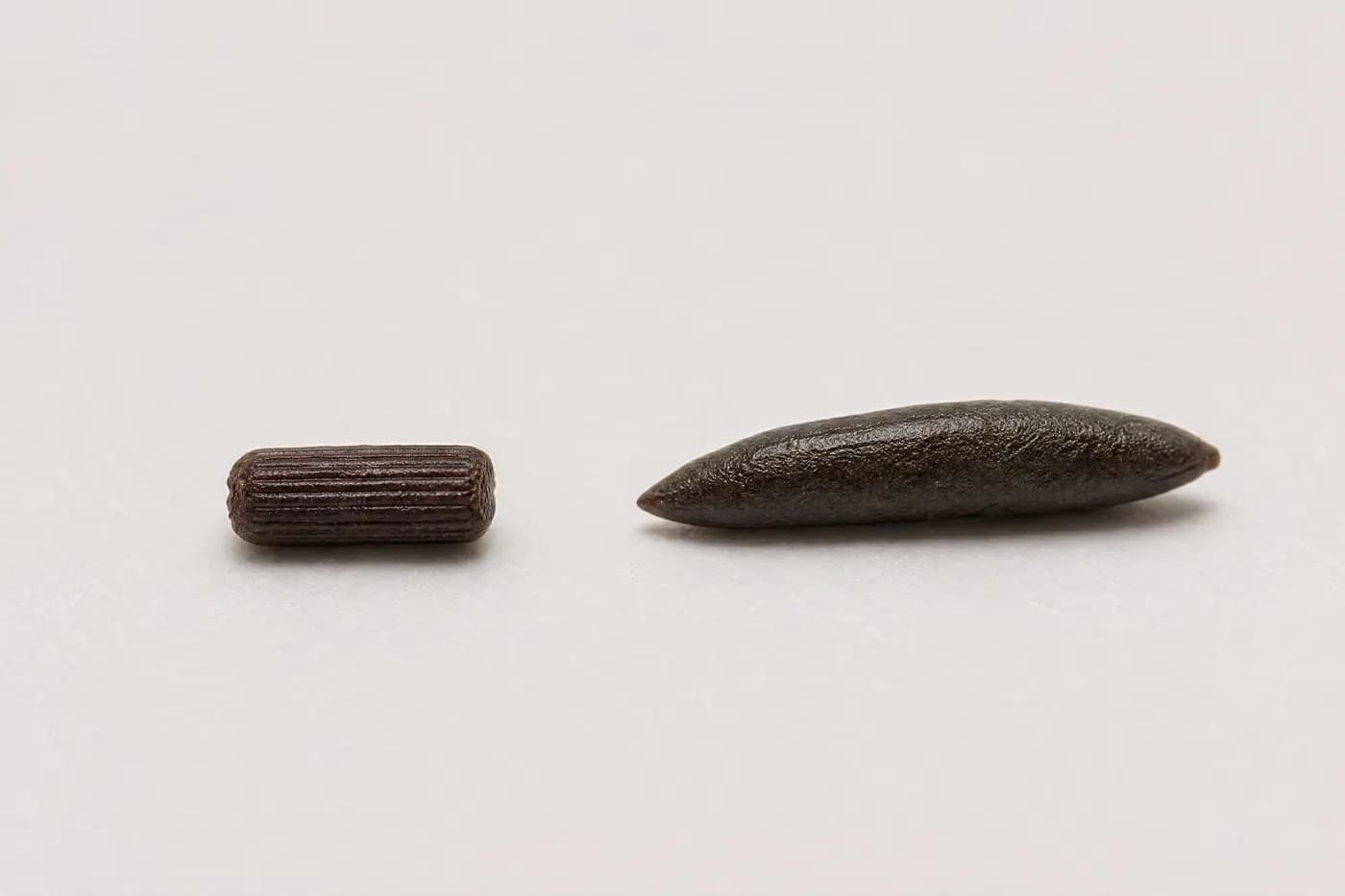
Where to check first
Roaches leave droppings where they rest, not where they wander — and where they rest is predictable, because they are looking for three things at once: a tight space that touches their body on multiple sides, warmth, and water within a short trip. Anywhere those three overlap is worth a look.
That's why the back corner of an under-sink cabinet is the highest-yield spot in most homes and the middle of the pantry floor is nearly worthless. Check the tight, warm, dark places within a few feet of water:
- Under-sink cabinets — especially the back corners and around the P-trap.
- Drawer runners and cabinet hinges — pull a drawer all the way out and look at the track.
- The dishwasher gasket and the void beneath it.
- The motor compartment of the refrigerator, behind the kick plate.
- The gap between the countertop and the backsplash, and around the sink rim.
- Small appliances that stay plugged in — the toaster, coffee maker and microwave all run warm.
- Pantry shelf corners, particularly where cardboard packaging sits.
Other evidence to look for
Droppings rarely show up alone. Four other signs sit alongside them, and each one adds precision to the picture.
Egg cases (oothecae). A cockroach egg case is a hard, purse-shaped capsule. German roach oothecae are small — about 8mm, tan to light brown, and the female carries hers attached to her abdomen until roughly a day before it hatches, so you usually find empty casings rather than viable ones. American cockroach oothecae are similar in length but far bulkier and darker — thick-walled, dark brown to nearly black — and get glued to a surface in a hidden spot. Finding egg cases is the clearest possible evidence of reproduction on site, not just visiting insects.
Shed skins. Roaches molt several times as they mature, leaving behind a pale, hollow, translucent shell of their own shape. Finding these in the same place as droppings means a population is going through its life cycle right there — nymphs are growing to adults in your cabinet, not wandering in from the neighbor's unit.
Smear marks. In consistently damp areas, roaches leave irregular dark smears along the edges they travel — under sinks, behind toilets, along the back of a dishwasher. Unlike droppings, smears show you the highway rather than the rest stop.
The odor. Established populations produce a musty, slightly oily smell from their aggregation pheromones. Most people notice it when opening a cabinet that stays closed. If you can smell it, the population is well past the early stage.
Photograph anything you find before cleaning. It costs nothing and it makes the inspection significantly faster.
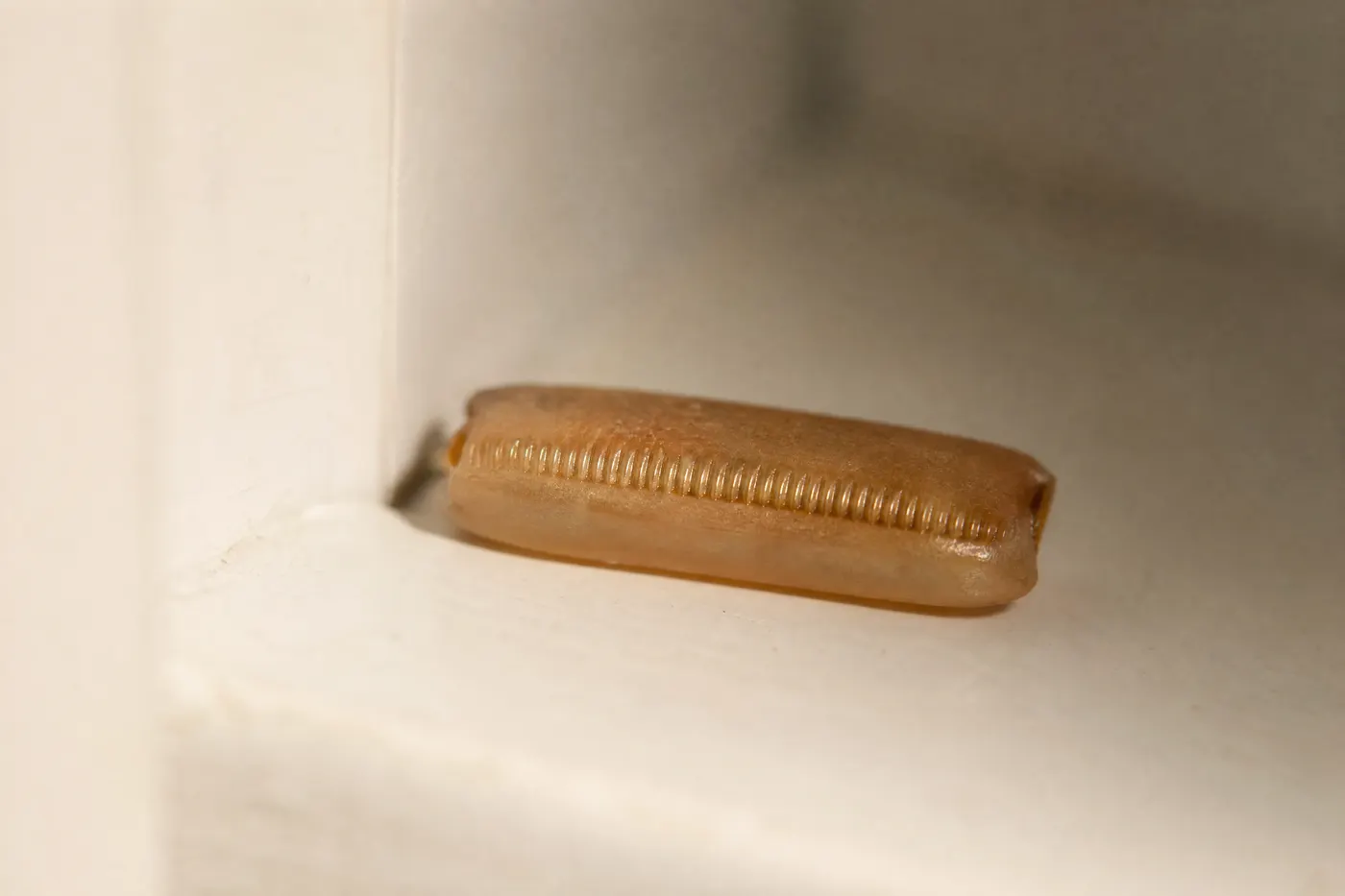
How much is too much?
There is no clean threshold, but the pattern tells you more than the volume.
A few specks in one location usually means a young or recently arrived population. This is the easiest version to end.
Droppings in three or more separate locations means the colony has outgrown its original harborage and is spreading. Treatment takes longer.
Droppings plus daytime sightings is the one worth acting on quickly. German roaches are nocturnal and avoid open space. Seeing them in daylight generally means the harborage is overcrowded — the population has grown past what the hiding spots can hold.
Droppings plus a musty, oily smell points to a large, established population. Volume of droppings on its own is ambiguous; droppings plus odor is not.
What droppings can't tell you
Worth being straight about the limits, because a few things get overstated online.
They don't date the infestation precisely. Droppings persist for months in a dry, undisturbed cabinet. Old evidence in a home that was previously treated can look identical to a live problem. What separates them is whether anything is accumulating — which is why marking a cleaned spot and re-checking it in a week is genuinely useful.
They don't measure population size reliably. A heavy deposit in one spot can mean a modest colony that has used the same harborage for a long time. A light scatter across six locations usually means a bigger problem. Distribution beats volume.
They don't always identify the species on their own. German and American droppings are distinguishable, but brown-banded and smokybrown roaches overlap with both. Species confirmation comes from an actual insect, an egg case, or a technician's inspection — not from a photo of specks.
They don't tell you the entry route. Droppings show you where roaches rest and feed. Finding out how they're getting in — the dry P-trap, the garage door sweep, the gap at the AC line set — takes an inspection of the structure.
Cleaning them up safely
Worth doing, with two caveats.
Cockroach droppings and shed skins contain proteins that are a well-documented indoor asthma and allergy trigger, particularly in children. So clean them up — but don't dry-sweep or vacuum with a standard vacuum, which pushes those particles into the air. Wipe with a damp cloth and a household cleaner, bag it, and wash your hands after.
The second caveat: note where everything was before you clean, and tell your technician. Those locations are the most precise information anyone has about where the colony lives, and they make the baiting far more accurate. And skip any DIY spray before the visit — repellent products scatter the colony deeper into the structure and make bait much harder to place.
Frequently asked questions
It depends on the roach. German roaches leave tiny black or dark brown specks the size of ground pepper. American cockroaches leave larger droppings, about 2mm long, blunt at both ends with visible ridges along the sides — often mistaken for mouse droppings.
Mouse droppings taper to a point at one or both ends and are smooth. American cockroach droppings are blunt at both ends and have lengthwise ridges. Mouse droppings also dry hard and crumble; roach droppings tend to smear.
Droppings mean roaches have been feeding in that spot repeatedly, so yes — an active population, not a stray. The amount and how spread out it is tells your technician how established the colony already is.
Clean up what you find for hygiene, but tell your technician exactly where it was. Those locations map the colony's feeding routes and make the baiting far more precise. Don't spray anything beforehand — it scatters the roaches and makes baiting harder.
Cockroach droppings and shed skins contain proteins that are a well-documented indoor asthma and allergy trigger, especially for children. That is a reason to treat the source rather than just wipe the surface.
Still dealing with it?
Cockroach Control across Broward County, FL, backed by a 30-day guarantee.
Book online in a few minutes and a Broward tech calls you back with your exact price (Mon–Fri 9am–5pm) — before any work starts.
Get rid of cockroaches todayKeep reading
Palmetto Bug vs Cockroach: What South Florida Homeowners Are Actually Seeing
A palmetto bug is a cockroach — here's which one, how to tell it from the kitchen roach, whether they fly, and what each one means for your home.
Ghost Ants: The Tiny Kitchen Invader You Can't Kill With Spray
Ghost ants are the #1 kitchen ant in South Florida. What they look like, why spraying multiplies them, and what actually ends the colony.