
Ants · Broward County, FL
Ghost Ants: The Tiny Kitchen Invader You Can't Kill With Spray
The short answer
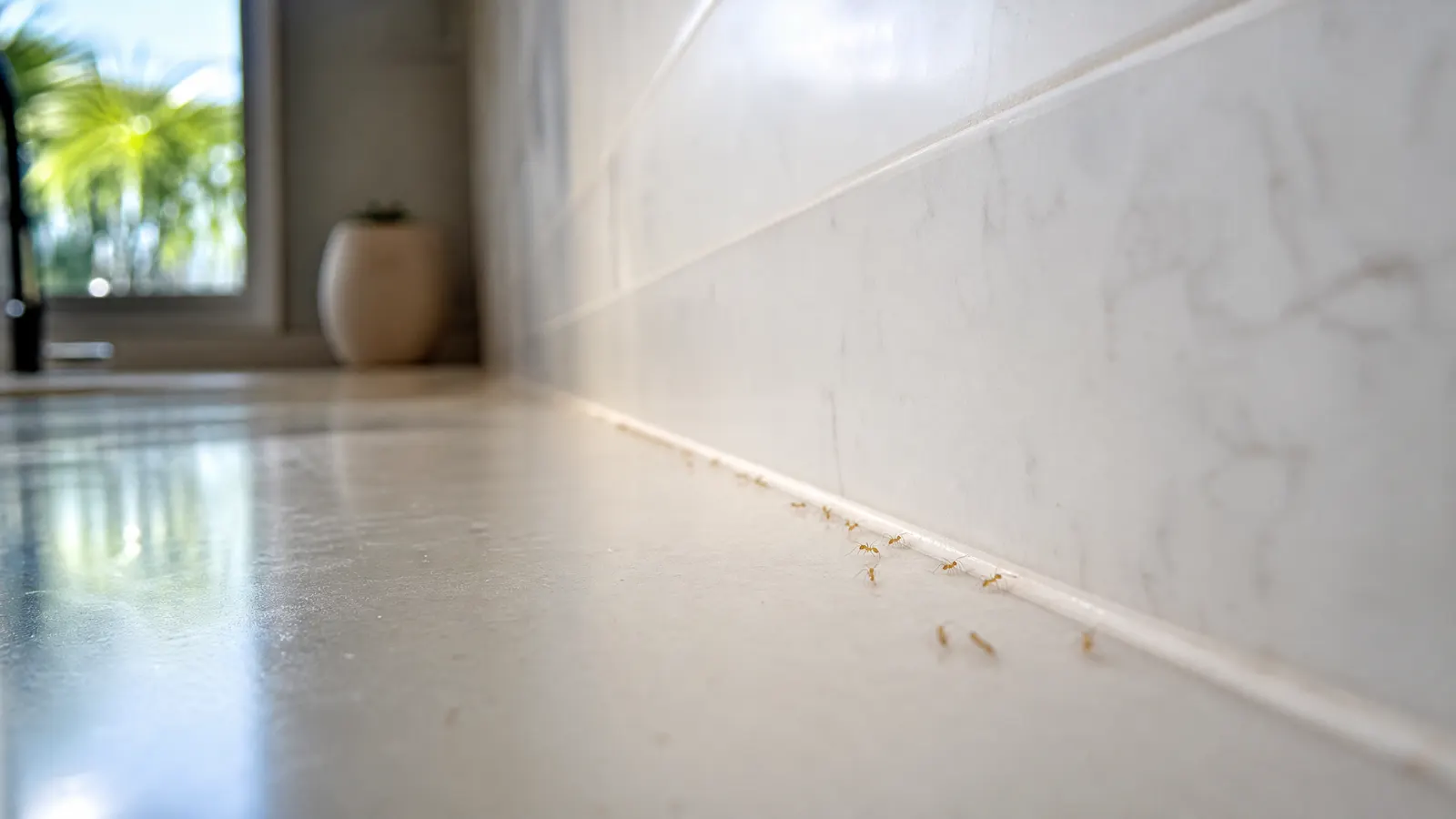
Ghost ants are tiny tropical ants — about 1.5mm, with a dark head and a pale, almost translucent body that makes them hard to see on a counter. Spraying them backfires: the colony responds to stress by splitting into new colonies, a process called budding. Baiting is what actually ends it.
You wipe the counter. Twenty minutes later the trail is back, in a slightly different place. You hit it with the spray from under the sink, and for two days it works — then there are trails in the bathroom and behind the microwave too.
That is not bad luck. That is ghost ant biology doing exactly what it evolved to do, and it is the reason the hardware-store can made your problem bigger.
What are ghost ants?
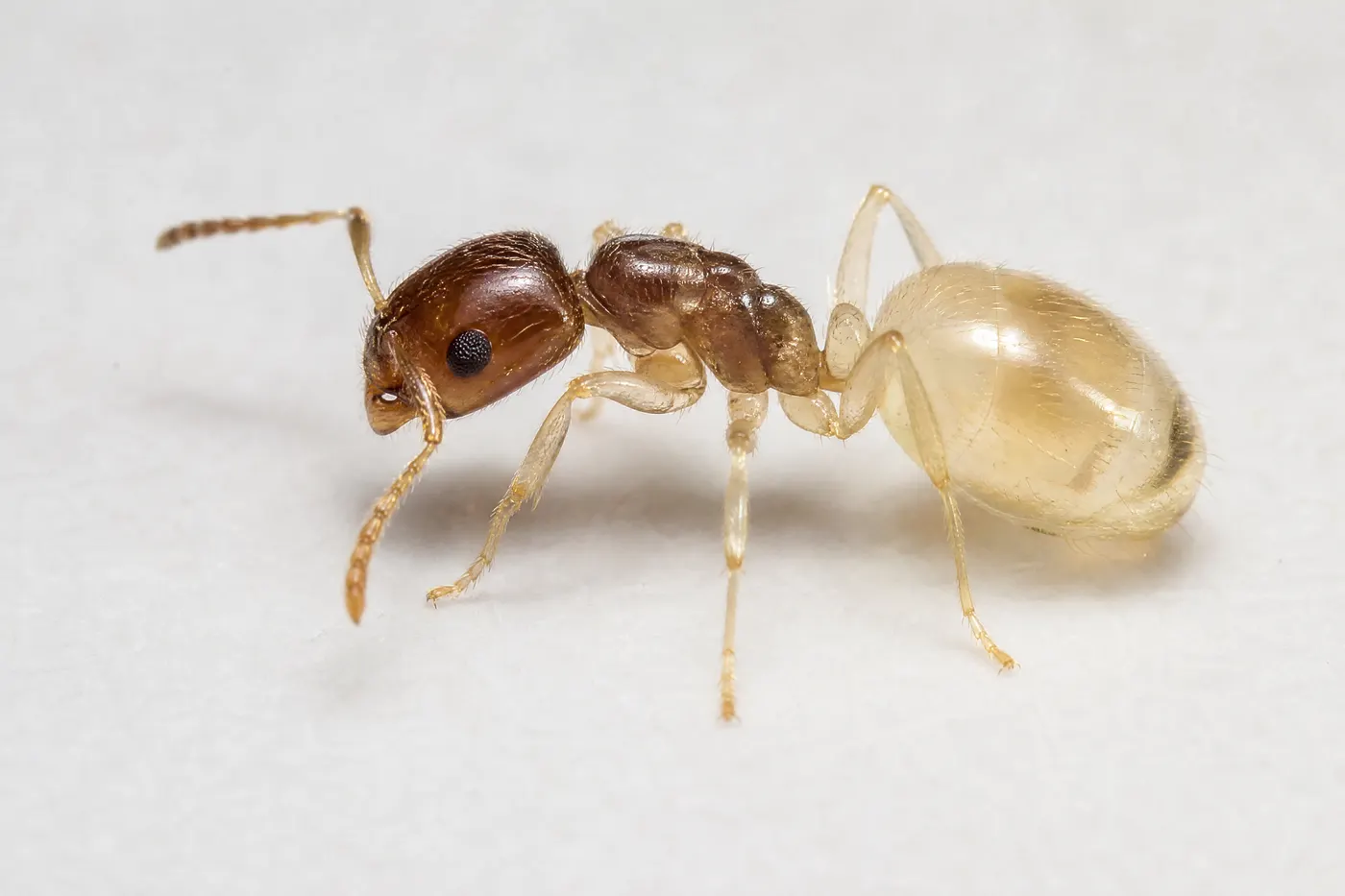
Ghost ants (Tapinoma melanocephalum) are a tropical species about 1.5mm long with a dark head and thorax and a pale, nearly translucent abdomen and legs. The name comes from how they look in motion: on a light countertop, the front half is visible and the back half essentially disappears.
They are the most common indoor ant in South Florida homes, and they are almost never a lawn problem that wandered in — they are a structural and landscape problem that has found your kitchen.
How to identify them
Three checks, in order:
- Size and color. Under 2mm, dark front, pale back. If the whole ant is one uniform color, it is something else.
- The smell. Crush one and it gives off a distinct coconut-like or rotten-coconut odor. Ghost ants are in the same genus as odorous house ants, and this is the fastest field ID there is.
- The trail behavior. Ghost ants move fast and erratically compared to larger household ants, and their trails hug edges — the seam where the counter meets the backsplash, the caulk line at the sink, the top edge of a baseboard.
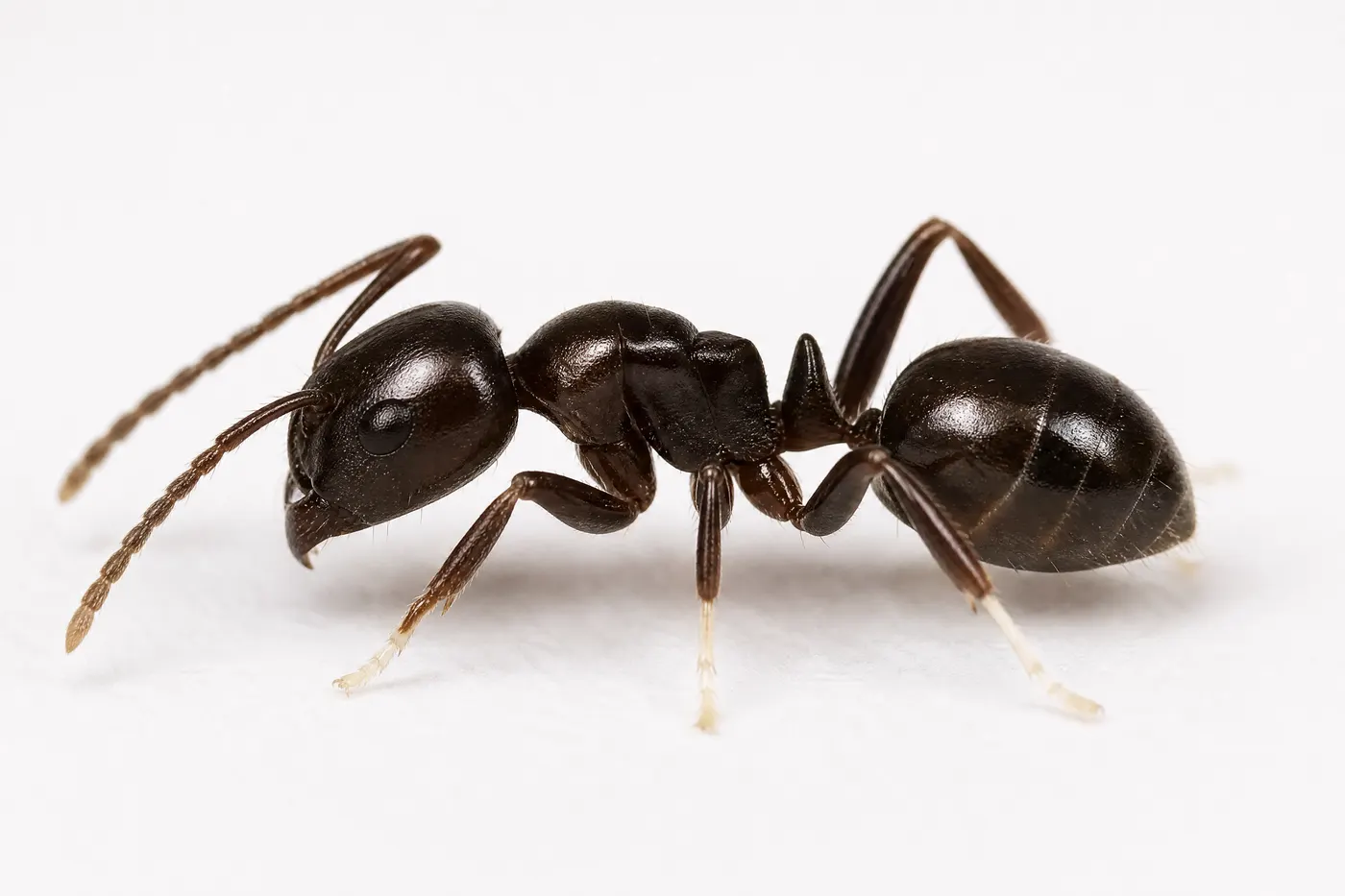
The species that trips people up on treatment is the white-footed ant, which is similar in size but has a uniformly dark body with pale feet, and does not respond to bait the same way. Getting this right matters, because the two need different bait formulations.
Why spraying makes it worse
Ghost ant colonies are polygyne — they have many queens, not one — and they are polydomous, meaning a single colony occupies multiple nest sites at once and moves between them freely.
When you apply a repellent spray, you don't kill the colony. You kill a few hundred foragers and deliver a stress signal to the rest. The colony's response is budding: one or more queens leave with a group of workers and establish a separate nest somewhere else in the structure.
One trail becomes three. The spray worked, briefly, and made the underlying problem permanently harder to solve.
This is the single most important thing to understand about ghost ants, and it is why the "I sprayed and they came back worse" experience is so universal here. It isn't a product failure. It's the product doing what a repellent does to a budding species.
Ghost ants vs other tiny Florida ants
Four small ants turn up on South Florida counters, and they don't all respond to the same bait. This is the fastest way to separate them.
| Ghost ant | White-footed ant | Pharaoh ant | Big-headed ant | |
|---|---|---|---|---|
| Size | ~1.5mm | ~2.5mm | ~2mm | 2–4.5mm, two worker sizes |
| Color | Dark head, translucent pale body | Uniformly black with pale feet | Yellow to light amber, dark abdomen tip | Reddish-brown; major workers have oversized heads |
| Crushed odor | Coconut-like | None notable | None notable | None notable |
| Where you see it | Counters, sinks, bathrooms | Trailing up exterior walls and into soffits | Kitchens, bathrooms, especially in multi-unit buildings | Sandy dirt piles along driveways and patios |
| Buds when sprayed | Yes | Yes | Yes — aggressively | Yes |
Note the bottom row: every one of these species buds. The practical consequence is that a can of spray makes all four worse, not just ghost ants. Pharaoh ants are the extreme case — they bud so readily that spraying a serious infestation can turn one colony into dozens.
The white-footed ant is the one most often mistaken for a ghost ant. It is worth getting right: white-footed ants don't share food by trophallaxis the way ghost ants do, so a bait that works beautifully on one performs poorly on the other.
Where the nest actually is
Almost never where you see the ants. Ghost ants nest in warm, damp, undisturbed voids and forage out along established trails to water and sugar.
The usual sites in a Broward home:
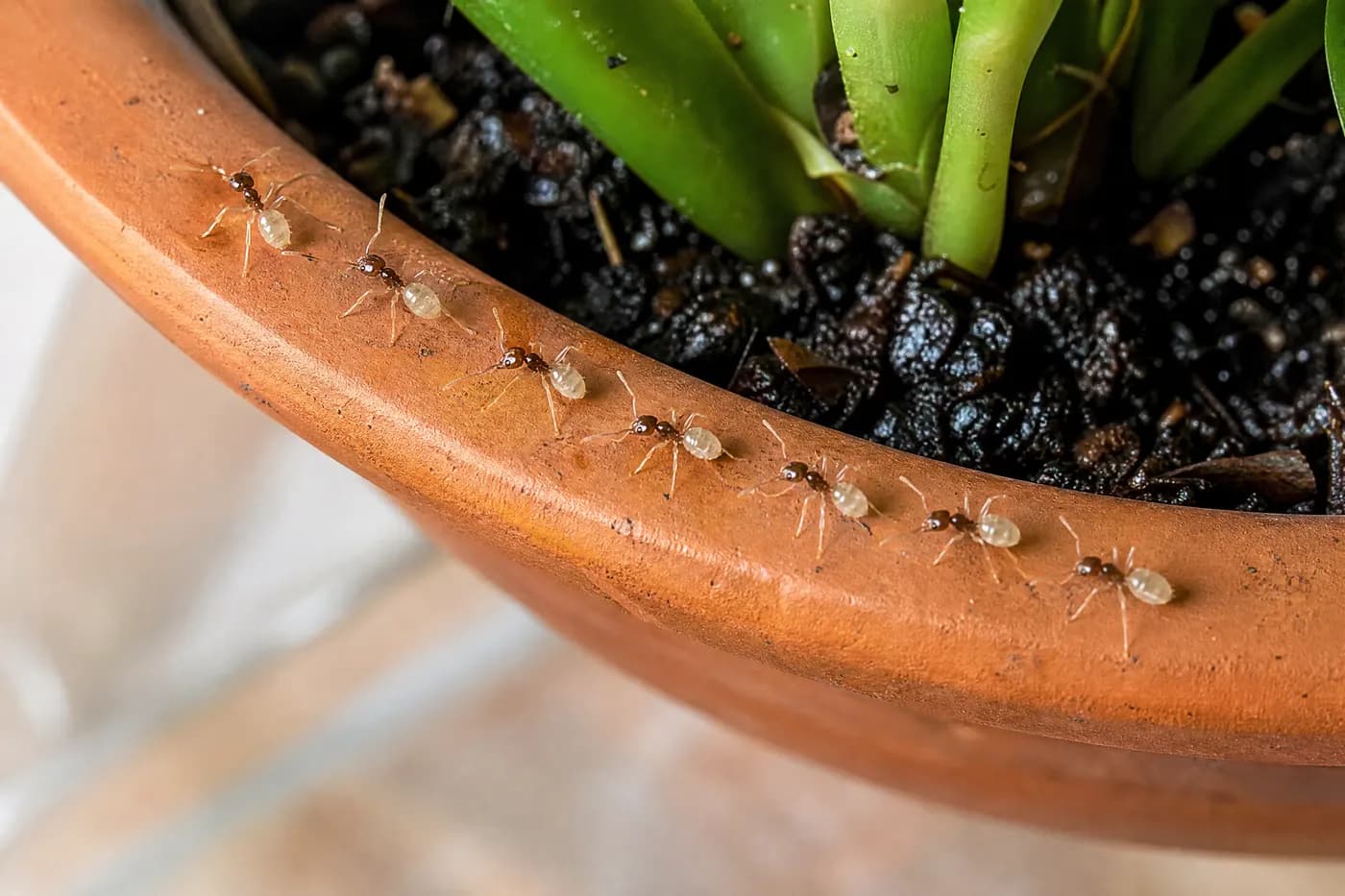
- Potted plants, indoor and on the patio — the single most common one.
- Wall voids, particularly behind the kitchen and bathroom plumbing.
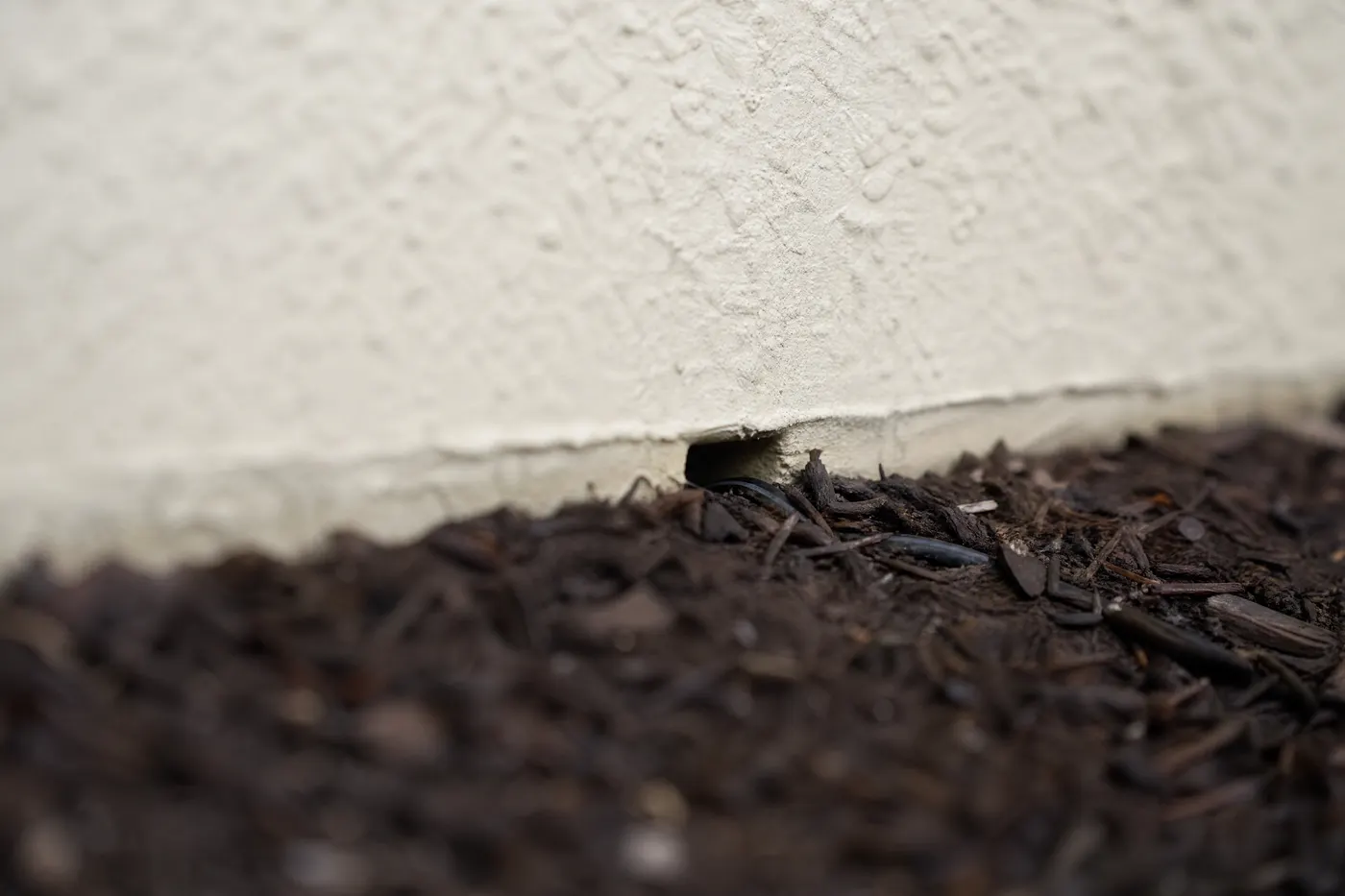
- Under loose bark and in mulch beds against the foundation.
- Palm boots and tree crotches, then in along a branch touching the roof.
- Behind loose baseboard, under laminate seams and in the void beneath a bathtub.
- Roof soffits and the space above dropped ceilings.
Wiping the counter removes the pheromone trail for a few hours. It does nothing to the nest, which is why the trail reappears in the same general area but on a slightly different line.
What actually works
Non-repellent, slow-acting bait carried back to the queens. That is the whole strategy, and every part of it is deliberate.
Non-repellent, because the ants must not detect it as a threat — that's what prevents budding. Slow-acting, because a worker needs time to return and share it through the colony by trophallaxis. Bait rather than spray, because the target is the queens you cannot reach, not the foragers you can see.
What that looks like on a real visit:
- Trail mapping. Your technician follows the active trails backward to find the nest sites, indoors and out. This is the step that determines everything else.
- Interior baiting placed along the actual trail lines, in cracks, voids and under-cabinet spaces where kids and pets can't reach.
- Exterior treatment of the harborage — the mulch line, planters, palm boots and the foundation perimeter — so the vacancy doesn't get refilled.
- Moisture and access correction. Trimming the branch touching the roof and fixing the dripping hose bib removes the reason they're there.
Two things you can do that genuinely help: stop spraying at least a week before treatment, and stop wiping the trails — an active trail is the map your technician needs.
Expect visible activity for the first few days after baiting. That is the bait being distributed, and it is the part where people panic and reach for the spray again. Give it the week.
Frequently asked questions
Ghost ants (Tapinoma melanocephalum) are a tropical species roughly 1.5mm long with a dark head and thorax and a pale, translucent abdomen and legs. In South Florida they are the most common ant found trailing across kitchen counters.
Many tropical ant species, ghost ants included, respond to chemical stress by budding — a queen and a group of workers break off and start a separate colony somewhere else. One trail becomes several. That's why the problem looks worse a week after the hardware-store can.
They don't sting and they very rarely bite. The problem is contamination and volume: they trail into food, pet bowls and prep surfaces in large numbers.
Almost never where you see them. Ghost ants nest in wall voids, behind baseboards, under loose bark, in potted plants and in mulch beds, then send foraging trails indoors to water and sugar. That's why wiping the trail does nothing.
Baiting is slow by design — workers have to carry it back and feed the queen. Expect visible activity for a few days, then a sharp drop. If trails are still active within 30 days of your visit, we come back at no charge.
Still dealing with it?
Ant Control across Broward County, FL, backed by a 30-day guarantee.
Book online in a few minutes and a Broward tech calls you back with your exact price (Mon–Fri 9am–5pm) — before any work starts.
Get rid of ants todayKeep reading
Palmetto Bug vs Cockroach: What South Florida Homeowners Are Actually Seeing
A palmetto bug is a cockroach — here's which one, how to tell it from the kitchen roach, whether they fly, and what each one means for your home.
Cockroach Droppings: What They Look Like and What They Mean
What roach droppings look like by species, how to tell them from mouse droppings, where to check first, and what the amount tells you about the infestation.