
Ants · Broward County, FL
Why Ants Keep Coming Back (Even After You Clean Everything)
The short answer
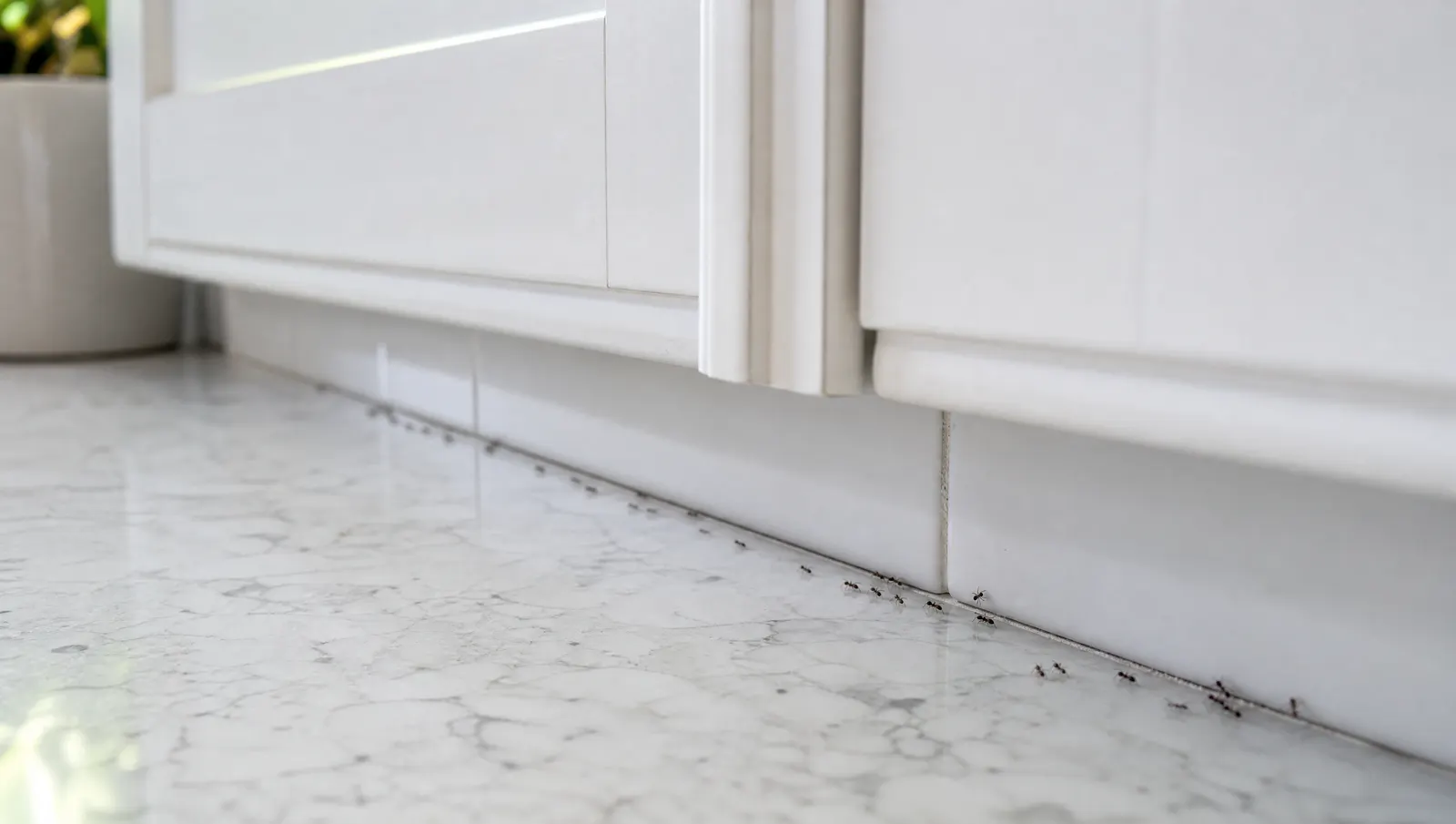
Ants return after cleaning because the colony and entry route remain, and surviving workers can continue following or rebuilding a pheromone trail. Moisture, plumbing gaps, wall voids and landscaping often matter more than a clean counter. Identify the species before using a repellent that may cause budding.
Cleaning a counter can make a kitchen look solved while the colony continues behind a wall, cabinet or plant. Ants return because the source and entry route remain, and surviving workers can rebuild a chemical trail. The way back in is usually more informative than the clean surface.
Cleaning removes the clue, not the source
Wiping removes food residue and part of the trail. It does not close a plumbing gap, dry a damp cabinet or remove a nest outside the window. When the same line returns, follow it instead of treating the visible endpoint as the entire problem.
How pheromone trails work
Foraging ants leave chemical information that helps other workers follow a successful route. Cleaning can interrupt it, but workers can lay a new path to the same food or water. The trail is a behavior, not a physical pipe that has been removed.
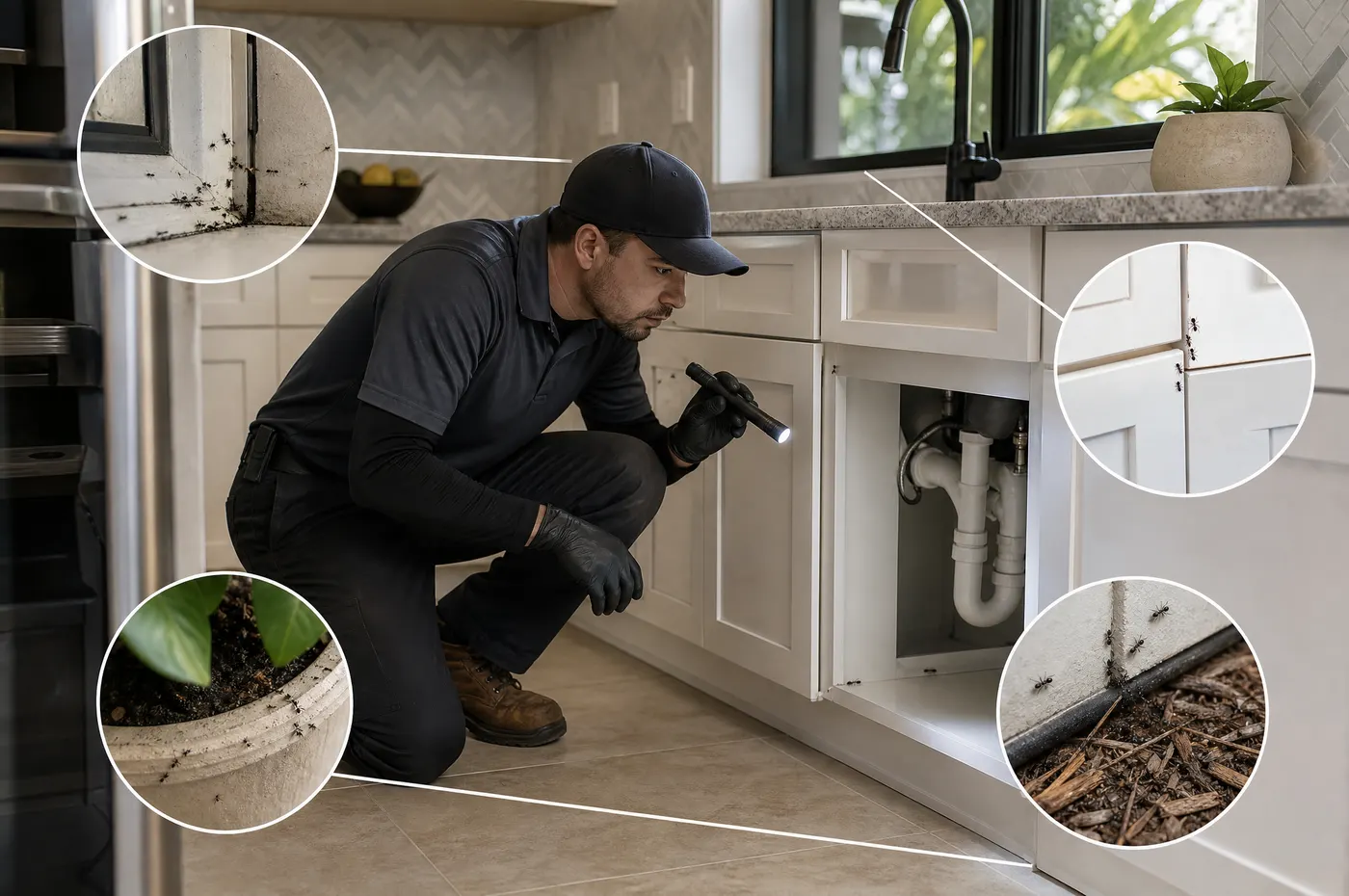
The five routes to check
- Plumbing: gaps around sink, dishwasher and bathroom pipes.
- Windows and doors: worn seals, tracks and threshold gaps.
- Cabinets and appliances: seams that stay warm or damp.
- Plants: pots, saucers, soil and branches touching the structure.
- Exterior edges: mulch, irrigation, roofline and wall penetrations.
Why spray can change the pattern
Repellent spray can kill exposed workers and make the original route unattractive. Some small household ants respond by moving queens and workers into new sites. The result is a trail in a different room, not necessarily a separate colony. That is why a history of spraying belongs in the inspection.
A better observation window
Dry obvious moisture, protect food and stop adding unplanned products long enough to see where the ants travel. Photograph a worker and note whether it has a pale rear, a large body or an unusual movement pattern. Record weather and whether the route changes after rain.
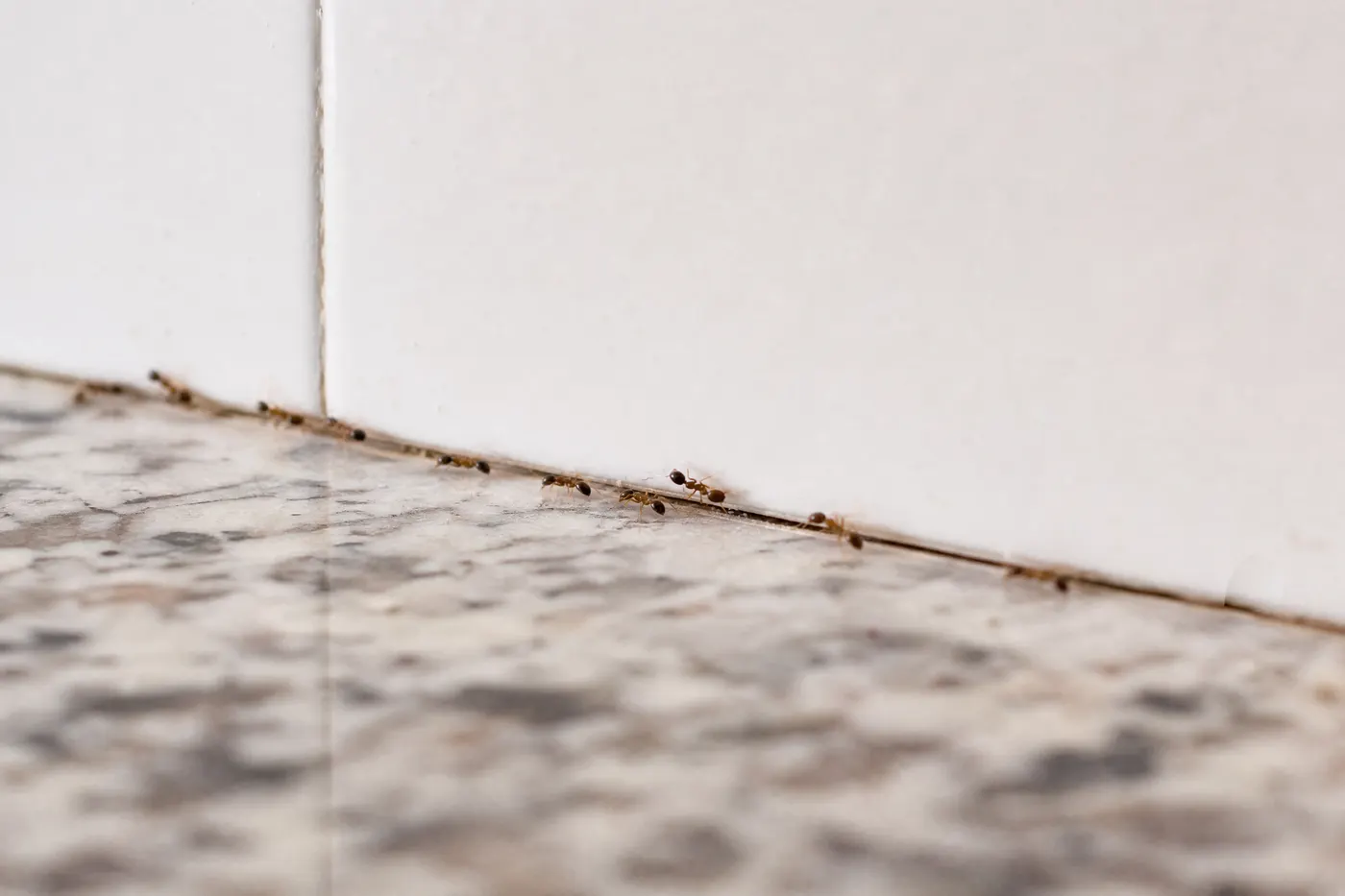
UF/IFAS Extension describes ant control as a species and colony question, which is why the same cleaning routine can produce different results for different ants. Keep the route visible long enough to identify the body and the entry. Then repair the moisture or gap and choose a method that does not simply move the colony to another room.
Frequently asked questions
Wiping can remove food and part of the chemical trail, but it does not close the gap or remove the nest. Workers may rebuild a route from the same plumbing, cabinet, window or exterior connection.
Common causes include moisture, sweet residue, plant pots, door thresholds, window seams, plumbing penetrations and wall voids. In Florida, landscaping can connect an outdoor colony to the roofline, fascia or a kitchen opening.
It can change the pattern and may contribute to budding in some small household ants. A trail that moves to multiple rooms after spraying is a reason to stop chasing workers and document the new routes.
Still dealing with it?
Ant Control across Broward County, FL, backed by a 30-day guarantee.
Book online in a few minutes and a Broward tech calls you back with your exact price (Mon–Fri 9am–5pm) — before any work starts.
Get rid of ants todayKeep reading
Ant Budding: Why Spraying Makes Your Ant Problem Worse
Ant budding is colony splitting triggered by stress. Learn why one trail can become several after spraying, which Florida ants do it, and what to change.
Ghost Ants vs Sugar Ants: Which One Is in Your Kitchen?
A practical comparison of ghost ants and the household ants people call sugar ants, using body color, trails, nests and behavior.
Ants All Over Your Kitchen Counter? Here’s Where They’re Coming From
Trace kitchen ant trails to plumbing, windows, cabinets, appliances and potted plants, then separate food pressure from the actual nest.