
Ants · Broward County, FL
Ghost Ants vs Sugar Ants: Which One Is in Your Kitchen?
The short answer
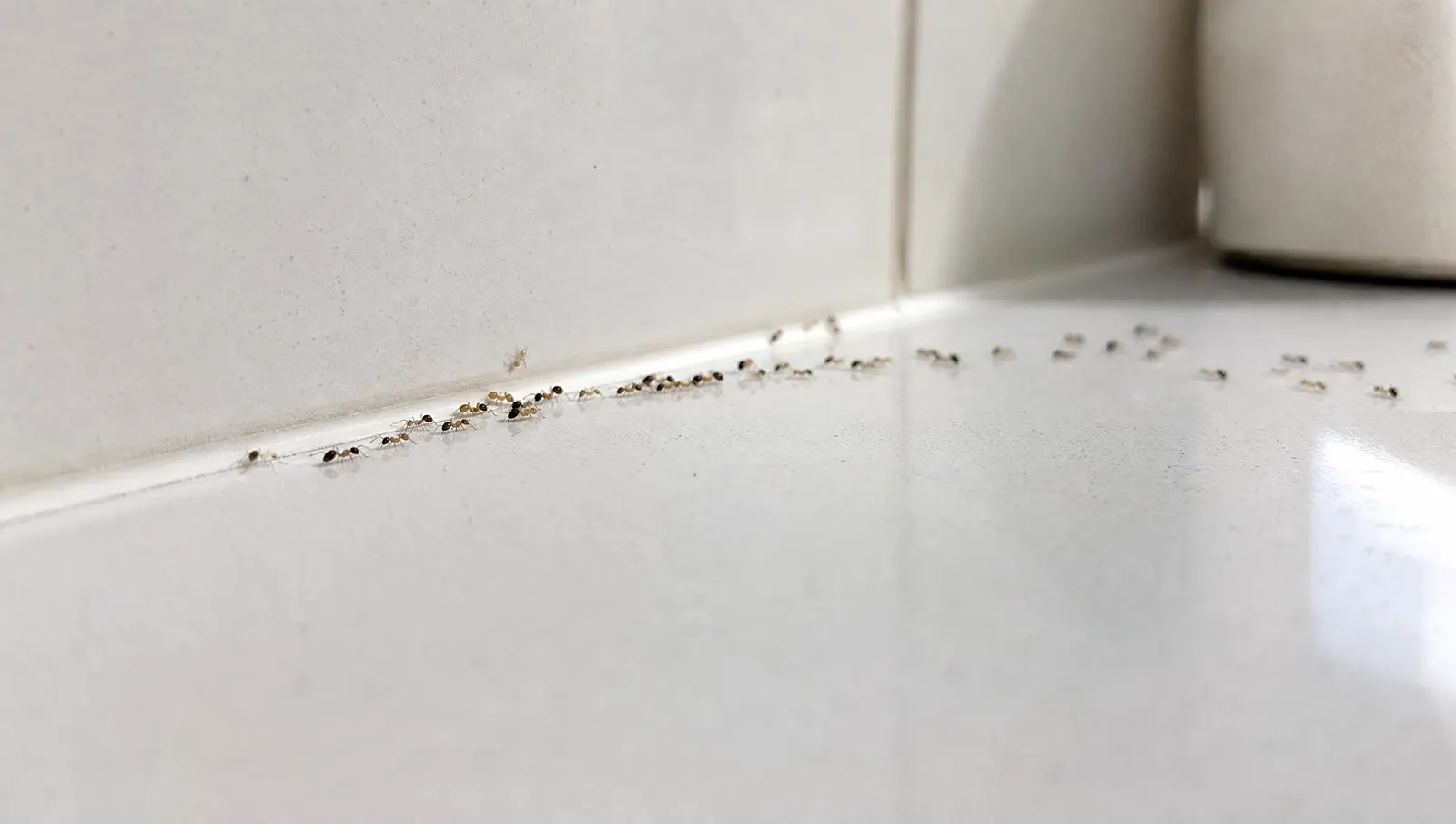
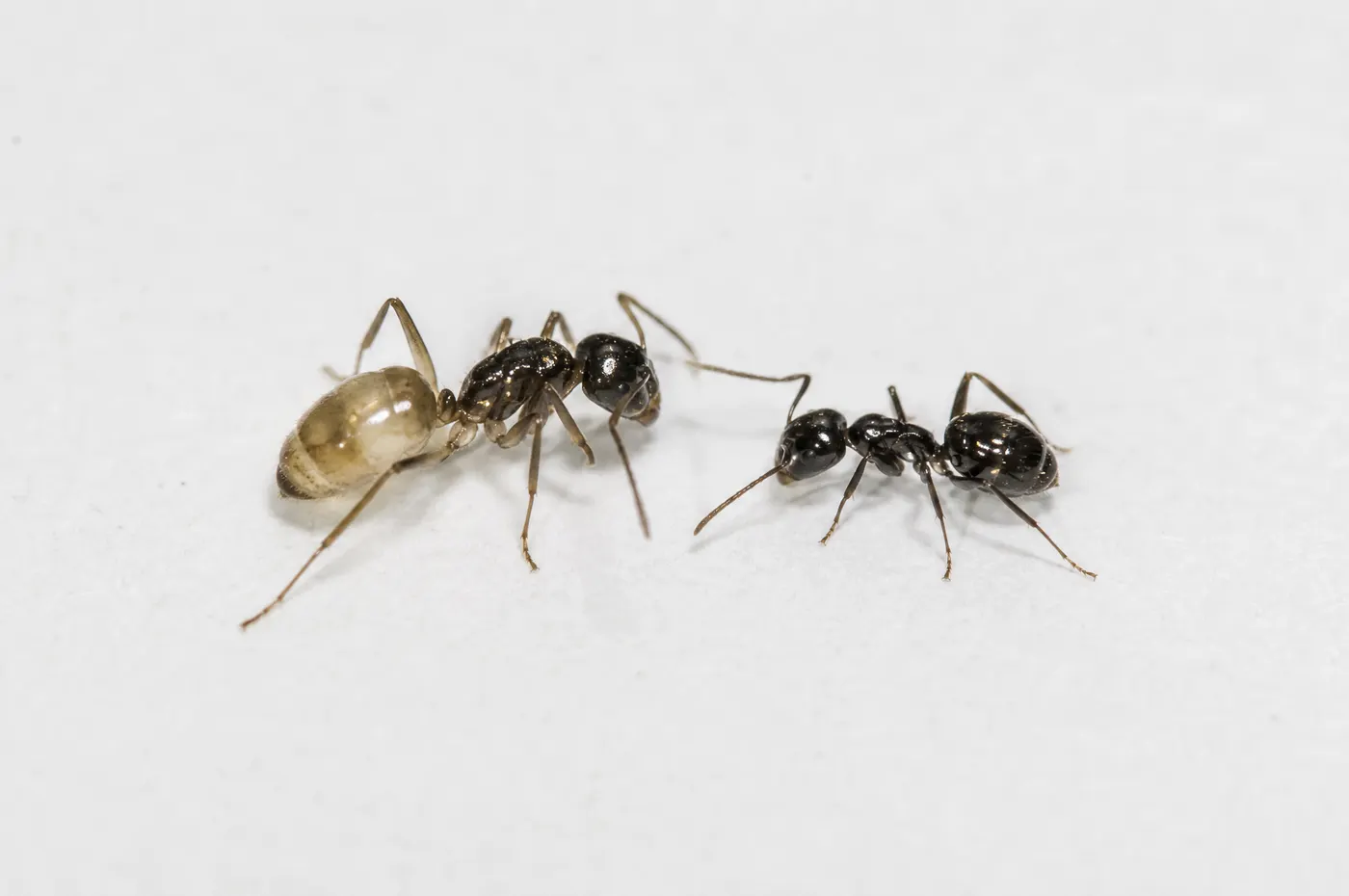
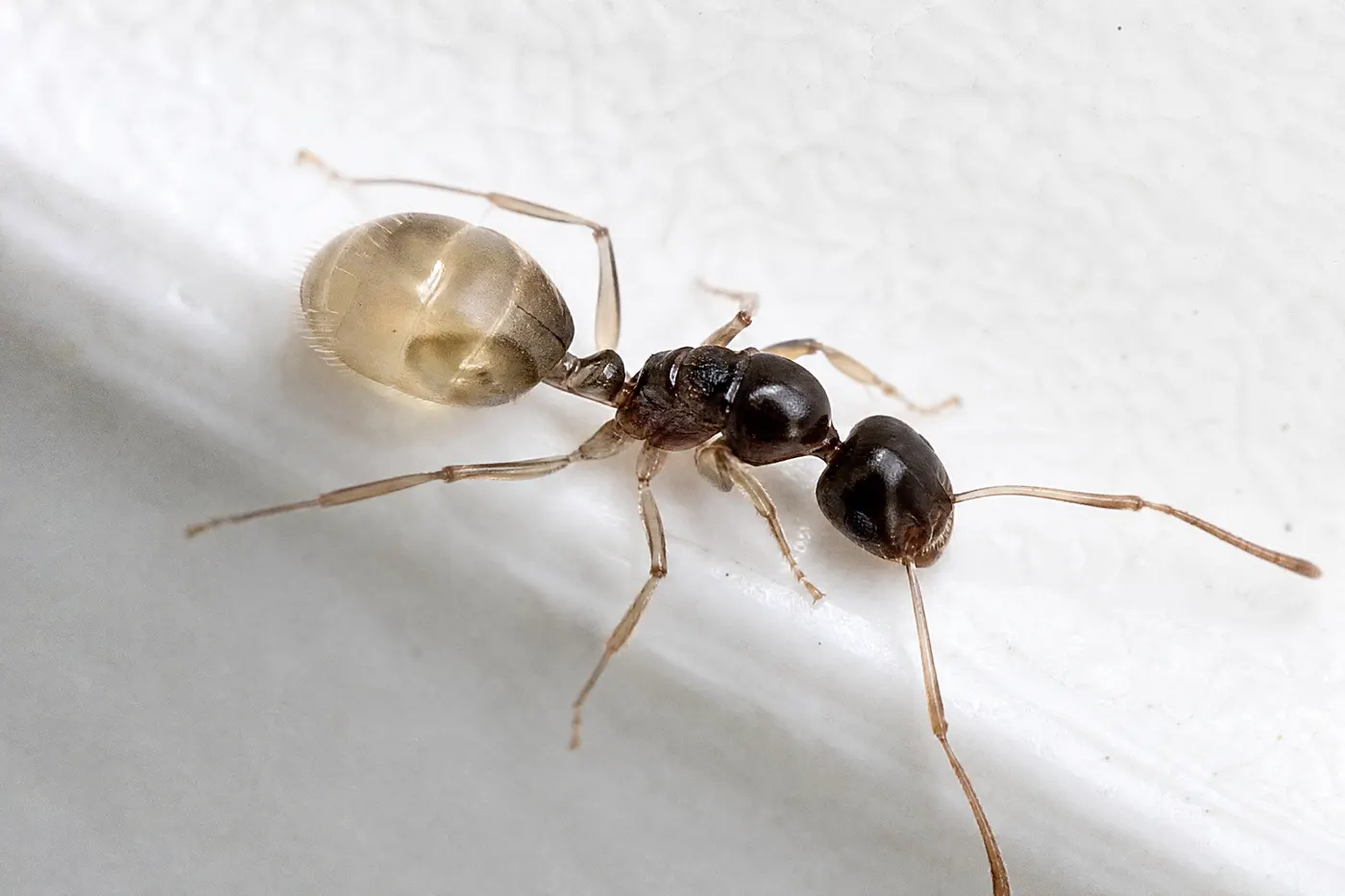
Ghost ants have a dark head and thorax with a pale translucent abdomen and legs. Sugar ant is a loose household label for several sweet-feeding ants, often with a uniformly dark or brown body. A clear color pattern, trail location and response to spray help narrow the identification.
Tiny ants on a Florida kitchen counter are often called sugar ants, but that name covers several species. Ghost ants are easier to recognize because the front of the body is dark and the abdomen and legs are pale. The comparison below uses more than the food they visit.
The four fastest differences
| Feature | Ghost ant | Ant called sugar ant |
|---|---|---|
| Body | Dark head and thorax, pale rear | Often broadly brown or dark |
| Size | Very small | Varies by species |
| Trail | Counters, sinks and plant pots | Kitchens, walls and outdoor edges |
| Nest | Wall gaps, plants, mulch or bark | Depends on the species |
Body color
Ghost ants have a striking two-tone pattern. Their head and thorax are dark, while the abdomen and legs look pale or translucent. That pale rear can vanish against a white counter, leaving what looks like a moving dark dot.
The phrase sugar ant does not identify one insect. Several sweet-feeding ants can receive that name, so a uniformly brown worker may belong to a different group. Photograph the entire body rather than a single worker from above.
Trail and nesting
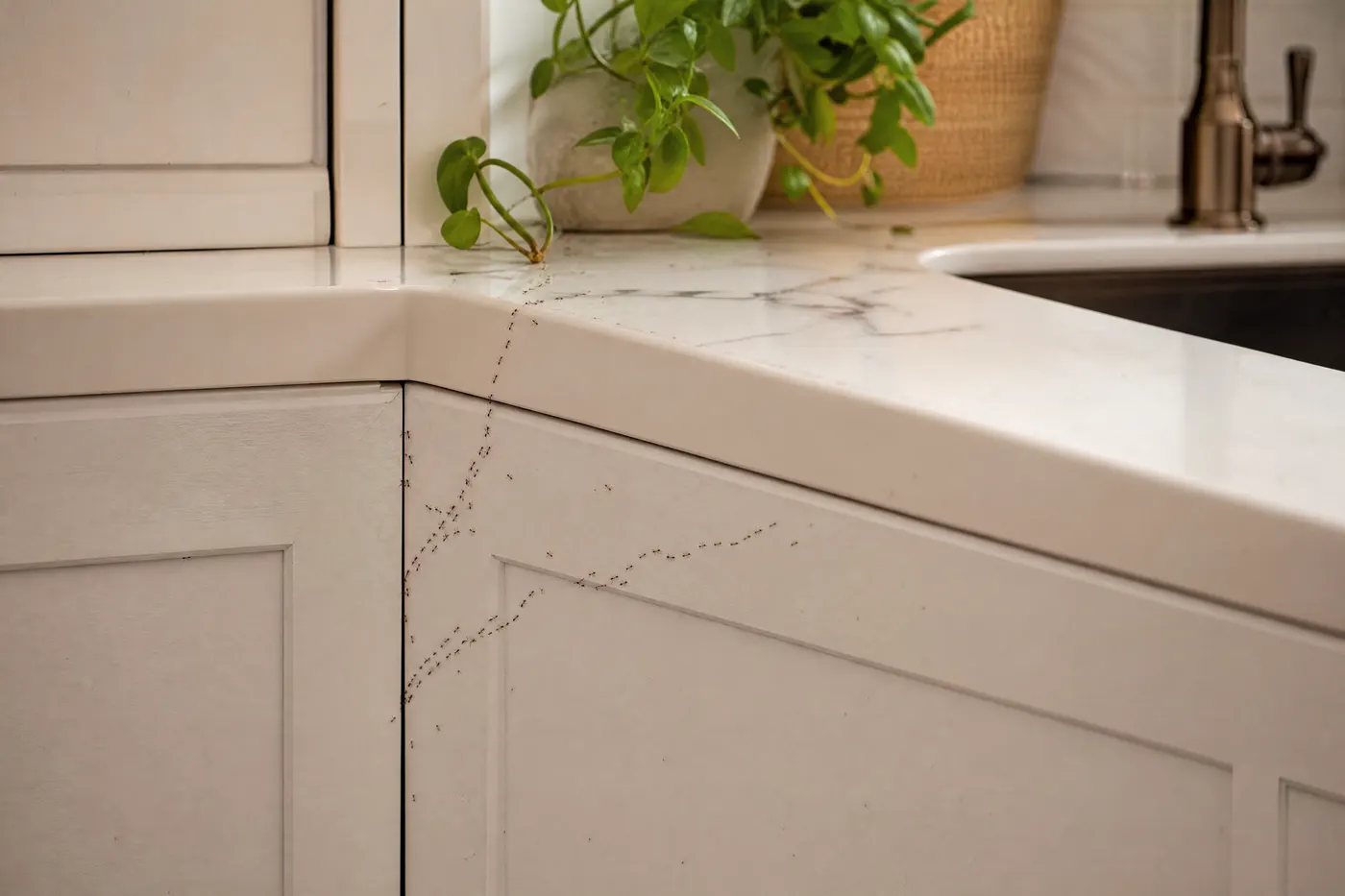
Ghost ants frequently use narrow edges around sinks, backsplashes, cabinet seams, potted plants and wall openings. The nest is usually not on the counter. Other small ants can use the same route, so follow it in both directions and look for where moisture, warmth or plants connect the inside to the outside.
Food and behavior
A worker visiting sugar does not prove its species. Food preference can change with the colony's needs and the season. Ghost ants may also forage for water, which explains activity around a clean sink or damp plant pot.
Why spray is a poor test
Repellent spray can kill exposed workers without reaching the nest. In some small household ants, disturbance can also cause budding: queens and workers move into new nearby sites. One trail disappears, then several appear in new rooms. That pattern makes a species-first inspection more valuable than another round of chasing workers.
The useful next step
Save a clear photograph, note whether the abdomen was pale, and record the rooms and moisture sources involved. Protect food, dry the sink area and avoid adding repellent products until the route is understood. The name matters because the colony behavior changes what a successful treatment needs to do.
Frequently asked questions
Not necessarily. Ghost ant is a species identification; sugar ant is a common name used for multiple small ants attracted to sweet food. A ghost ant has a dark front and pale rear, which is a more useful clue than the food it visits.
Ghost ants are tiny, with a dark head and thorax and a pale, almost translucent abdomen and legs. They often form narrow trails along counters, sinks, cabinet seams and potted plants in warm Florida homes.
Repellent disturbance can cause some small household ants to split into nearby nest sites. The original trail may disappear while new trails emerge elsewhere. That pattern is why identification and bait acceptance matter more than chasing each visible worker.
Still dealing with it?
Ant Control across Broward County, FL, backed by a 30-day guarantee.
Book online in a few minutes and a Broward tech calls you back with your exact price (Mon–Fri 9am–5pm) — before any work starts.
Get rid of ants todayKeep reading
Ghost Ants: The Tiny Kitchen Invader You Can't Kill With Spray
Ghost ants are the #1 kitchen ant in South Florida. What they look like, why spraying multiplies them, and what actually ends the colony.
Ant Budding: Why Spraying Makes Your Ant Problem Worse
Ant budding is colony splitting triggered by stress. Learn why one trail can become several after spraying, which Florida ants do it, and what to change.
Natural Ant Repellents: What Actually Works in a Florida Kitchen
An honest verdict on vinegar, cinnamon, coffee grounds, essential oils, cleaning, exclusion and moisture control for Florida ants.