
Ants · Broward County, FL
Ant Budding: Why Spraying Makes Your Ant Problem Worse
The short answer
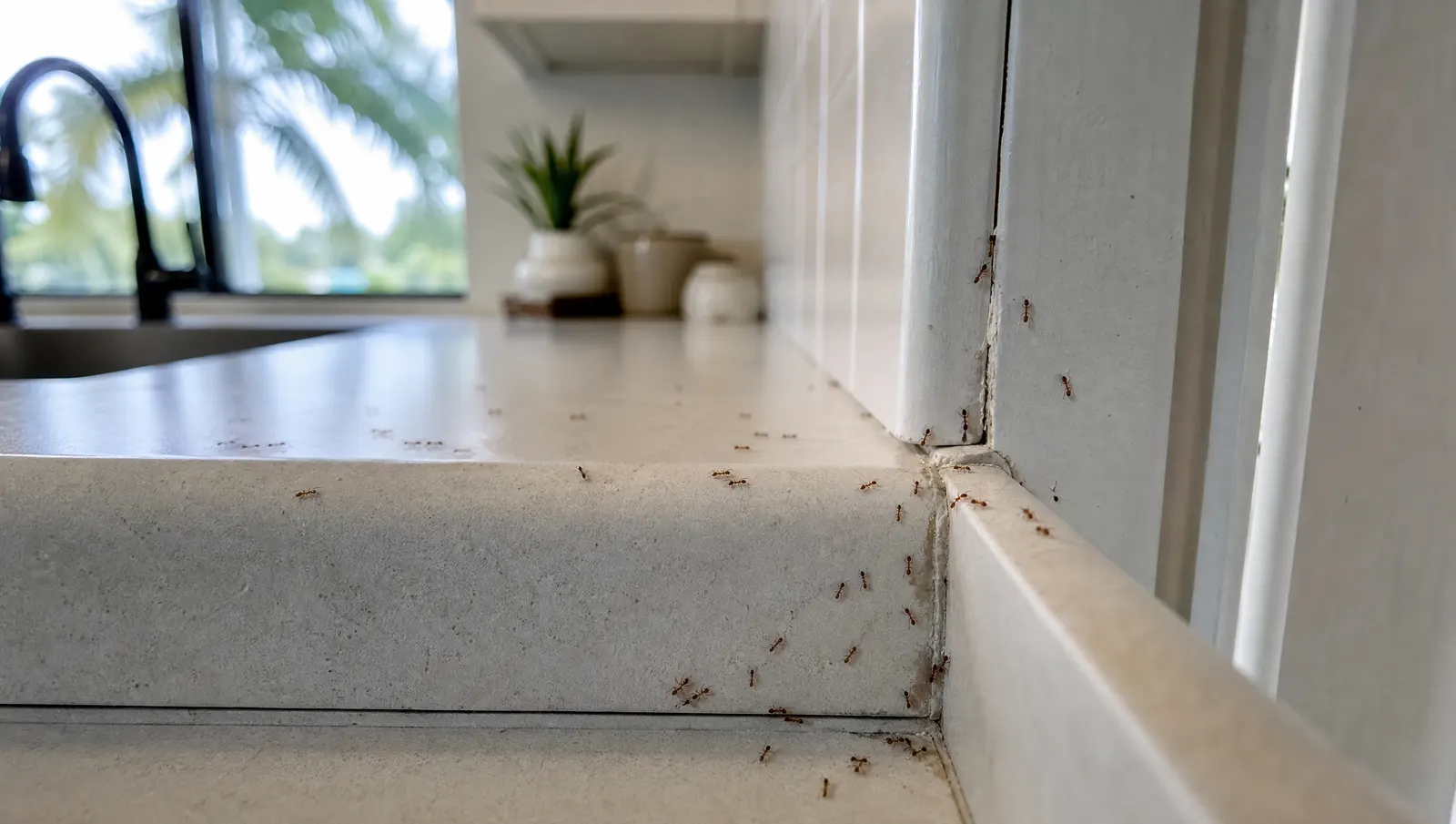
Ant budding is a form of colony splitting in which a queen and workers leave an established nest to start another one. In several Florida ant species, repellent spray can trigger this response: the visible trail disappears briefly, then new trails emerge elsewhere. The colony has moved, not been eliminated, so the treatment strategy must change.
The trail disappears after you spray the baseboard. Two days later, ants are back behind the microwave. Then you find a second trail in the bathroom and a third around a potted plant.
That pattern has a name: ant budding. It is not a magical ability to create ants from nothing. It is colony splitting, and in several small Florida ant species it can turn one visible route into several hidden nest sites.
What ant budding means
Budding happens when a queen and a group of workers leave an established nest and start another nest nearby. The original colony may remain active, and the new group can occupy a wall void, plant pot, cabinet seam, baseboard or outdoor harborage.
The result is a colony with multiple homes and multiple foraging trails. The trail on your counter is only the part you can see. Removing those workers does not necessarily affect the queen or the nest sites behind the wall.
Why spraying can trigger more trails
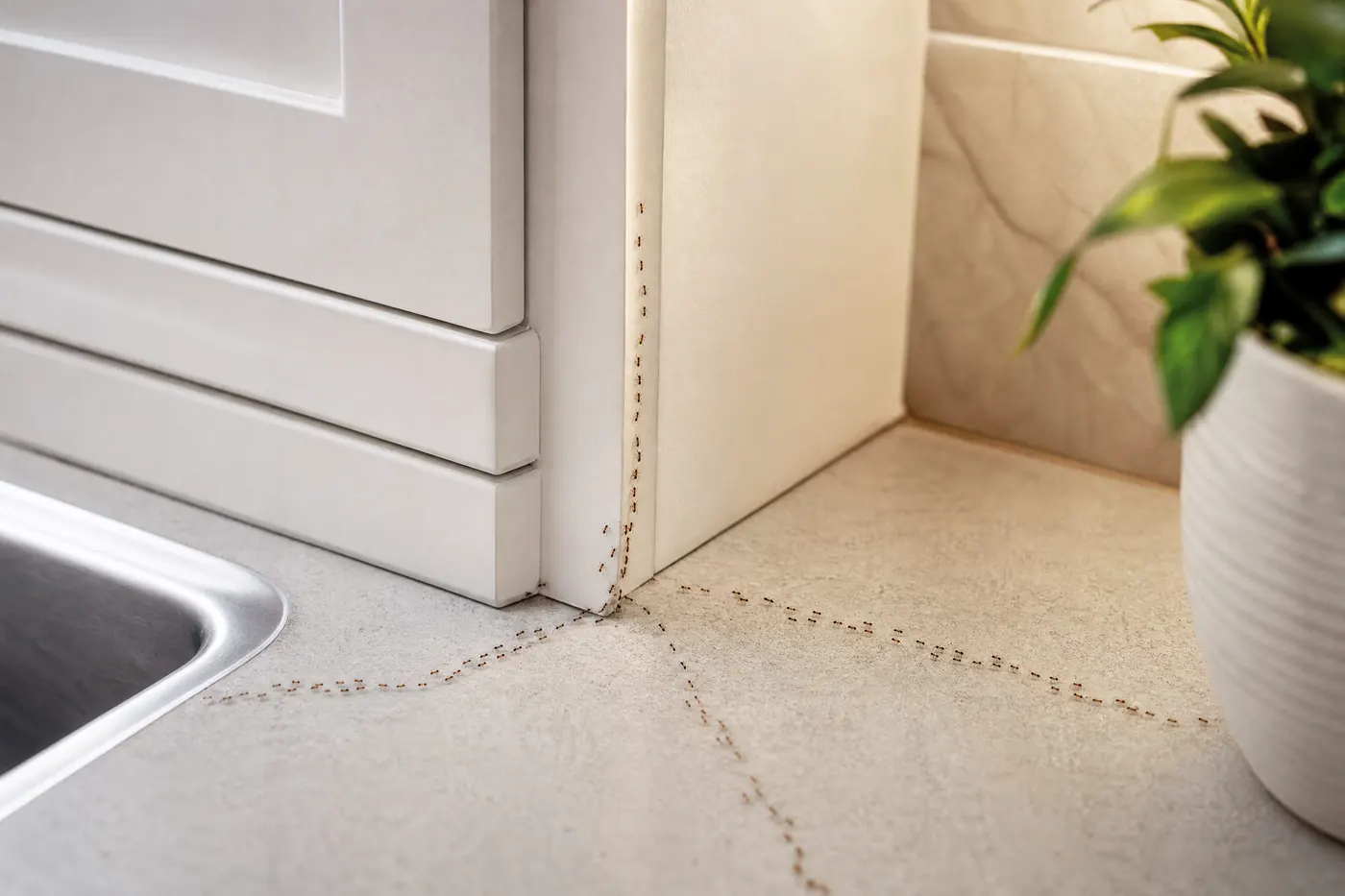
A repellent spray creates a disturbance at the trail. Exposed workers may die, but the colony can respond by moving queens and workers away from the treated area. The original trail fades, then activity appears somewhere else.
That is why people often say, "I sprayed them and now there are more." The spray did not necessarily increase the total number of ants overnight. It changed their location and split the visible problem into routes that are harder to follow.
There is a second issue: repeated spray removes the map. An active trail shows where workers travel between food, water and shelter. Once every route has been interrupted, the colony is still present but the evidence is fragmented.
Which Florida ants bud?
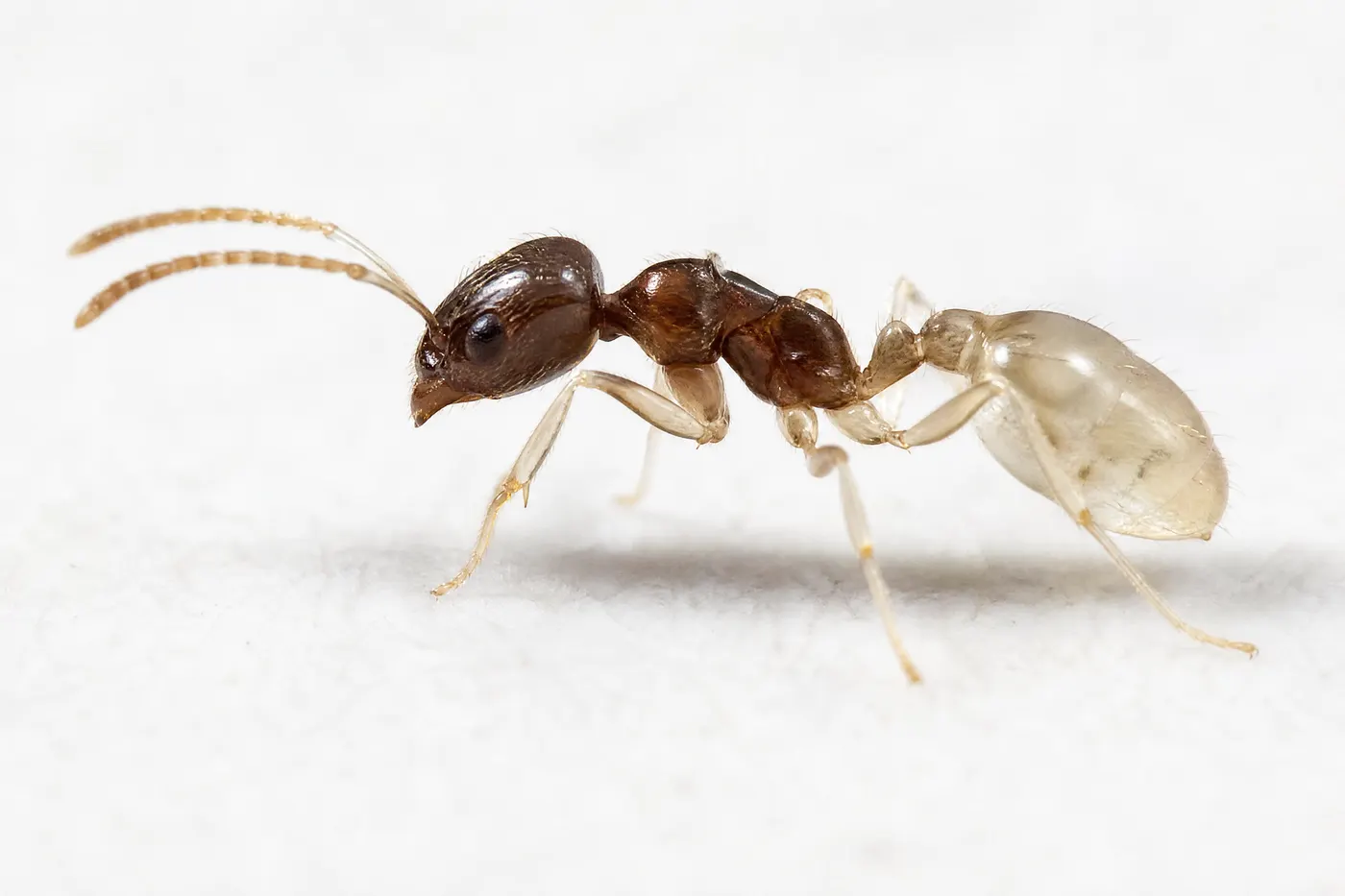
Ghost ants, white-footed ants and some other small household ants can maintain multiple nest sites and split when disturbed. The species cannot be confirmed from the fact that a trail multiplied. Size, body color, nesting location, movement and food preference still matter.
Ghost ants have a dark head and thorax with a pale, almost translucent abdomen and legs. White-footed ants are more uniformly dark with pale feet. Other small ants may look similar on a white countertop but respond differently to a species-specific plan.
How to tell budding is happening
Look for a sequence rather than one dramatic sighting:
- One trail disappears shortly after a spray.
- Activity resumes along a different edge or in another room.
- Several routes appear near plumbing, plants, baseboards or wall seams.
- Wiping or spraying each new trail creates another short-lived quiet period.
- The activity spreads without an obvious increase in food or clutter.
This pattern does not prove budding. A leaking pipe, a new entry point or a neighboring colony can produce similar movement. It does tell you that treating each visible trail as a separate problem is unlikely to finish the job.
What works instead
Start by preserving the route. Stop adding repellent spray, photograph the trails and note where they begin and end. Check moisture, potted plants, mulch, plumbing openings and branches touching the structure.
An inspection should identify the ant and map the active nest sites. For ants that share food through the colony, a slow-acting bait can let workers carry the material back to queens that are not visible. Exterior harborage and moisture corrections may matter as much as the indoor trail.
The objective is not to make one counter look clear for an afternoon. It is to reach the colony without scattering the evidence first. HONEX handles ant service across Broward County. Book online and a technician calls you back with the exact price during business hours (Mon–Fri 9am–5pm), before any work starts.
Frequently asked questions
Ant budding is colony splitting. One or more queens leave with workers and establish another nest nearby, while the original nest may remain active. It is common in several small household ants and explains why a single trail can become several after a repellent treatment.
The spray may kill exposed workers while the colony responds to the disturbance by moving queens and workers into new nest sites. The original trail can fade, but new trails appear at baseboards, cabinets, bathrooms or nearby rooms.
Ghost ants, white-footed ants and some other small household ants can form multiple nest sites and split when disturbed. Identification matters because species differ in nesting habits, food preferences and how a technician should approach the colony.
Look for a short-lived reduction in one trail followed by new trails in separate rooms, along different edges or near new moisture sources. A widening pattern after repeated spraying is a reason to stop applying repellent products and document the routes instead.
Stop adding repellent spray, record where the trails run and correct obvious moisture or access issues. A species-specific inspection can then determine whether the active trails lead to one nest, several nest sites or an exterior source.
Still dealing with it?
Ant Control across Broward County, FL, backed by a 30-day guarantee.
Book online in a few minutes and a Broward tech calls you back with your exact price (Mon–Fri 9am–5pm) — before any work starts.
Get rid of ants todayKeep reading
Ghost Ants: The Tiny Kitchen Invader You Can't Kill With Spray
Ghost ants are the #1 kitchen ant in South Florida. What they look like, why spraying multiplies them, and what actually ends the colony.
Palmetto Bug vs Cockroach: What South Florida Homeowners Are Actually Seeing
A palmetto bug is a cockroach — here's which one, how to tell it from the kitchen roach, whether they fly, and what each one means for your home.