
Ants · Broward County, FL
Ants All Over Your Kitchen Counter? Here’s Where They’re Coming From
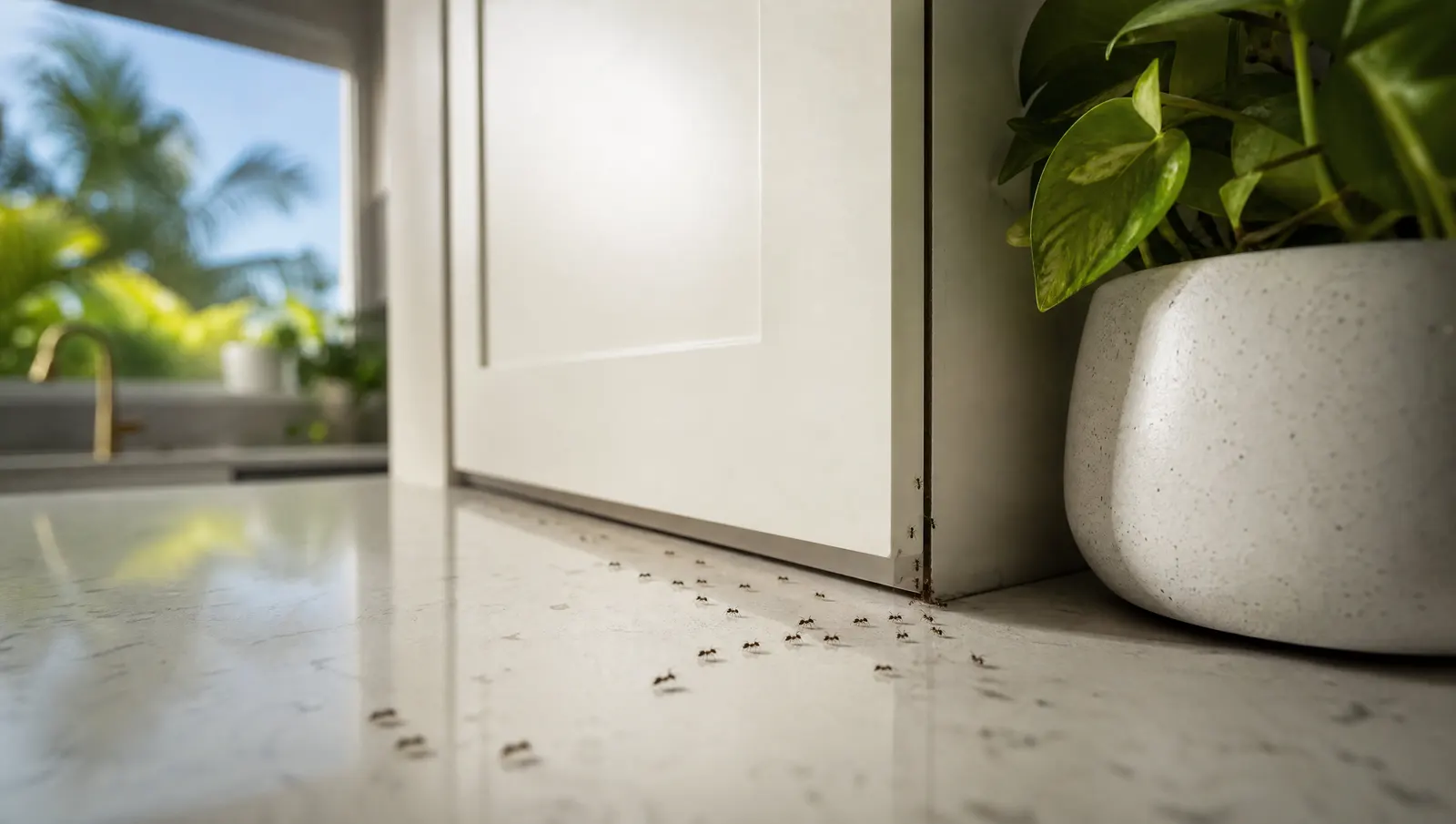
The short answer
Kitchen ants commonly enter through plumbing penetrations, cabinet seams, window gaps, door thresholds and connections to potted plants or outdoor landscaping. The counter is usually a feeding destination, not the nest. Follow the trail in both directions and record whether the ants are tiny, dark or two-toned.
When ants cover a kitchen counter, the counter is usually the destination. The workers are looking for sugar, grease or water, while the nest may be in a wall, cabinet, plant, mulch bed or exterior route. Five entry points account for much of the pattern in Florida homes.
The counter is the destination
Start at the line, not the food. Watch where workers arrive and where they disappear. Note whether the ants are tiny and two-toned, uniformly dark, large and wood-associated, or moving from outside after rain.
1. Plumbing penetrations
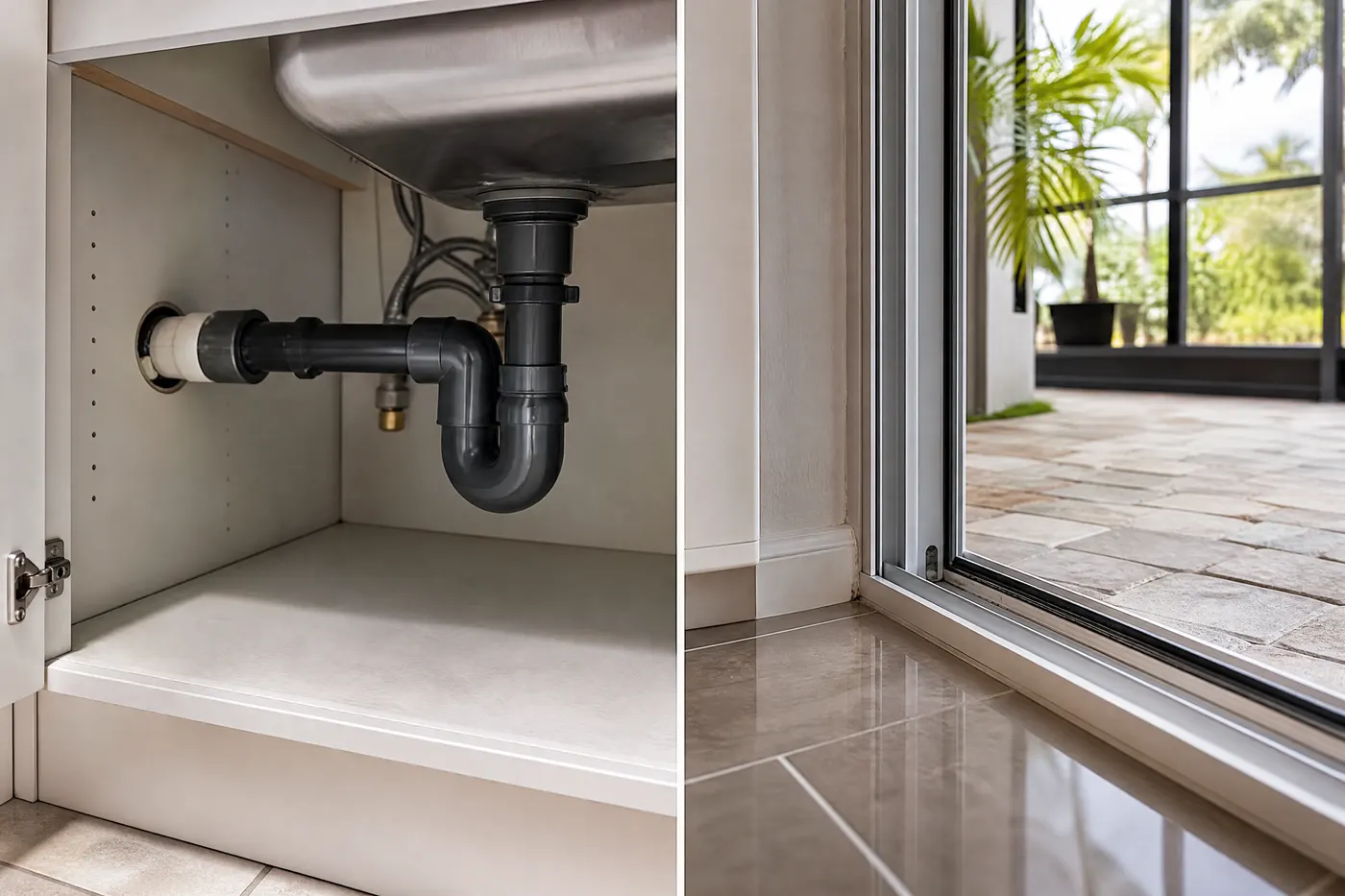
Sink cabinets, dishwasher lines and pipe openings give ants both moisture and a protected route. Check the back corners, not just the cabinet floor. A small leak or condensation can keep activity alive even after the counter is wiped.
2. Window and door gaps
Tracks, worn weatherstripping and gaps at a patio door connect a kitchen to landscaping. Follow the trail toward light, screens, mulch and plants. A door route can bring in foragers without an indoor nest.
3. Cabinet and appliance seams
Warm hinges, dishwasher edges, refrigerator spaces and toe-kicks offer shelter. Ghost or pharaoh ants can disappear into gaps too narrow to notice from standing height. Record the exact seam where the workers vanish.
4 and 5. Plants and exterior routes
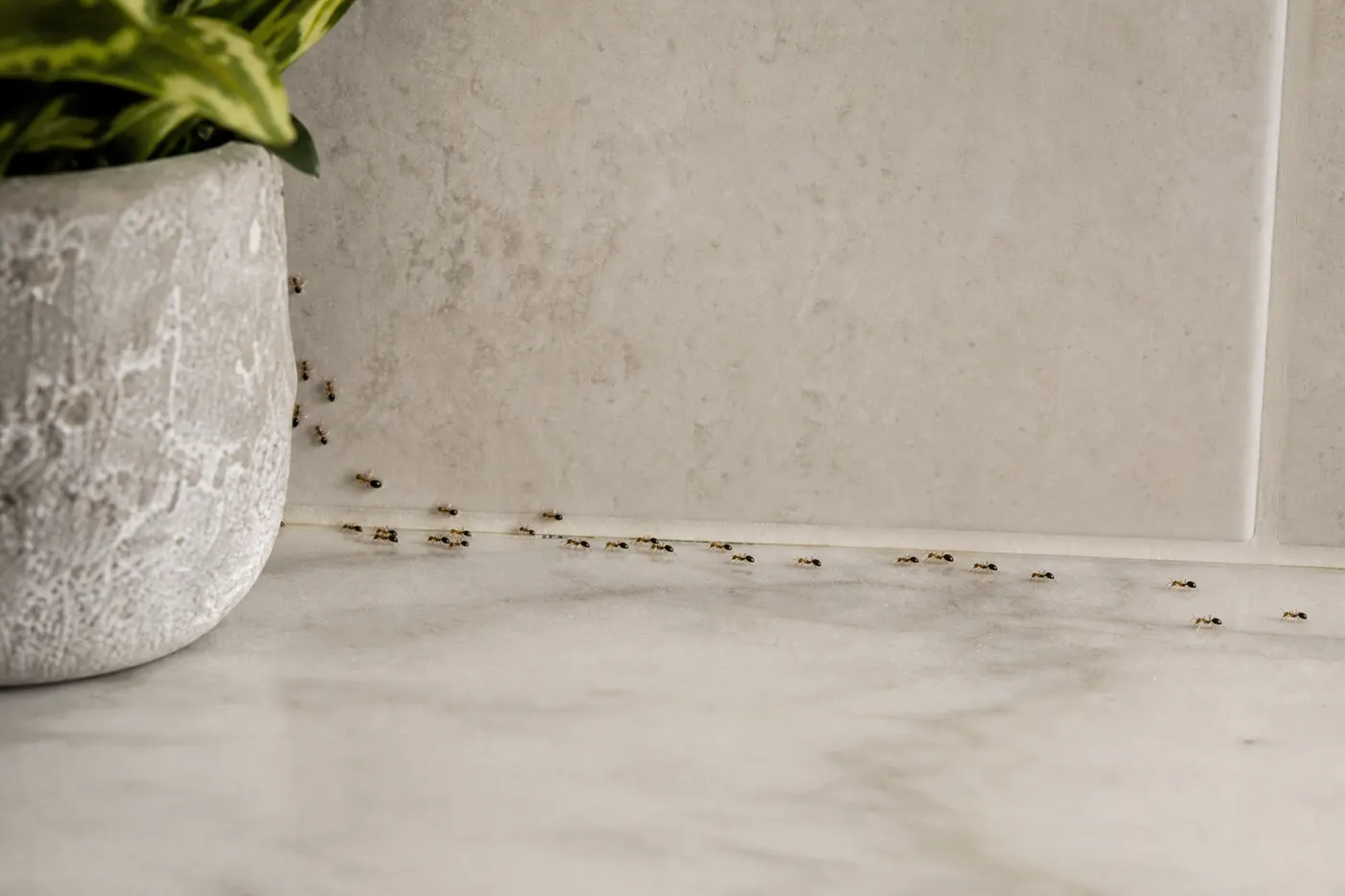
Potted plants, saucers, mulch, irrigation lines and branches can connect an outdoor colony to the kitchen. Move plant care and water sources into the route investigation rather than assuming every ant began indoors.
How to map the trail
Photograph one worker, write down the time and follow the line in both directions. Protect food, dry the sink and remove residue. Avoid repeatedly spraying until the species is understood; some small ants can bud when disturbed. If the trail branches, include every room in the record.
The Florida Department of Agriculture and Consumer Services emphasizes reading the product label for any pesticide application. That is especially important when a kitchen route crosses a food-preparation surface. Identification should come before placement, and placement should stay in a labeled, protected site rather than on the counter where the ants were first noticed.
Frequently asked questions
They commonly arrive through plumbing gaps, cabinet joints, window seams, door thresholds, appliance spaces and potted plants. The trail on a counter is where workers forage; the nest may be in a wall, cabinet void or outside.
Counters offer water, sugar, grease and warmth, so workers may concentrate there even when the nest is elsewhere. Follow the line toward the backsplash, sink cabinet, window or wall rather than treating the visible endpoint.
Protect food and remove standing water, then document the trail and identify the ant. Avoid repeatedly applying repellent spray until you know whether the species can bud and whether the route leads to one nest or several.
Still dealing with it?
Ant Control across Broward County, FL, backed by a 30-day guarantee.
Book online in a few minutes and a Broward tech calls you back with your exact price (Mon–Fri 9am–5pm) — before any work starts.
Get rid of ants todayKeep reading
Ghost Ants: The Tiny Kitchen Invader You Can't Kill With Spray
Ghost ants are the #1 kitchen ant in South Florida. What they look like, why spraying multiplies them, and what actually ends the colony.
Ghost Ants vs Sugar Ants: Which One Is in Your Kitchen?
A practical comparison of ghost ants and the household ants people call sugar ants, using body color, trails, nests and behavior.
Why Ants Keep Coming Back (Even After You Clean Everything)
Cleaning can remove food while the pheromone route, entry gap and nest remain. Learn how to read recurring ant trails in a Florida home.