
Cockroaches · Broward County, FL
Roaches in a Clean House? Here's What's Really Attracting Them
The short answer
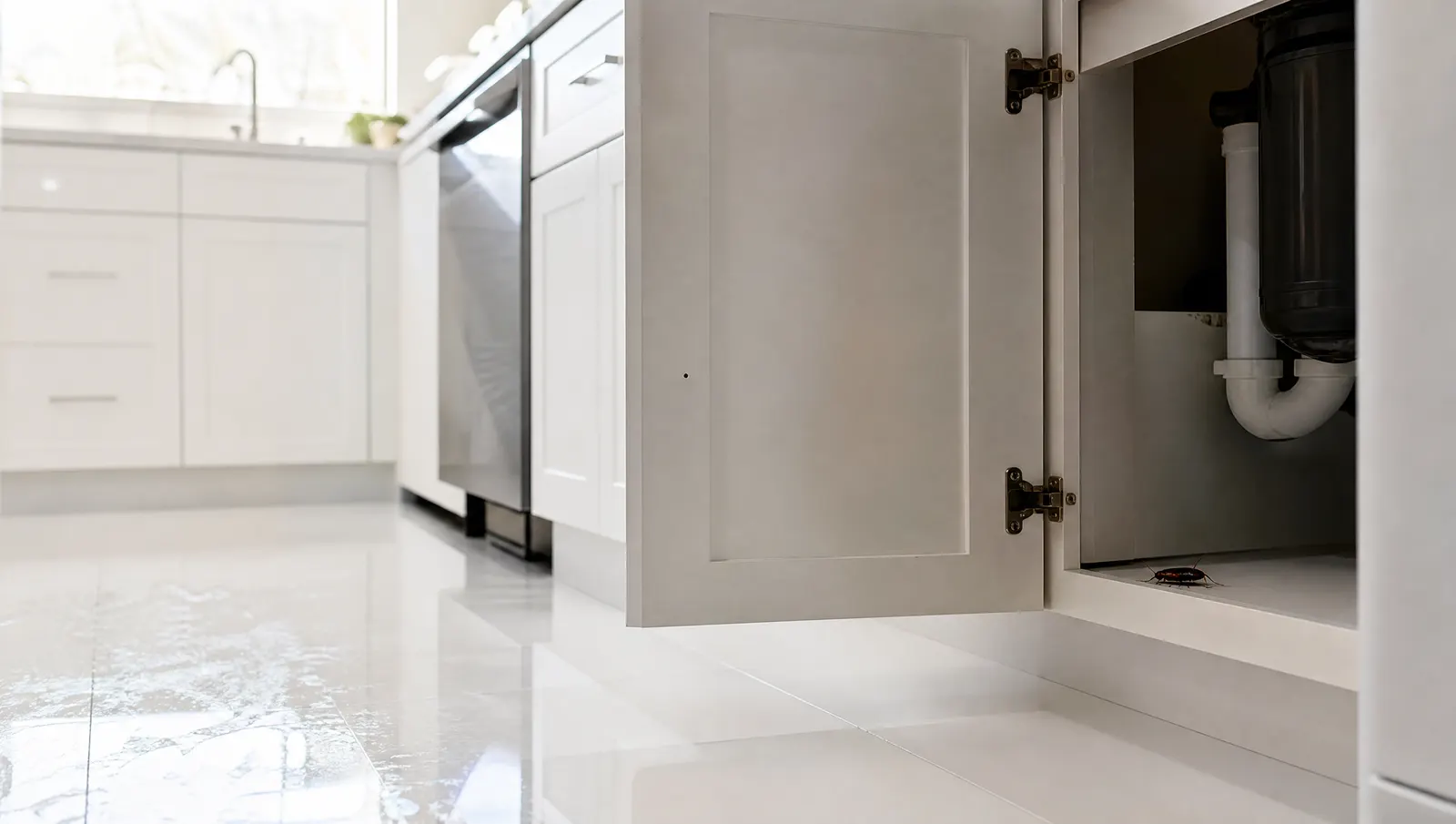
A clean house can still have roaches because cleanliness does not remove moisture, heat, wall voids or shared entry routes. In South Florida, roaches can follow plumbing, drains, door gaps and utility penetrations into a tidy home. Seeing them is not proof that the house is dirty; it is evidence to investigate the route and source.
Finding a roach in a clean kitchen feels personal. You wipe the counters, keep food sealed and take the trash out, yet something still moves behind the refrigerator at night. The conclusion many people reach is that they must have missed a cleaning problem.
In South Florida, that is often the wrong conclusion. A clean home can still offer warmth, moisture, shelter and an easy route through a wall, drain or door gap. Housekeeping matters, but it is only one part of exclusion.
Cleanliness is not the same as exclusion
Roaches do not need a dirty kitchen to enter a building. A large outdoor roach can follow a damp route from a drain, garage, patio or landscaping gap. A small indoor roach can arrive in a grocery bag, cardboard box or appliance and then find a protected seam near heat and water.
The same distinction matters in condos and apartments. Shared walls, plumbing chases and utility openings can connect several units. A spotless kitchen may still receive activity from a source that is outside the unit.
That does not mean cleaning is pointless. Removing crumbs, fixing leaks and storing food properly reduces resources. It simply means a clean room cannot close a gap in a door sweep or remove a colony behind an appliance.
The five things roaches need
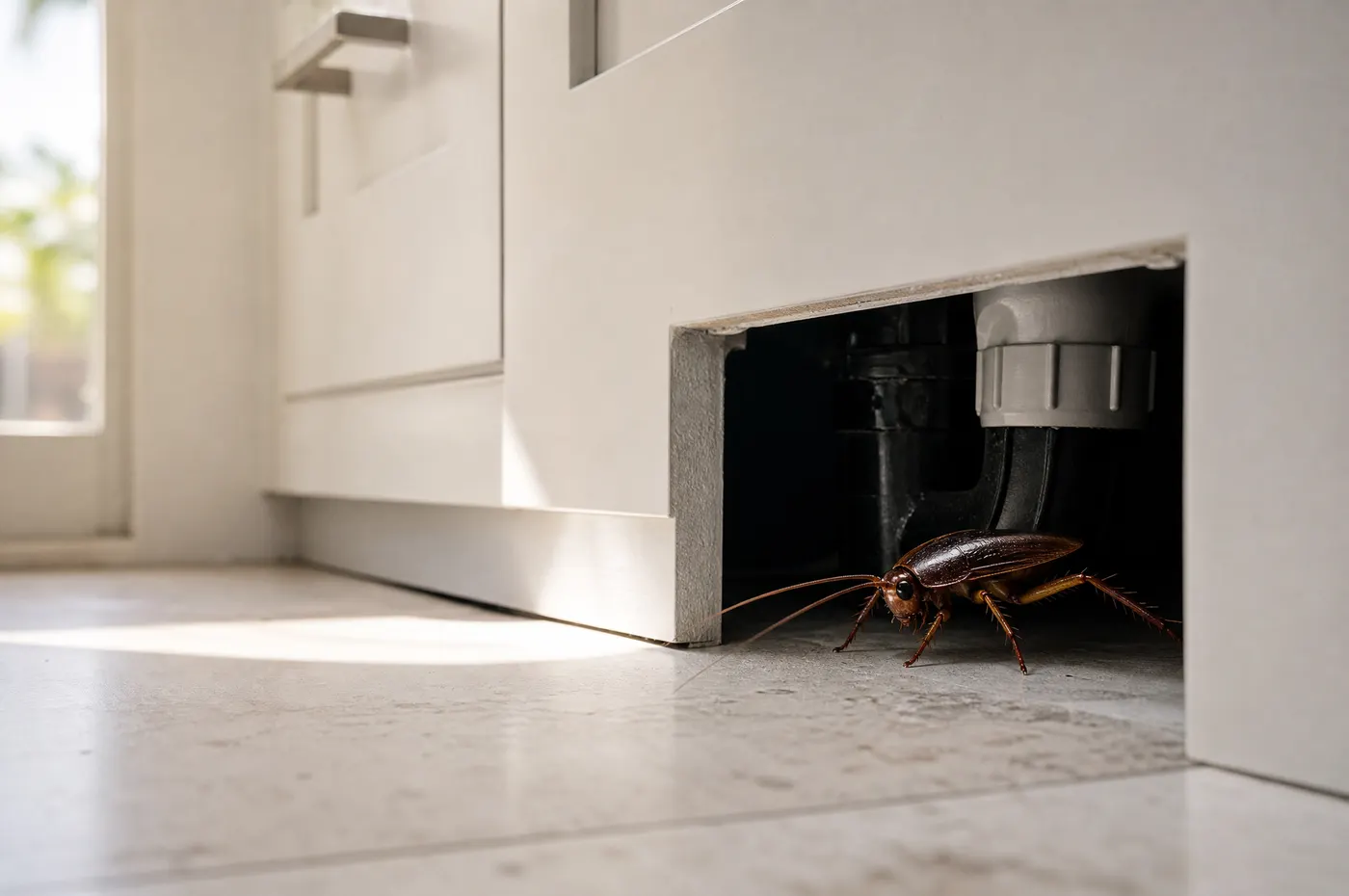
The exact combination varies by species, but these five conditions explain most recurring activity in a well-kept home:
- Water: A slow plumbing leak, condensation line, wet cabinet base or dry drain trap can provide enough moisture to keep a route active.
- Warmth: Appliance motors, kitchens, laundry rooms and wall voids hold heat that makes them attractive shelter.
- Protection: Cracks, hinges, cardboard seams, pipe chases and voids under cabinets are safer than open floors.
- Access: A door sweep, utility penetration, drain or roof return can turn an outside harborage into an indoor route.
- A nearby source: Mulch, drains, shared walls, an adjacent unit or a hidden indoor colony can keep replacing the insects you remove.
Crumbs are only one possible resource, and often not the most important one. Moisture and shelter can explain why a roach appears in a kitchen that looks clean enough to photograph.
Why apartments see more activity
Attached housing gives insects more routes and gives residents less control over the source. Plumbing stacks, cable openings, ventilation, shared walls and hallway doors can connect spaces that look separate from inside the unit.
If activity appears in multiple rooms, returns soon after cleaning or follows a wall shared with another unit, document the pattern before applying spray. A single-unit treatment may reduce what you see while the connected source keeps feeding the route.
Responsibility is a separate question. The lease, association documents, maintenance rules and physical location of the source can all matter. A resident should notify the property manager and check the governing documents before assuming who pays.
Where to look first
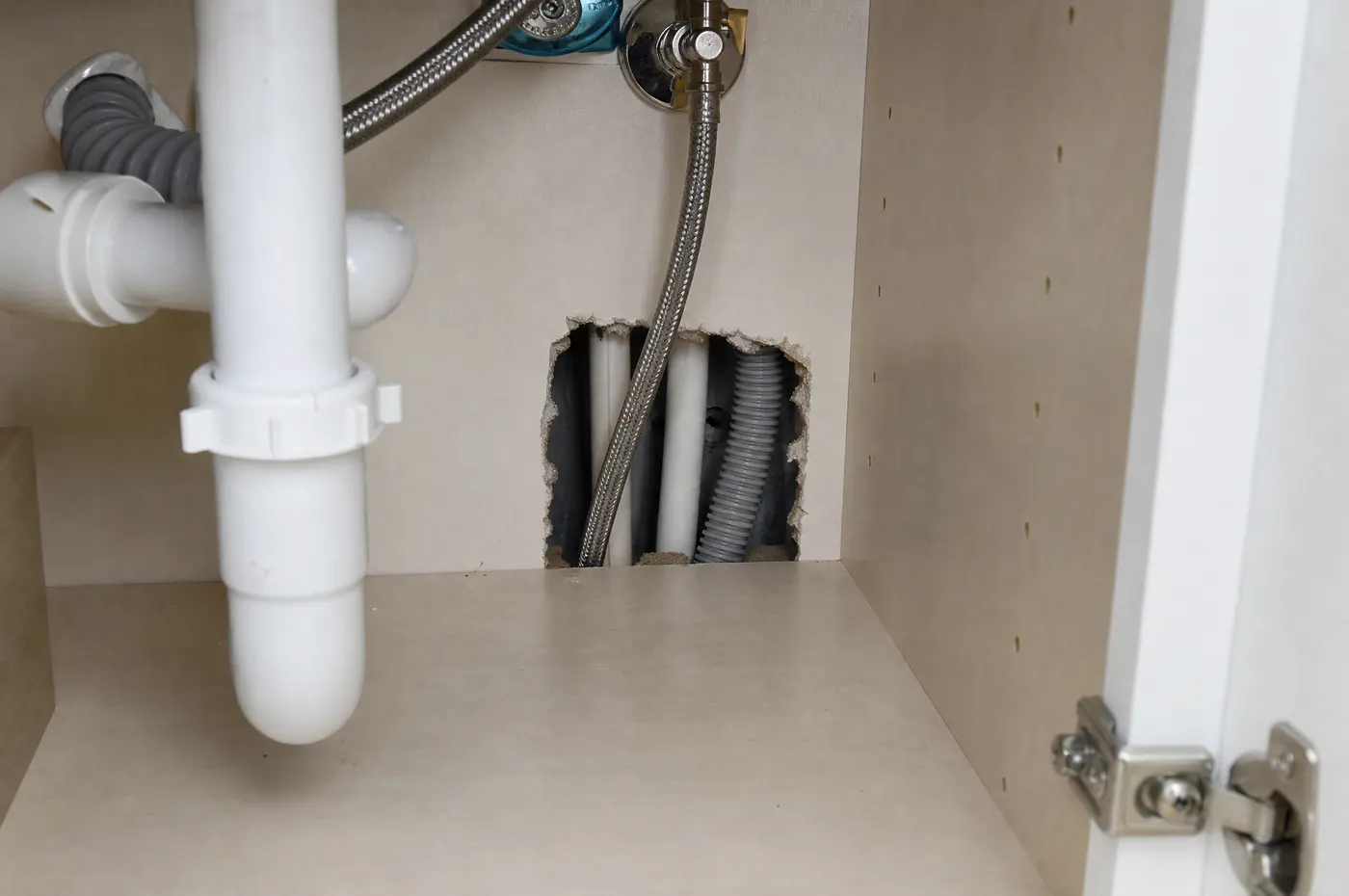
Start with the places that combine moisture, heat and protection:
- Under the kitchen and bathroom sinks, including the back of the cabinet.
- Around the dishwasher, refrigerator compressor and stove sides.
- Cabinet hinges, drawer runners and the seam where the counter meets the wall.
- Door sweeps, garage thresholds and utility penetrations.
- Drains that are rarely used or have a trap that may have dried out.
- Wall edges shared with a bathroom, kitchen or neighboring unit.
Do not pull apart an appliance or open a wall just because you saw one insect. The point is to map the pattern and preserve useful evidence. A photograph of a dropping location can be more useful than a spotless surface after a deep cleaning.
What cleaning can and cannot fix
Cleaning can remove food residue, reduce clutter and make activity easier to spot. It cannot identify a species, follow a wall route or reach a colony inside an appliance. It also cannot correct a failed door sweep, an open utility gap or a source in a neighboring unit.
Avoid turning the problem into a cycle of cleaning followed by spraying. A repellent product can push roaches away from the visible area, which makes the home feel better briefly but makes the route harder to interpret. Record where and when you see activity, then use that information to decide whether the problem is a stray outdoor visitor or an established indoor population.
A clean home is not a contradiction. It is a reason to investigate moisture, access and shelter instead of assigning blame. If sightings continue, HONEX serves Broward County and can inspect the species and source. Book online and a technician calls you back with the exact price during business hours (Mon–Fri 9am–5pm), before any work starts.
Frequently asked questions
Roaches need more than food. Moisture, warmth, shelter and an opening can be enough, and those conditions exist in clean homes. Plumbing penetrations, drains, wall voids, door sweeps and shared walls can let roaches enter without any connection to housekeeping.
The strongest attractors are usually moisture, warmth, shelter and access. Leaking plumbing, condensation, a dry drain trap, gaps under doors and undisturbed spaces behind appliances can matter more than a clean countertop or a sealed pantry.
Yes. In attached housing, roaches can move through shared walls, plumbing chases, utility openings and door gaps. That does not prove a neighbor caused the issue, but recurring activity in several units is a reason to involve the property manager and inspect the shared routes.
Cleaning removes some food and residue, but it does not seal entry points or remove a colony inside a wall, appliance or neighboring unit. Cleaning is useful maintenance; it is not a substitute for identifying where the roaches are nesting and how they are getting in.
Repeated sightings, daytime activity, droppings, egg cases or small roaches in a kitchen point to more than a single outdoor visitor. The location and timing matter as much as the number. Record both before you clean or spray the area.
Still dealing with it?
Cockroach Control across Broward County, FL, backed by a 30-day guarantee.
Book online in a few minutes and a Broward tech calls you back with your exact price (Mon–Fri 9am–5pm) — before any work starts.
Get rid of cockroaches todayKeep reading
Palmetto Bug vs Cockroach: What South Florida Homeowners Are Actually Seeing
A palmetto bug is a cockroach — here's which one, how to tell it from the kitchen roach, whether they fly, and what each one means for your home.
Cockroach Droppings: What They Look Like and What They Mean
What roach droppings look like by species, how to tell them from mouse droppings, where to check first, and what the amount tells you about the infestation.
Ghost Ants: The Tiny Kitchen Invader You Can't Kill With Spray
Ghost ants are the #1 kitchen ant in South Florida. What they look like, why spraying multiplies them, and what actually ends the colony.