
Cockroaches · Broward County, FL
Pest Control With Kids and Pets at Home: What We Use, Where It Goes, and When You Can Come Back
The short answer
Pest treatment with children or pets at home depends on the product label, the application site and the required reentry directions. Applications should be limited to labeled cracks, voids and other planned locations, with people and animals kept out for the label’s stated interval. Ask before treatment.
Questions about pest treatment become more specific when children or animals share the home. The useful conversation is not whether a product has a broad marketing label. It is where the application will go, what the product label requires, what must be removed and exactly when people and animals can return.
Start with the label, not a slogan
Every pesticide application has a label that controls its permitted sites, directions and reentry instructions. The EPA registration label is the document to ask about. A technician should be able to explain which product category is planned and how the application follows that label.
The answer can change with the pest. A German cockroach in an appliance gap is not the same application as ants entering across a patio door. It can also change with the structure, ventilation, food preparation areas and the presence of aquariums or caged animals.
Where products are placed
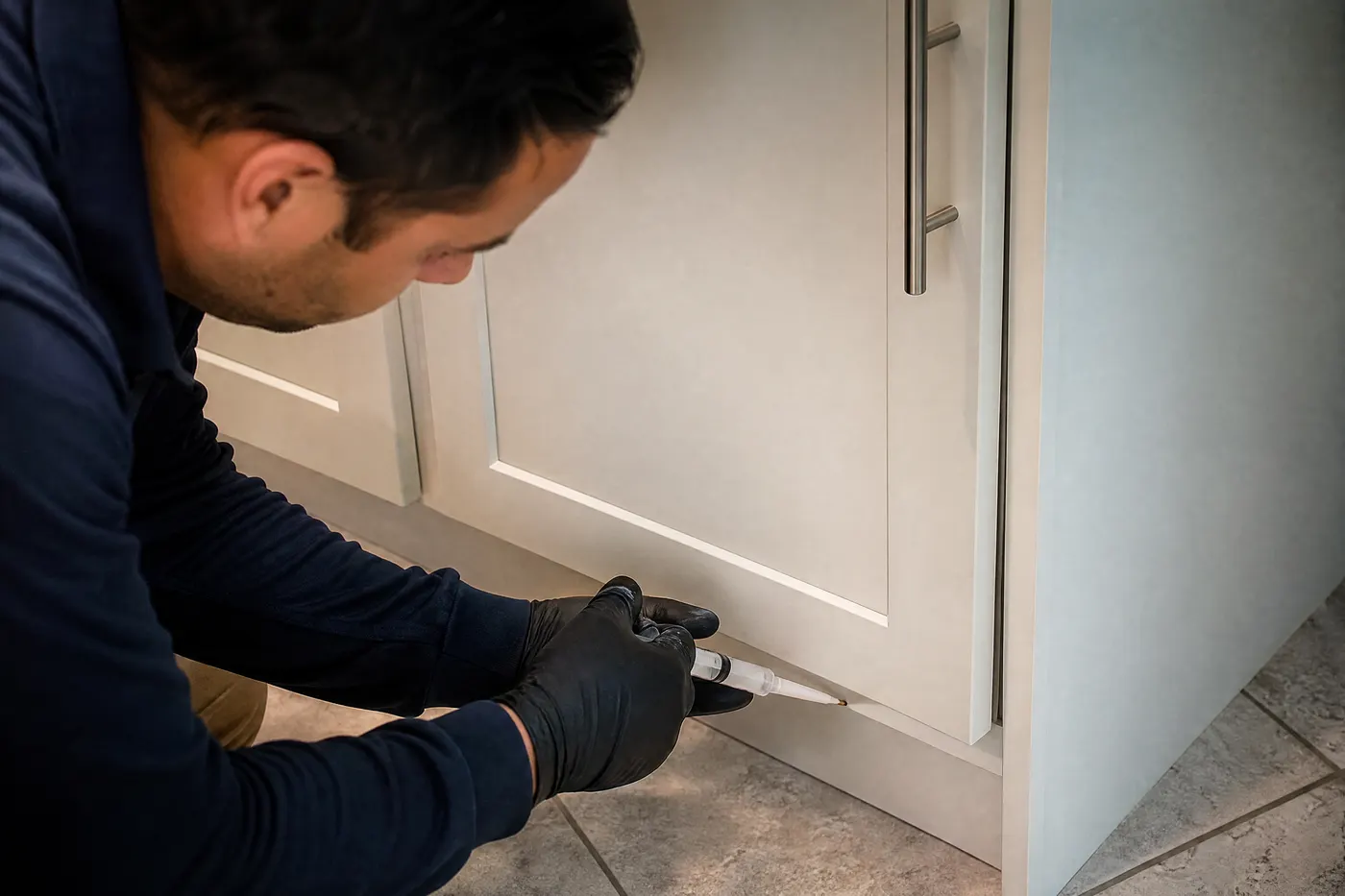
Indoor work may be directed to labeled cracks, crevices, cabinet voids, plumbing penetrations, wall gaps or other protected sites. The point is to target the route without turning open living surfaces into a treatment area.
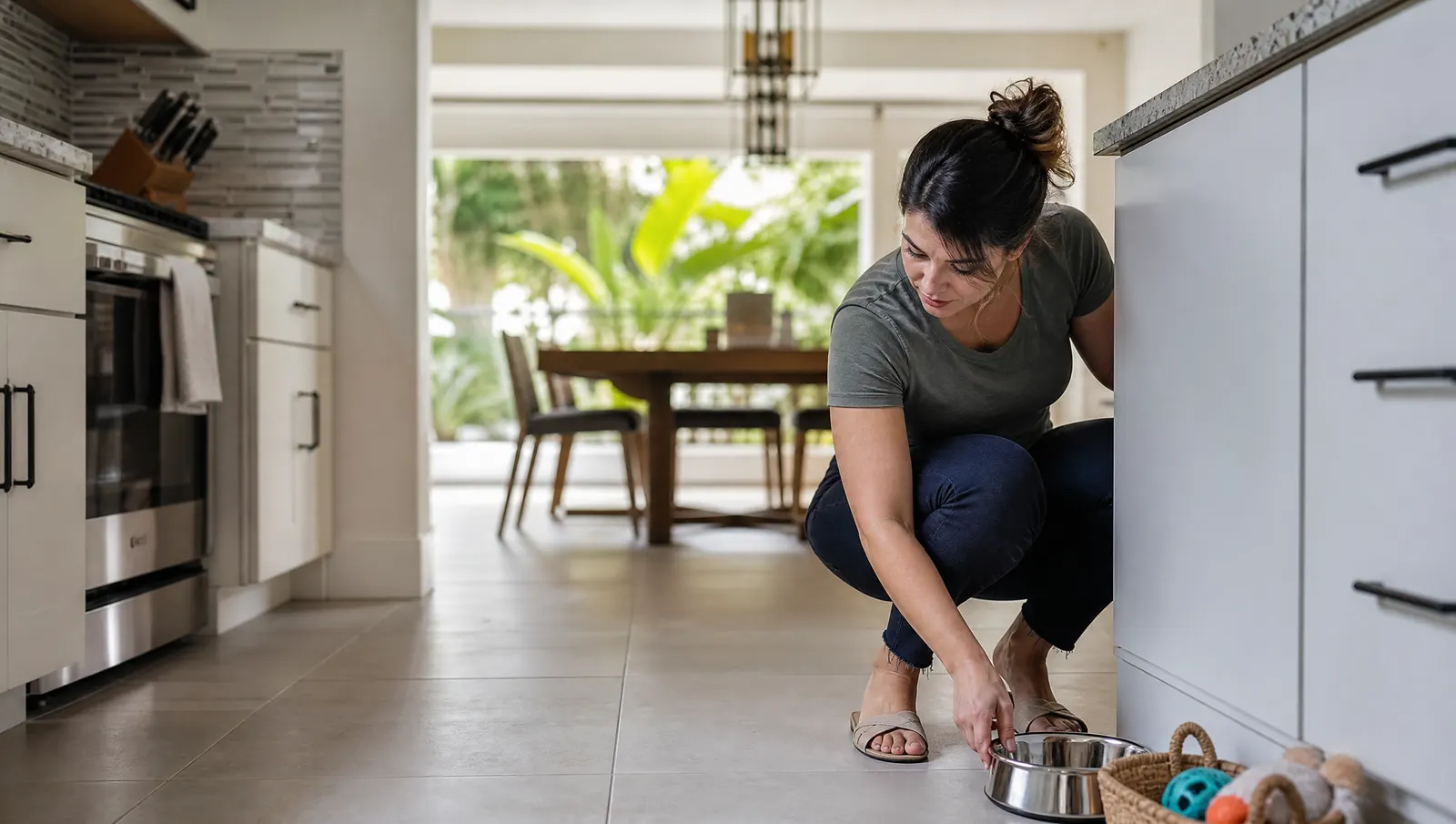
Before the visit, put away food, dishes, toys, pet bowls, bedding and anything that could be touched or contaminated according to the technician's instructions. Do not improvise by moving a product to a new location later.
The reentry question
There is no universal reentry time for every product or every application. Ask for the exact interval before the work starts. Keep children and animals out of treated areas until the label and technician directions say the space can be used again.
If a product is applied to a crack or void, the reentry question may differ from a treatment that reaches a broader surface. If a room needs ventilation or the application is still wet, that changes the instruction too. Get the answer in plain language and write it down.
What to remove before a visit
Use this short preparation list:
- Store or cover food and remove dishes from the planned work area.
- Move pet bowls, bedding, toys and litter accessories as instructed.
- Clear the cabinet, appliance edge or baseboard route being inspected.
- Tell the technician about aquariums, birds, reptiles or other animals with special enclosure and air requirements.
- Ask how long the area must remain closed and who can reopen it.
Preparation makes a targeted inspection easier and prevents last-minute assumptions about where a product can go.
Questions to ask the technician
Ask: What pest are we treating? Where will the application be placed? Which label directions control reentry? What should be removed? What should not be cleaned or sprayed afterward? What signs should cause a follow-up call?
The best plan is specific: a named pest, a mapped route, labeled placement, clear preparation and an exact reentry instruction. That protects the quality of the treatment decision without making a blanket claim that applies to every home, product or application.
Frequently asked questions
Ask which product category will be used, where it will be applied, what the label says about reentry, and how food, water bowls, bedding and toys should be handled. The answer should describe the actual application, not a general slogan.
Depending on the label and pest, applications may be directed to cracks, crevices, wall voids, cabinet gaps, plumbing penetrations or other specific sites. Open floors, food-contact surfaces and areas accessible to children or animals require separate instructions.
There is no universal interval. The product label and the technician’s application instructions control reentry. Ask for the exact time before work starts, and keep children and animals away until that direction has been met and treated areas are ready for occupancy.
Still dealing with it?
Cockroach Control across Broward County, FL, backed by a 30-day guarantee.
Book online in a few minutes and a Broward tech calls you back with your exact price (Mon–Fri 9am–5pm) — before any work starts.
Plan a pest inspectionKeep reading
Why You Keep Seeing Roaches After You Spray
Spray can kill the roaches you see without reaching the colony behind the wall. Learn why activity returns, what evidence matters, and what to change next.
Roach Poop vs Mouse Poop: 4 Ways to Tell the Difference
Compare droppings by size, ends, texture and location before deciding whether a kitchen clue points to roaches or a rodent.
Ghost Ants: The Tiny Kitchen Invader You Can't Kill With Spray
Ghost ants are the #1 kitchen ant in South Florida. What they look like, why spraying multiplies them, and what actually ends the colony.