
Cockroaches · Broward County, FL
Roach Poop vs Mouse Poop: 4 Ways to Tell the Difference
The short answer
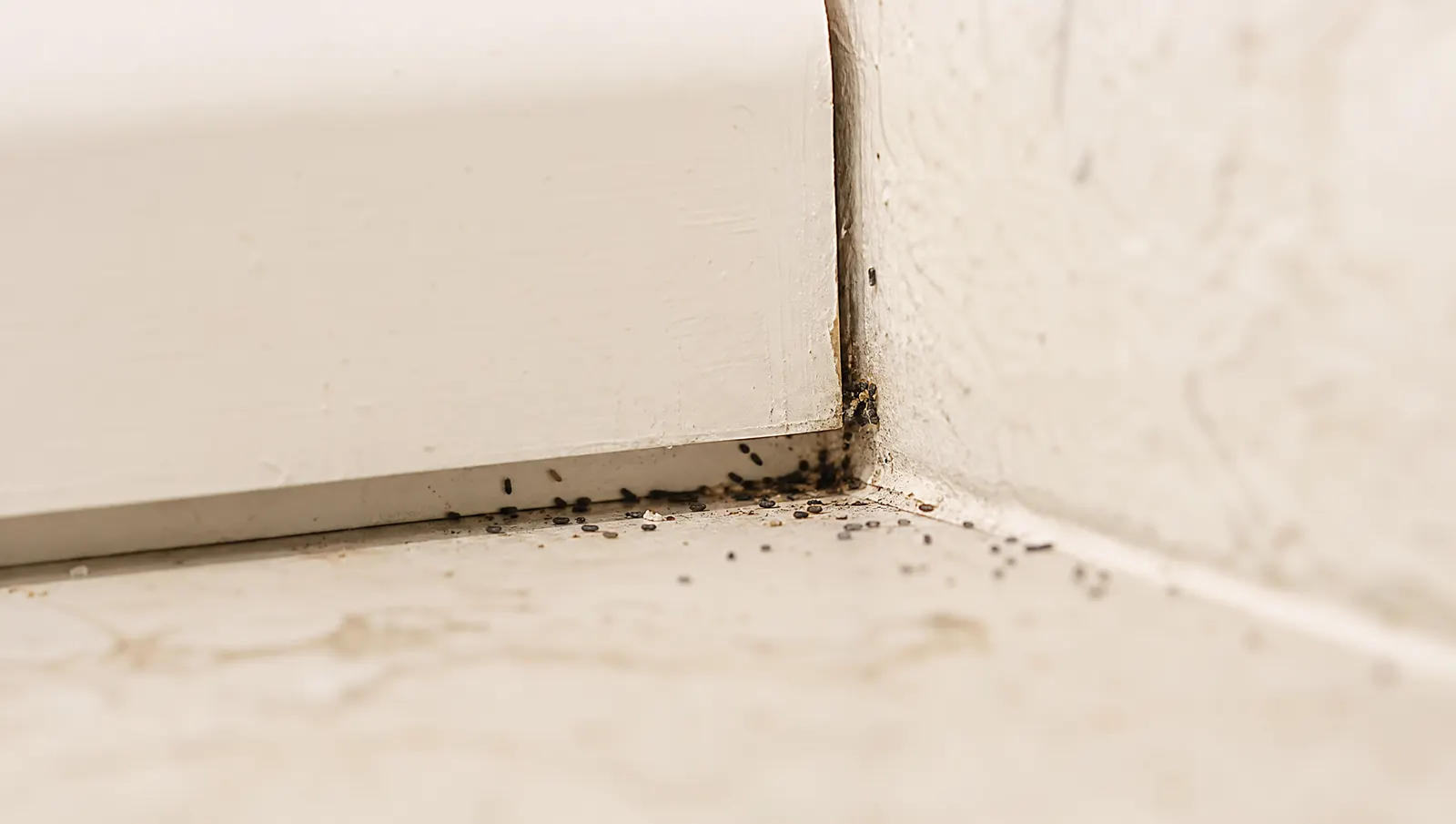
Roach droppings are often blunt and ridged, while mouse droppings are smoother, longer and tapered at the ends. German roaches leave pepper-like specks in protected kitchen corners; mice leave spindle-shaped pellets along runways. Location and repeated evidence matter, so photograph the area before cleaning it.
Droppings are frustrating because both roaches and mice leave dark material in quiet corners. The shape is not a perfect diagnosis, but four comparisons make the first decision much easier: size, the ends, surface texture and location.
The four differences
| Feature | Roach droppings | Mouse droppings |
|---|---|---|
| Size | Tiny specks or short blunt pellets | Usually longer spindle-shaped pellets |
| Ends | Blunt, sometimes ridged | Tapered or pointed |
| Texture | May show ridges or smear | Usually smooth and dry |
| Location | Hinges, drawers, appliance gaps | Wall routes, storage, attic runways |
1. Size and shape
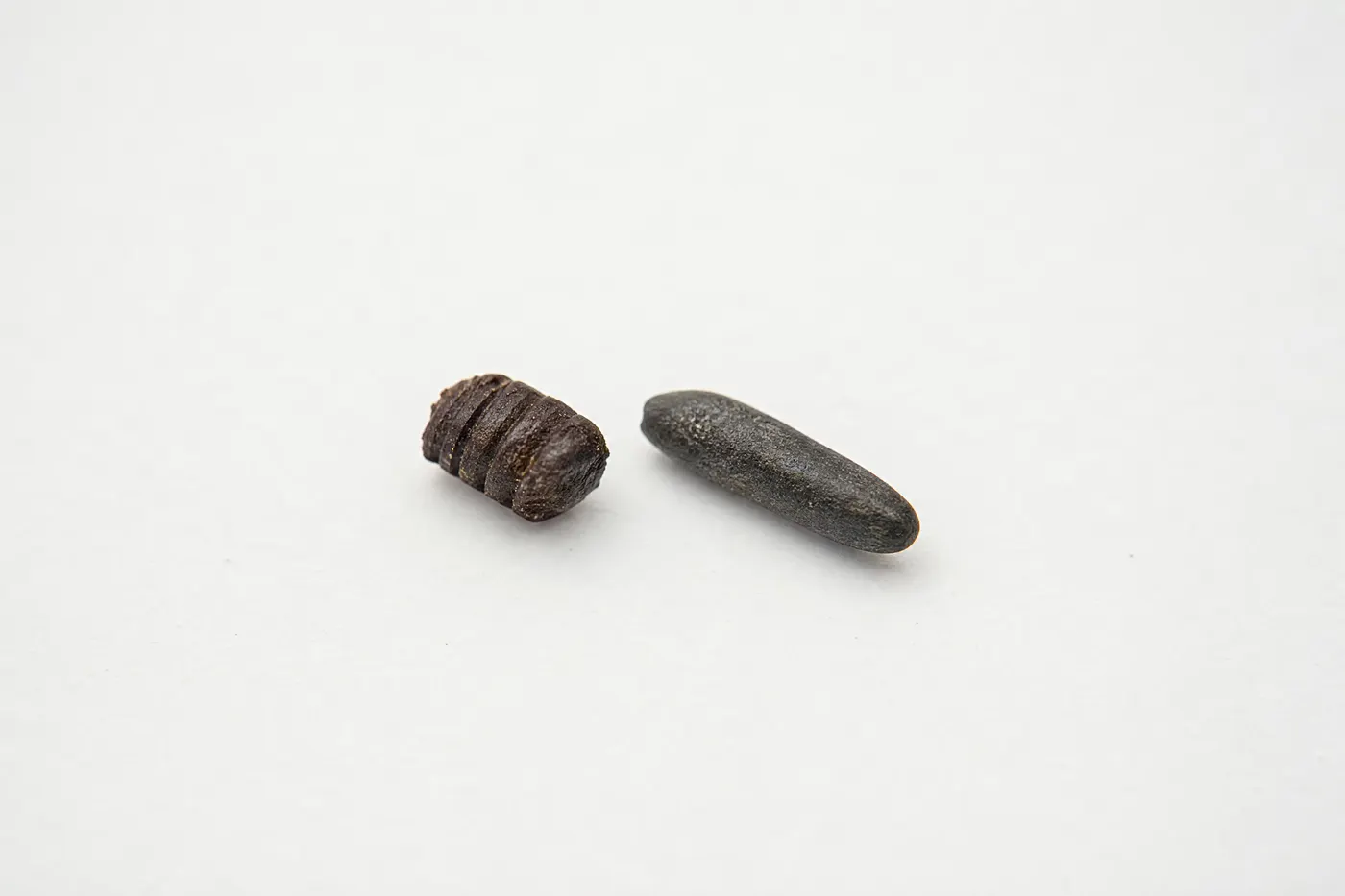
German cockroaches leave pepper-like specks that can be easy to mistake for crumbs. Large cockroaches leave short, dark pellets. Mouse droppings are more elongated and often look like a grain of rice with narrowed ends.
Size overlaps when the evidence is old or photographed from far away, so put a familiar object beside a fresh specimen only if that can be done hygienically.
2. Ends and texture
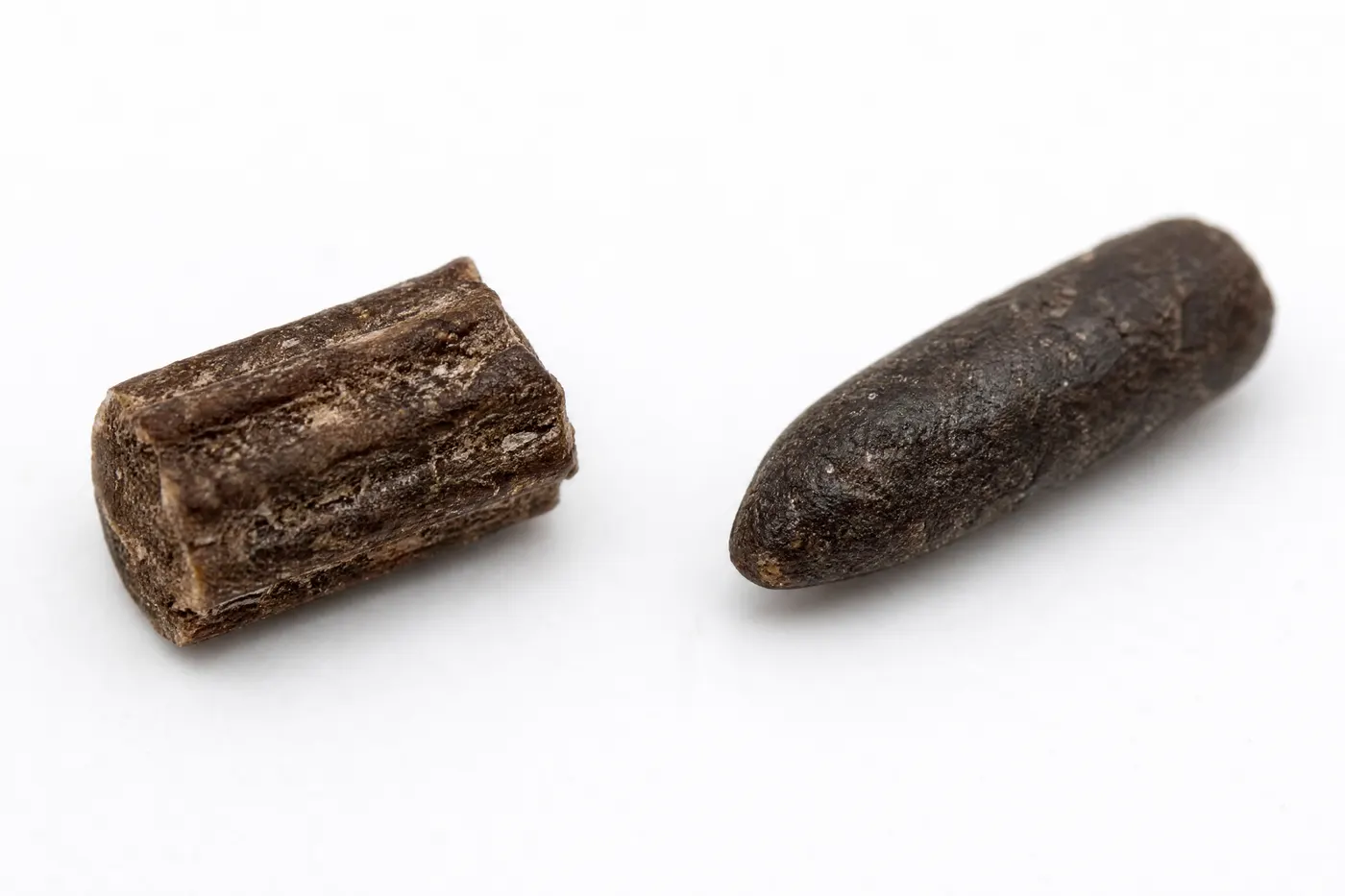
Cockroach pellets are often blunt at both ends and may have lengthwise ridges. Mouse pellets tend to be smooth and pointed at one or both ends. Moisture and age can change both surfaces, so compare several pieces rather than one.
3. Location
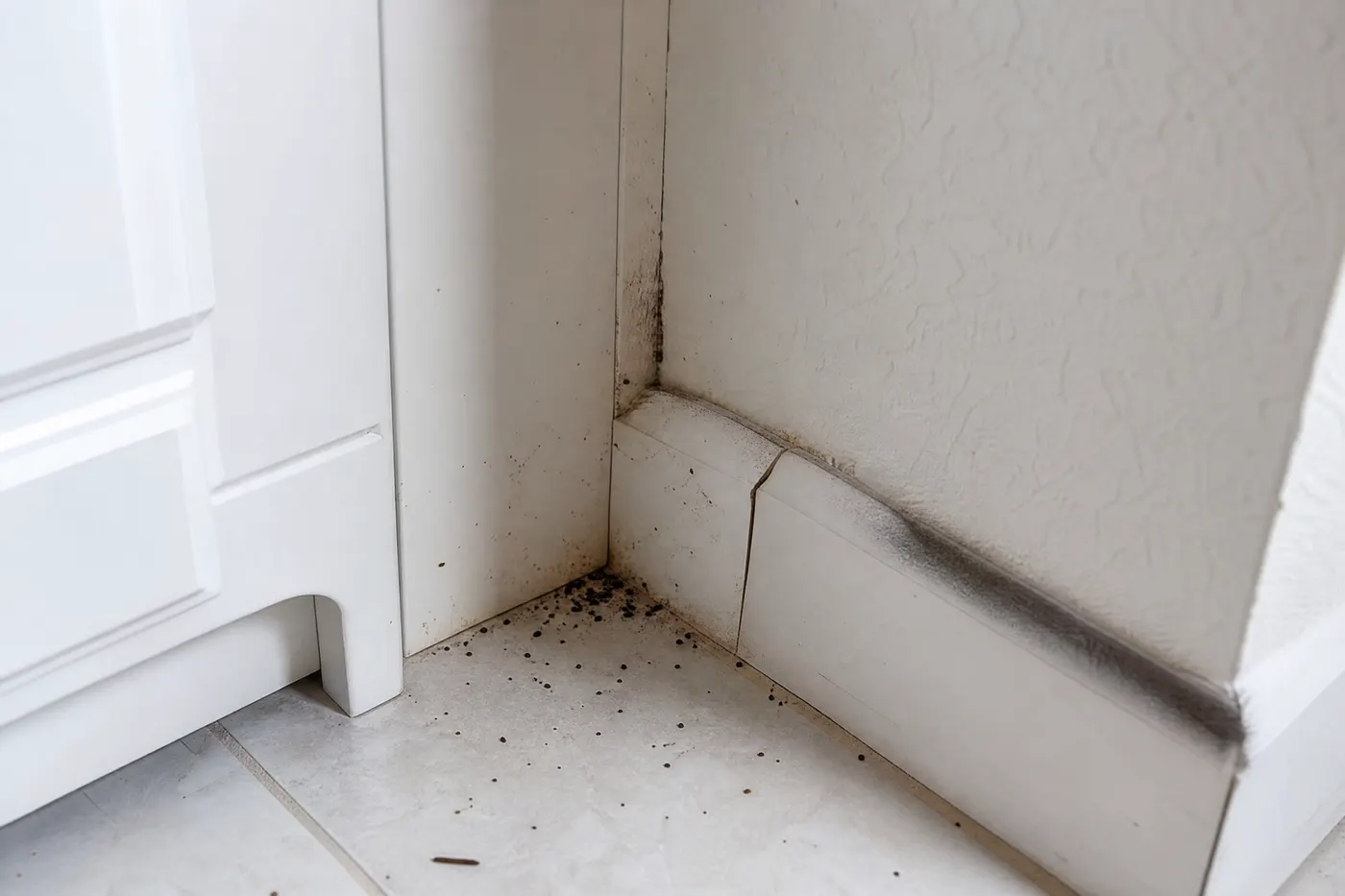
Pepper-like material in cabinet hinges, drawer corners and appliance seams points toward German roaches. A line of spindle-shaped pellets along a wall, joist, stored box or attic runway points toward a rodent. Location tells you how the animal travels and where to inspect next.
4. What else is nearby
Look for shed skins, egg cases and a musty oily odor with roach evidence. Look for gnawing, nesting material, rub marks, tracks or attic runways with rodent evidence. No single clue should be separated from the room and route around it.
Cleaning and documenting
Photograph the material before cleaning, record the room and inspect nearby gaps. Then clean using appropriate hygiene practices; do not dry-sweep unknown droppings into the air. If evidence keeps returning, the source is active even when the surface looks clean. A technician can use the shape, route and other signs to decide whether the next inspection is for cockroaches or rodents.
Frequently asked questions
Look at the ends and surface. Roach pellets are usually blunt and may show ridges; mouse pellets are smoother and taper toward the ends. Tiny pepper-like specks in cabinet hinges point toward German roaches rather than mice.
Mouse droppings often follow travel routes near walls, behind stored items, under sinks, in cabinets and around food storage. A line of larger spindle-shaped pellets in an attic or along a joist is a different pattern from pepper-like kitchen specks.
Photograph the location and size first. Then clean according to public-health guidance and avoid sweeping dry material into the air. Keeping a record of where the evidence was found helps separate a roach route from a rodent runway.
Still dealing with it?
Cockroach Control across Broward County, FL, backed by a 30-day guarantee.
Book online in a few minutes and a Broward tech calls you back with your exact price (Mon–Fri 9am–5pm) — before any work starts.
Find the source of pest evidenceKeep reading
Cockroach Droppings: What They Look Like and What They Mean
What roach droppings look like by species, how to tell them from mouse droppings, where to check first, and what the amount tells you about the infestation.
7 Signs of a Roach Infestation You’re Probably Ignoring
Droppings, egg cases, odor, nymphs and daytime activity can reveal a roach colony before the sightings feel dramatic.
German Roaches: Why the Small Ones Are the Serious Problem
Small tan roaches in a kitchen are often German cockroaches. Learn the visual signs, where they hide, why daytime sightings matter, and what not to spray.