
Cockroaches · Broward County, FL
German Roaches: Why the Small Ones Are the Serious Problem
The short answer
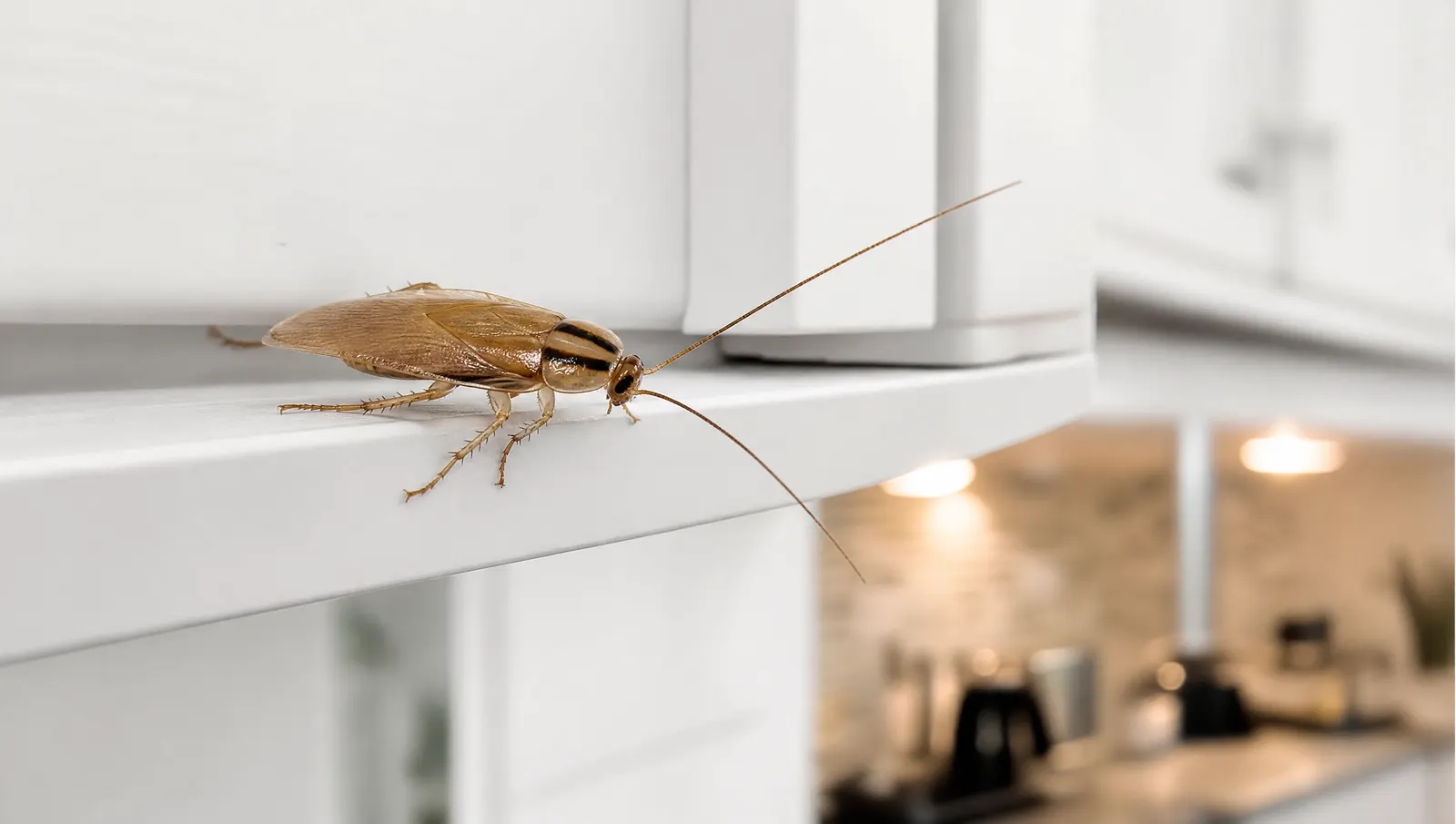
German cockroaches are small, light-brown roaches with two dark parallel lines on the shield behind the head. Finding small roaches in a kitchen during the day usually means an established indoor colony, not a stray visitor. They hide in warm appliances, cabinets and wall voids, so surface spray rarely reaches the source.
The roach is small, light brown and gone before you can reach for a towel. Then you see another one beside the toaster, and a third one under the sink in the middle of the afternoon. That is the pattern that makes German cockroaches more concerning than a single large roach that wandered in from outside.
The identification is not difficult when the insect stays still: look for two dark parallel lines on the shield directly behind the head. The more important question is what the size, location and timing say about the colony around it.
What a German cockroach looks like
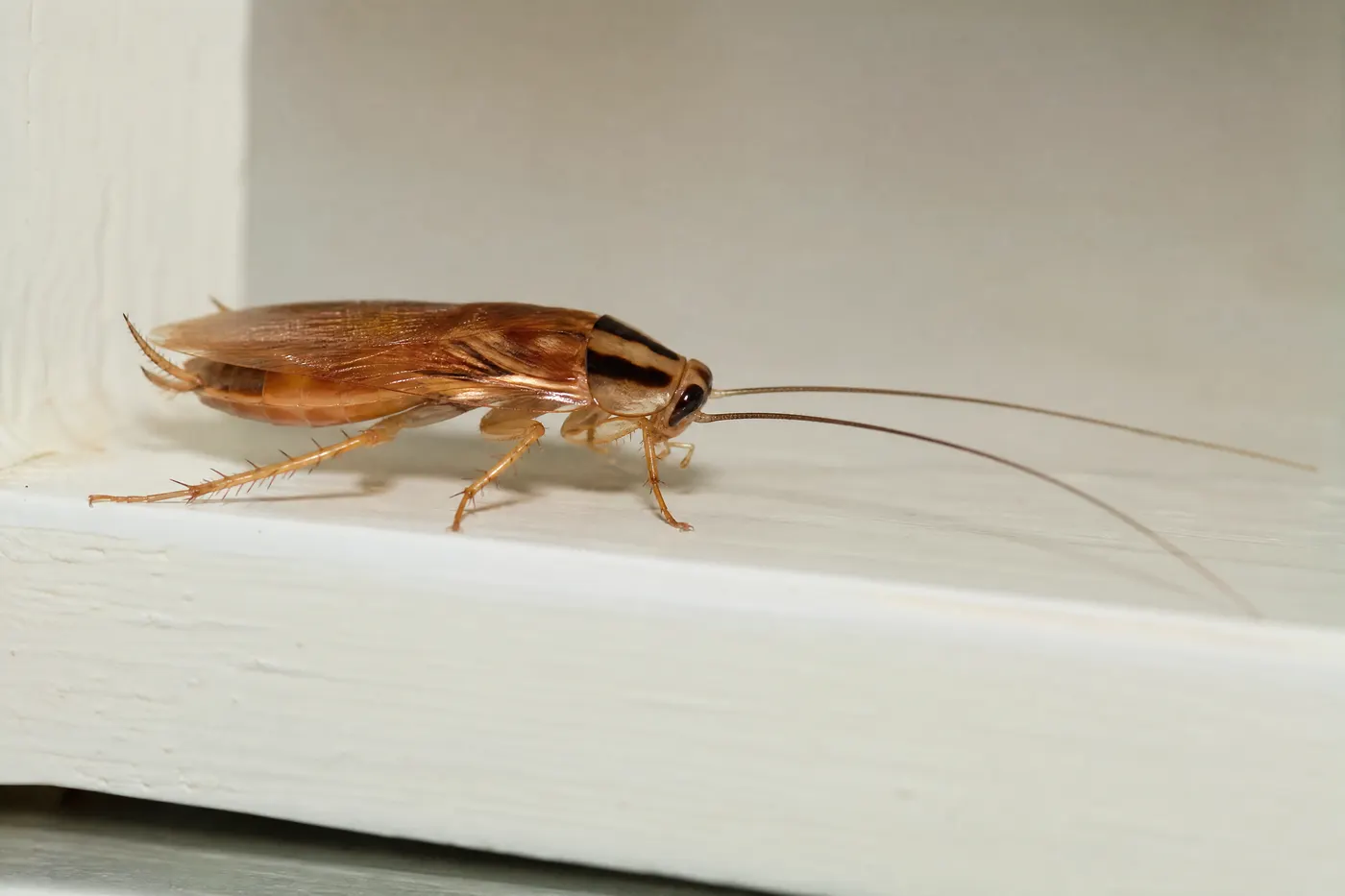
An adult German cockroach is usually about half an inch long, light tan to golden brown and relatively narrow. The key field mark is two dark parallel bars on the shield behind the head. They do not continue as stripes down the wings or abdomen.
Young roaches are harder to identify because they are smaller and do not have fully developed wings. A nymph may look like a dark speck with a pale stripe, so a blurry photograph is not always enough. Save a specimen or take several photos from above if you can do so without disturbing the hiding place.
Why small roaches are more concerning
Size changes the question. A large reddish-brown roach near a patio or garage may be an outdoor visitor. Small tan roaches in a kitchen, especially several in a short period, are more consistent with an indoor population living close to food, water and warmth.
That does not mean every small roach proves a large infestation. It means the cost of ignoring the pattern is higher. A colony can stay out of sight in an appliance or wall void while a few foragers appear at the edge of the room.
Watch for these combinations:
- Small roaches in more than one room.
- Nymphs mixed with adults.
- Activity during daylight.
- Droppings in cabinet hinges, drawer corners or appliance seams.
- Repeated sightings after a surface spray.
The more of these appear together, the less useful it is to treat each sighting as an isolated insect.
Where the colony hides
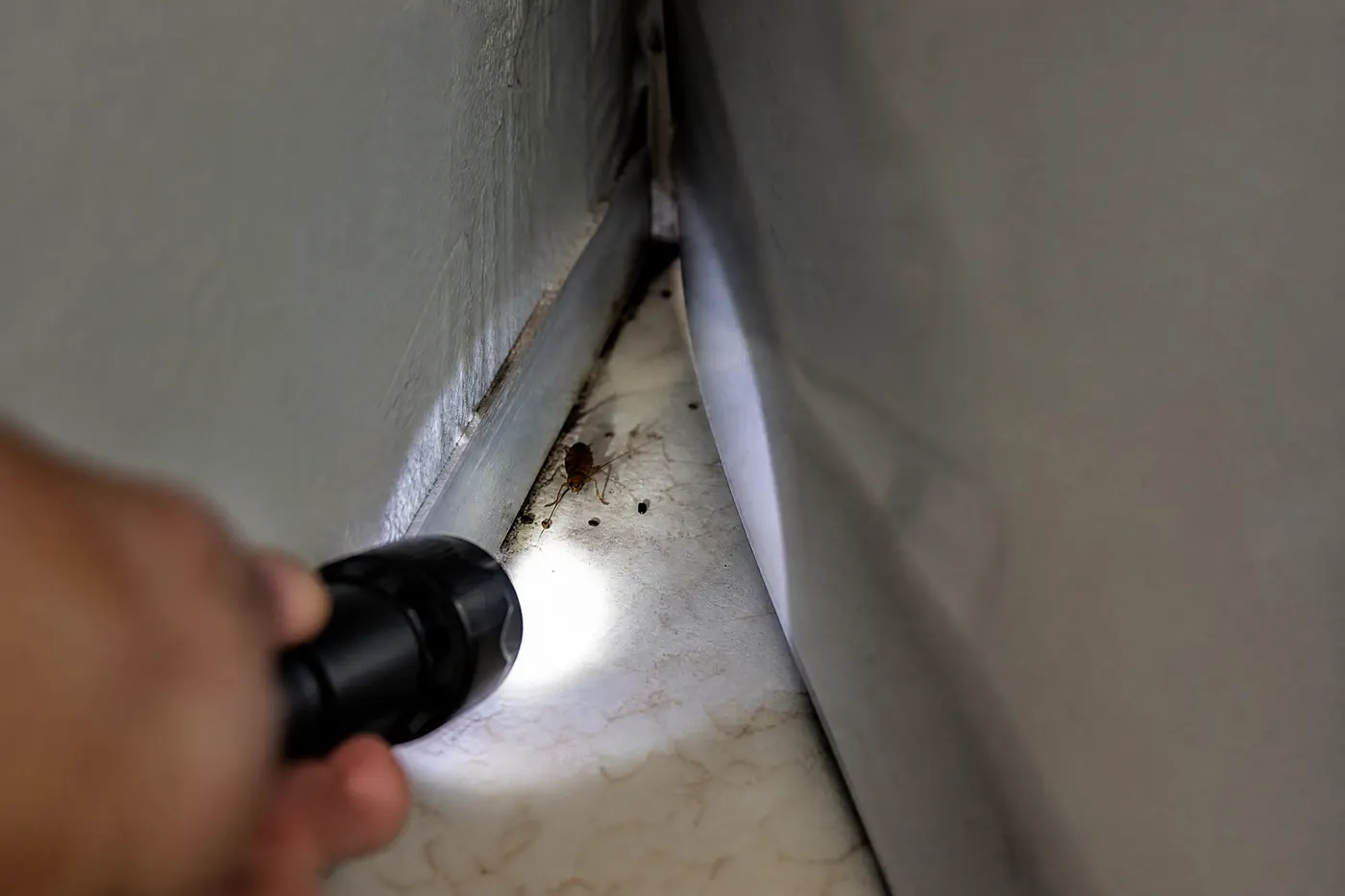
German roaches prefer warm, protected areas near water and food. Common places include the motor space behind a refrigerator, the underside of a dishwasher, cabinet hinge gaps, the back of a drawer, the void beside a stove and openings around plumbing.
They can also move through wall voids and utility penetrations. This is why a cleaning pass or a spray along the open floor can leave the real source alone. Look at seams and edges rather than only at the center of the room.
What daytime sightings mean
Roaches usually avoid open activity when the home is bright and occupied. A daytime sighting is not a species test by itself, but repeated daytime activity can mean the hiding places are crowded, the colony has been disturbed or the population is large enough that competition is pushing individuals out.
Record the time instead of immediately treating the spot. Note whether the roach came from under an appliance, along a wall or out of a cabinet. That context helps separate a recurring indoor route from a single insect carried in with something else.
Why spraying is the wrong first move
Repellent spray can kill an exposed roach while driving others away from the treated edge. The visible activity may shift into another cabinet, wall void or room. That makes the home feel quieter but removes the trail that would have shown where the colony is concentrated.
Fogging is an even broader version of the same mistake. It does not place a species-specific treatment into the protected gaps where German roaches spend their time, and it can spread residue through areas that were not part of the problem.
Do not mix several products while trying to force a quick result. Identify the species, map the activity and choose a plan that reaches the source. If an earlier spray has already been used, tell the technician what it was and where it was applied.
What to record before help arrives
Take a photo of the insect beside a familiar object for scale. Write down the room, time, approximate size and direction of travel. Check nearby hinges, drawer corners, appliance edges and plumbing openings for droppings, but leave the evidence in place if possible.
The goal is not to make the kitchen look perfect before a visit. The goal is to show the pattern that the colony is creating. HONEX handles cockroach service across Broward County. Book online and a technician calls you back with the exact price during business hours (Mon–Fri 9am–5pm), before any work starts.
Frequently asked questions
Look for a small, light-tan roach about half an inch long with two dark parallel lines on the shield directly behind the head. The body behind that shield is usually uniform tan. A clear photo or specimen is more reliable than a guess from a fast-moving insect.
They may be, especially if they are light tan, stay near cabinets or appliances and appear during the day. Small roaches can also be young roaches of another species, so the markings, location and behavior should be considered together.
Large outdoor roaches often enter as individual visitors. German cockroaches are adapted to indoor kitchens and reproduce in protected areas near food, water and heat. A small roach in that setting can indicate a colony that is already established even when the home is clean.
They have wings, but they rarely use them to fly. Their more important behavior is moving quickly through cabinet seams, appliance spaces and wall voids. That is why a spray applied to an open floor can miss the places where the colony is actually living.
Record the room, time and size, then check nearby cabinet hinges, appliance edges and plumbing openings for droppings or additional activity. Avoid fogging or adding repellent spray before an inspection; it can scatter the colony and make targeted treatment harder.
Still dealing with it?
Cockroach Control across Broward County, FL, backed by a 30-day guarantee.
Book online in a few minutes and a Broward tech calls you back with your exact price (Mon–Fri 9am–5pm) — before any work starts.
Get rid of cockroaches todayKeep reading
Cockroach Droppings: What They Look Like and What They Mean
What roach droppings look like by species, how to tell them from mouse droppings, where to check first, and what the amount tells you about the infestation.
Palmetto Bug vs Cockroach: What South Florida Homeowners Are Actually Seeing
A palmetto bug is a cockroach — here's which one, how to tell it from the kitchen roach, whether they fly, and what each one means for your home.
Why You Keep Seeing Roaches After You Spray
Spray can kill the roaches you see without reaching the colony behind the wall. Learn why activity returns, what evidence matters, and what to change next.