
Ants · Broward County, FL
5 Reasons Ants Keep Coming Back to Your Bathroom
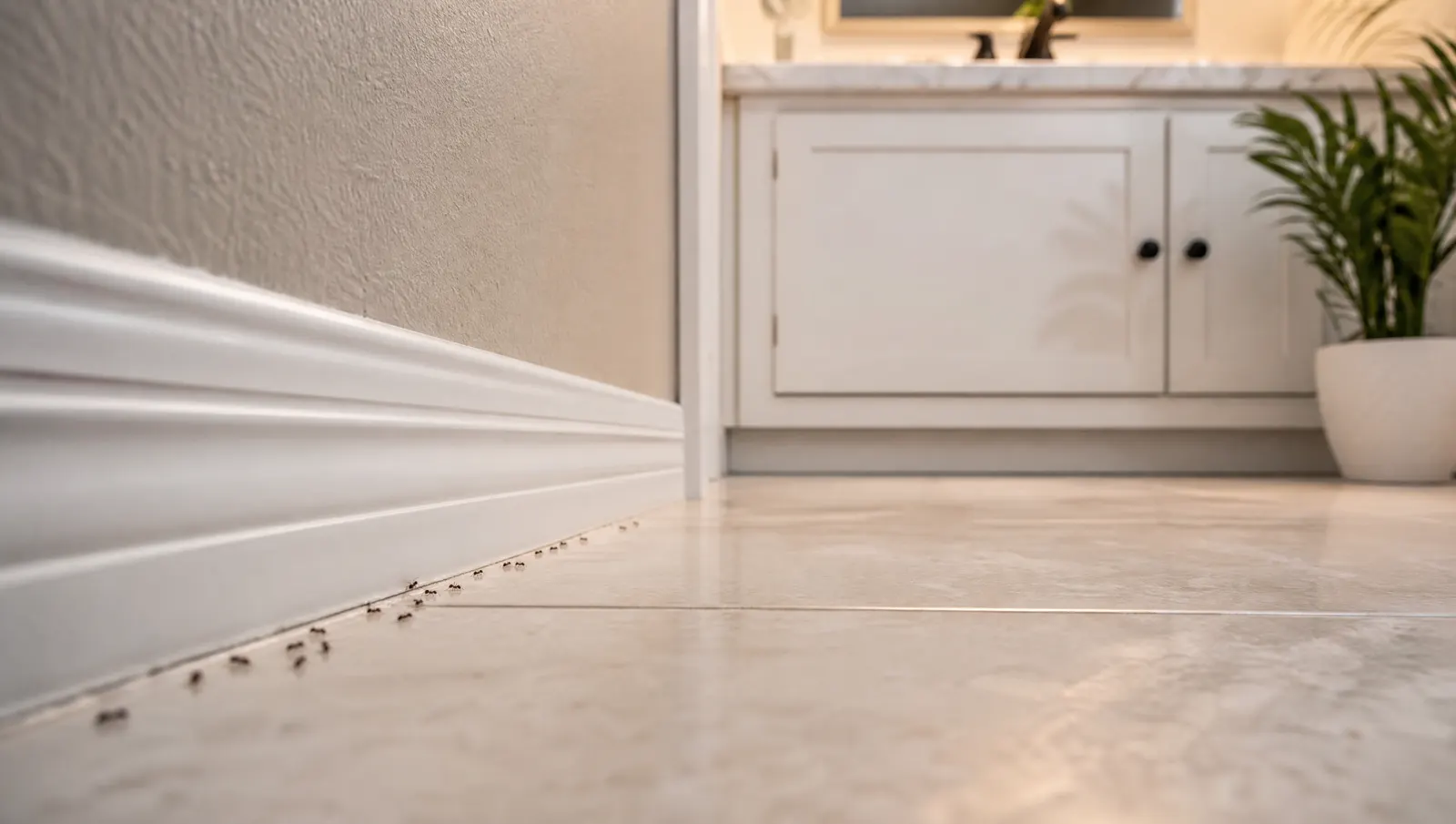
The short answer
Ants keep returning to Florida bathrooms because they find water, condensation, plumbing gaps, damp trim or a protected wall route. The trail may lead to a nest outside or inside the wall. Drying the area helps, but species identification and entry-point work determine whether the problem ends.
Bathroom ants are usually following a resource, not choosing the room at random. Water, condensation, damp trim and plumbing routes make bathrooms useful to small household ants. Five checks can reveal why the trail keeps returning after the floor and sink have been cleaned.
1. Plumbing and drain gaps
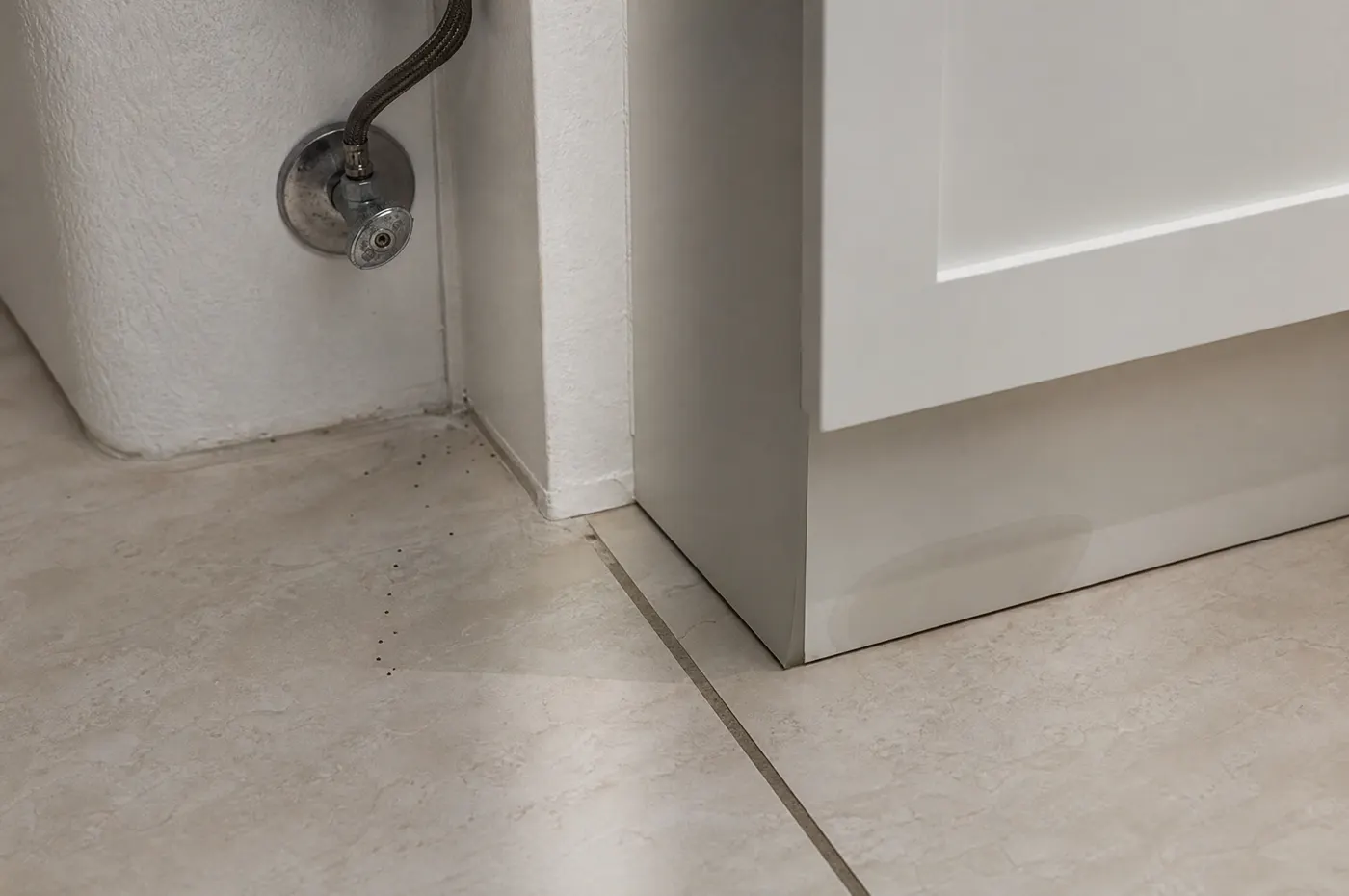
Inspect around sink pipes, the toilet supply, tub access panels and wall penetrations. A narrow gap provides both a route and a protected space. Repair leaks and keep the area dry, but record where workers enter before sealing it.
2. Condensation
Cold pipes, air-conditioning lines and poorly ventilated surfaces can create enough moisture to keep foragers active. Look behind cabinets and near the base of walls, not only at visible puddles. A dry surface today does not rule out a recurring condensation pattern.
3. Damp trim or drywall
Soft trim, stained drywall or a musty cabinet can signal a leak and provide protected nesting space. Carpenter ants deserve special attention around damp wood. Tiny household ants may use the same area as a route without nesting in the wood itself.
4 and 5. Plants and wall routes
Potted plants, saucers, mulch outside a bathroom wall and shared utility chases can all connect the trail to another source. If activity appears in the kitchen and bathroom, map the rooms together before treating either one as isolated.
How to follow a bathroom trail
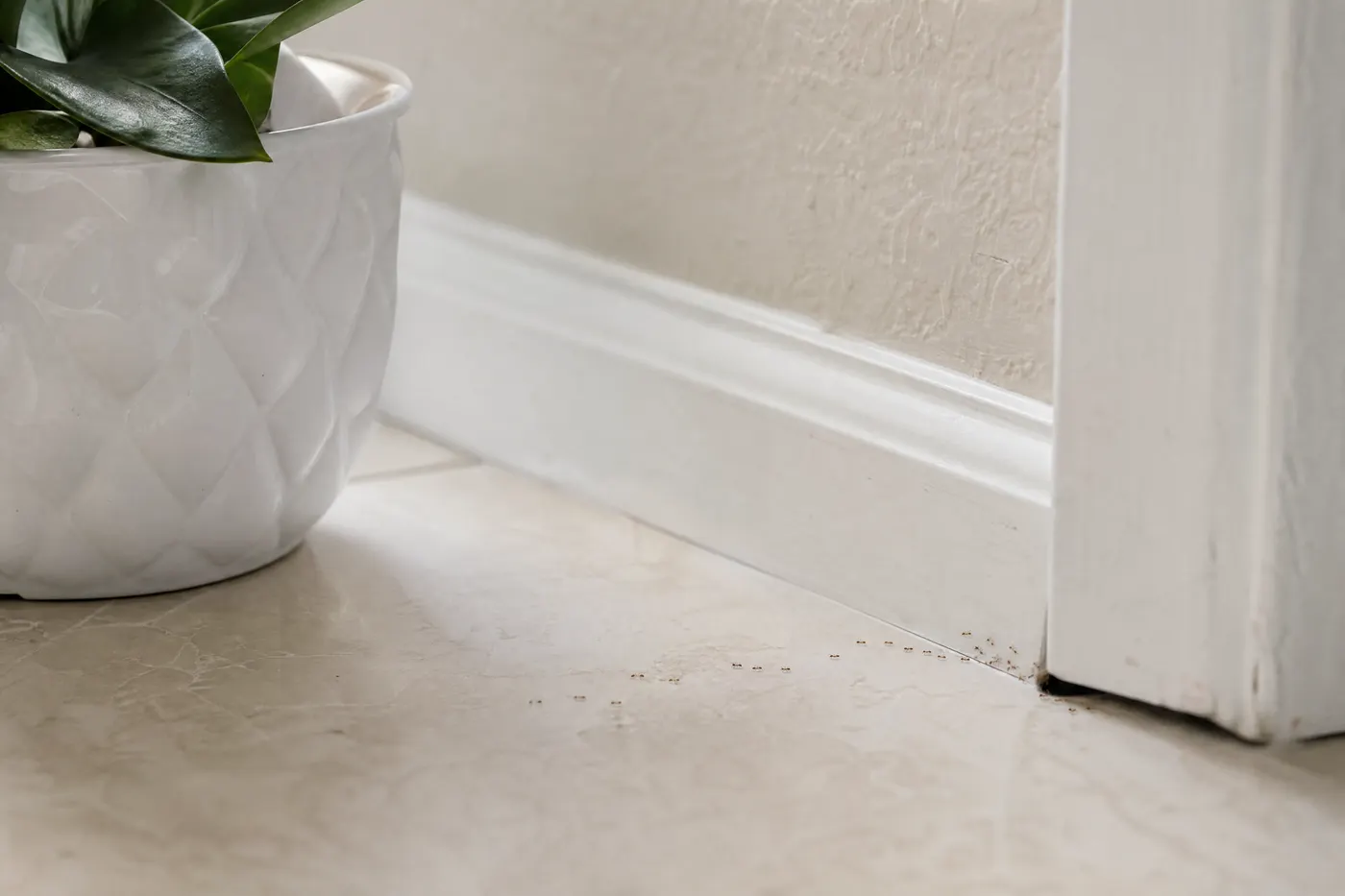
Photograph a worker, note the time and trace the line in both directions. Dry standing water, remove accessible residue and avoid repeated repellent spray until the species is known. If the trail branches or returns after rain, share that history during an inspection. The objective is to find the nest options, not merely to make the bathroom look empty for a day.
Before sealing a gap, make sure the moisture issue has been investigated. A sealed opening beside a leaking pipe can move the route to the next unsealed space and hide useful evidence. Note whether the ants are two-toned, whether they appear after showers and whether the same trail is visible in the kitchen. Those observations give UF/IFAS-style species identification more context than a generic bathroom pest label.
Frequently asked questions
Bathrooms provide water and protected routes. Ants may use plumbing penetrations, condensation, damp trim, a plant pot or a wall void. The visible trail is a route to a resource, not proof that the nest is in the bathroom.
Moisture can make a wall, trim or cabinet more useful to ants and can also attract foragers. Check for leaks and condensation, but do not assume the leak is the whole cause if the trail continues outside.
Dry standing water, repair leaks and document where the trail begins and ends. Avoid chasing a recurring trail with repellent spray until the ant is identified; some small species can split into new nest sites when disturbed.
Still dealing with it?
Ant Control across Broward County, FL, backed by a 30-day guarantee.
Book online in a few minutes and a Broward tech calls you back with your exact price (Mon–Fri 9am–5pm) — before any work starts.
Find the bathroom ant sourceKeep reading
Ants All Over Your Kitchen Counter? Here’s Where They’re Coming From
Trace kitchen ant trails to plumbing, windows, cabinets, appliances and potted plants, then separate food pressure from the actual nest.
Ghost Ants: The Tiny Kitchen Invader You Can't Kill With Spray
Ghost ants are the #1 kitchen ant in South Florida. What they look like, why spraying multiplies them, and what actually ends the colony.
Why Ants Keep Coming Back (Even After You Clean Everything)
Cleaning can remove food while the pheromone route, entry gap and nest remain. Learn how to read recurring ant trails in a Florida home.