
Ants · Broward County, FL
Ants in Your Broward Apartment: Who’s Responsible and What Works
The short answer
Responsibility for ants in a Broward apartment depends on the lease, building rules, source and whether the issue is inside the unit or a common element. Notify management in writing, document trails and moisture, and ask for a coordinated inspection when ants cross plumbing, walls or neighboring units.
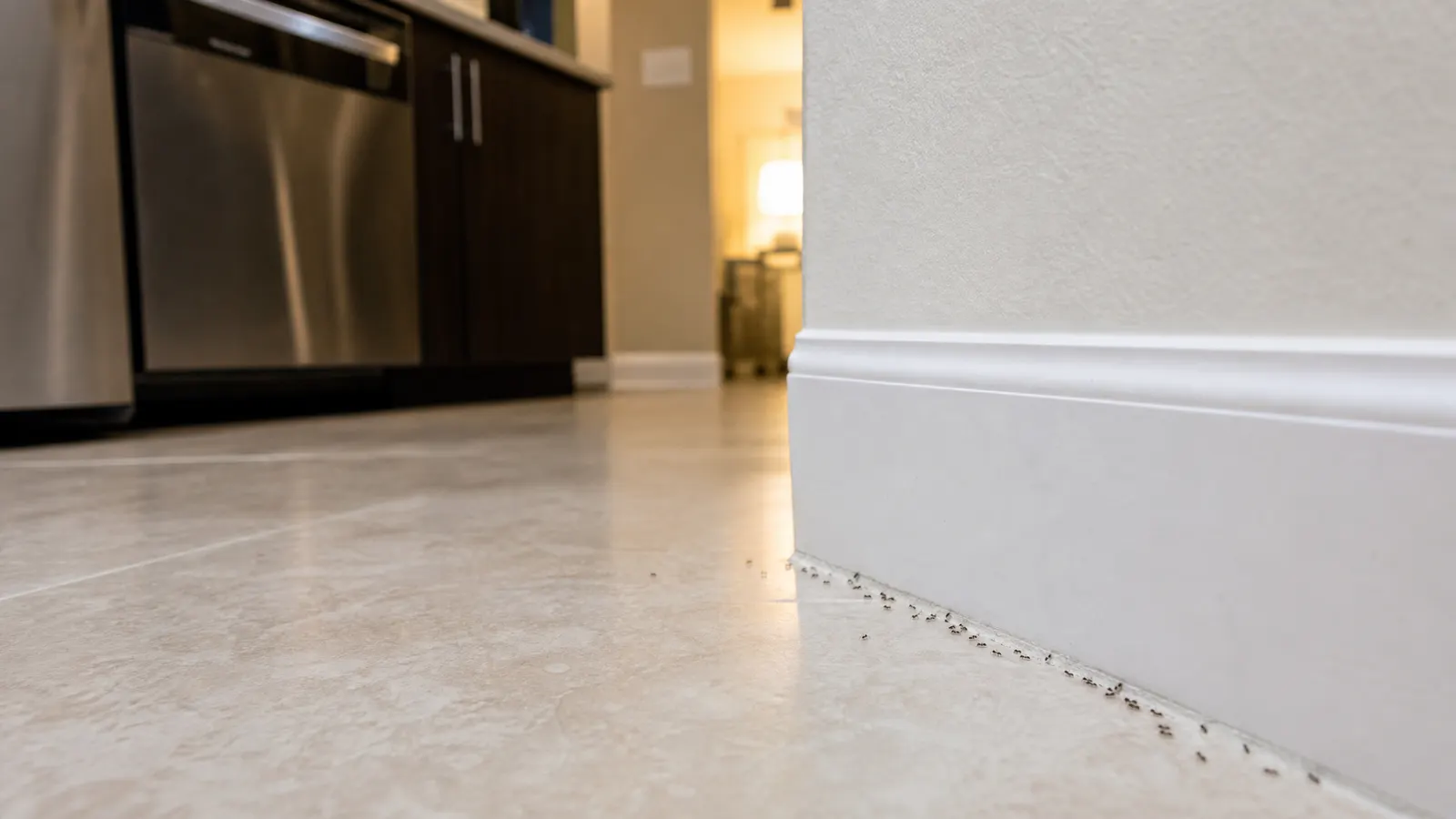
An ant trail in an apartment is not always a problem contained by one kitchen. Small ants can cross utility openings, plumbing chases, shared walls and door gaps. Responsibility depends on the lease and building rules, while the useful technical first step is to identify the ant and map the route.
Why apartment ant problems repeat
A trail may begin at a sink, bathroom, window or plant and disappear into a wall. If the nest or moisture is in a common area or neighboring unit, cleaning one counter only removes the visible evidence. New trails can then appear in a different room without being a completely new event.
Who may be responsible
There is no universal answer for every Florida rental or condominium. The lease, association documents, maintenance duties, source and location can change who handles the work. Notify management in writing and keep a dated record before assuming that a tenant, owner or association must pay.
What to document
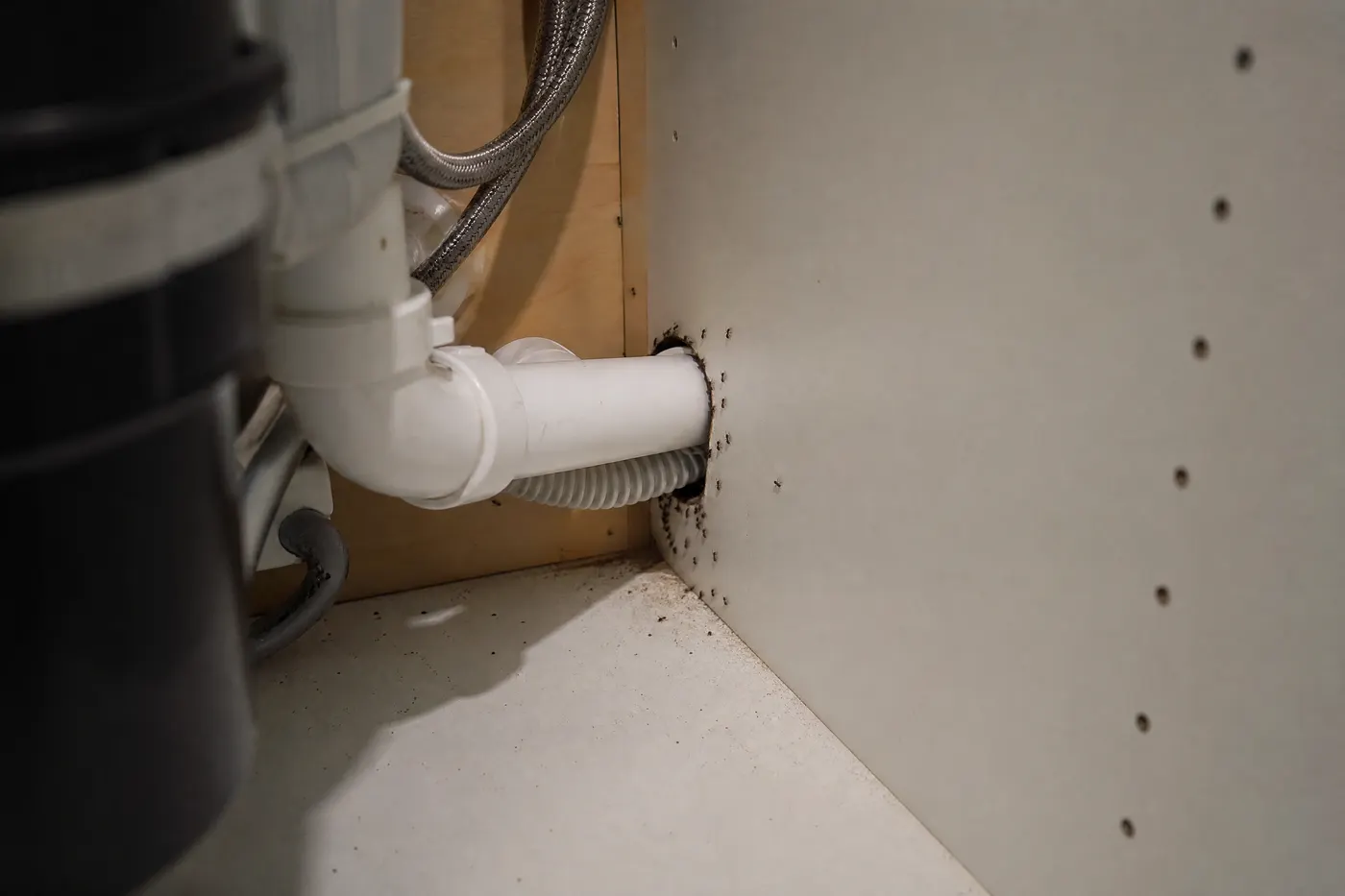
Record the date, room, time, weather, approximate size, body color and direction of travel. Photograph the opening where ants disappear, moisture, plants, plumbing and any previous treatment. Note whether activity occurs in another unit, hallway or common area if management shares that information.
What to ask management
Ask whether the building has seen similar activity, whether a common-area inspection is planned, which contractor is authorized and whether neighboring units will be checked. Share the map rather than only saying that ants are everywhere. A route can tell the property manager which wall or service chase needs attention.
When to book a unit inspection
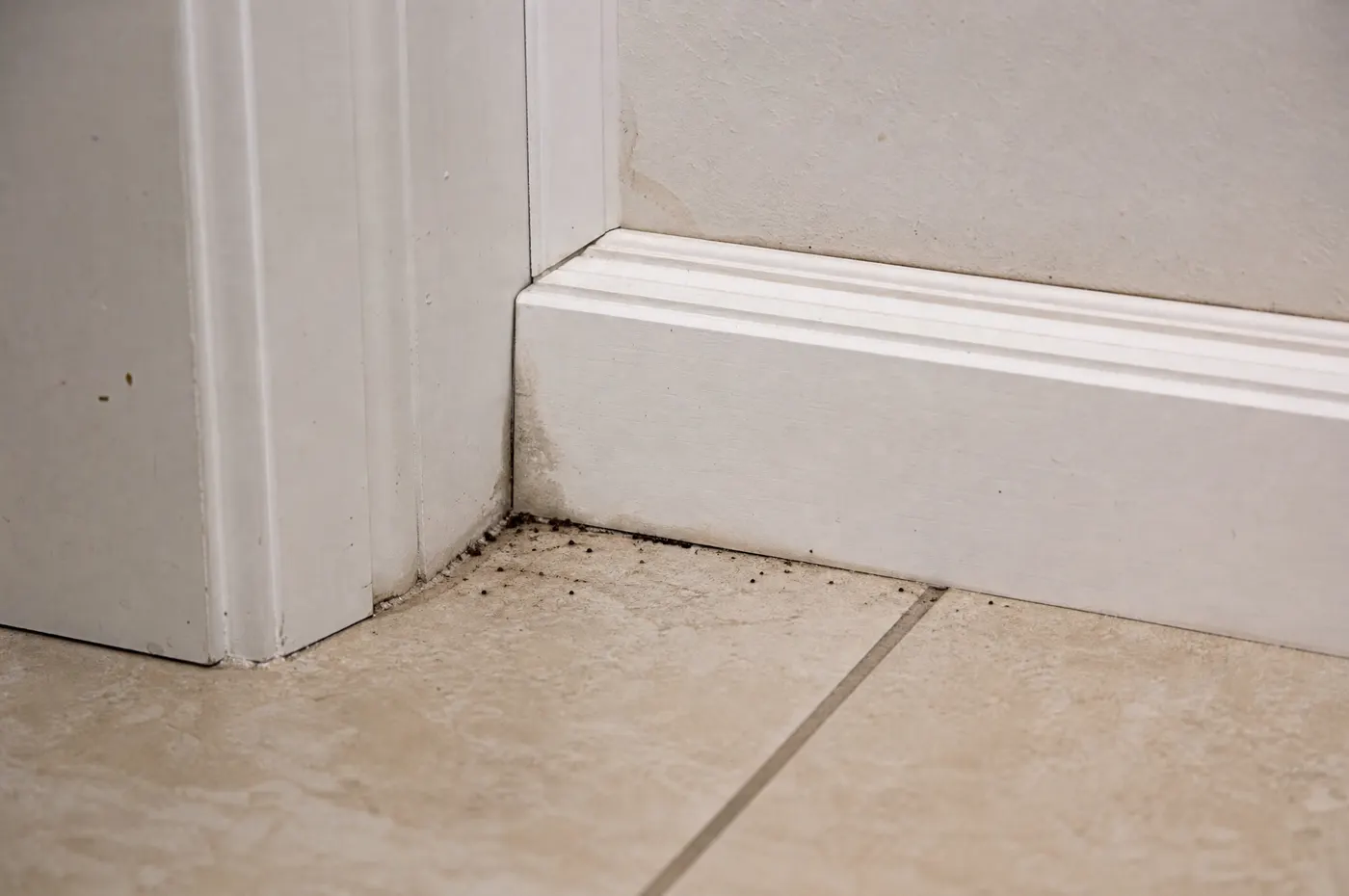
Book an inspection when the trail repeats, branches after spray, follows wet wood, moves through several rooms or continues after management treats a common area. The visit should identify the ant, trace routes and separate a unit source from a building source. Treatment works better when the technical and lease questions are handled together.
The Florida lease or association documents answer the responsibility question; an inspection answers the biological one. Keep those questions separate. A manager can coordinate access to a shared chase, while a technician can explain whether the workers are ghost ants, carpenter ants or another species. That combination prevents a resident from paying for a route that originates outside the unit.
Frequently asked questions
There is no universal answer. The lease, building rules, source and location of the nest can change responsibility. Notify the landlord or manager, keep records and ask whether the issue involves a common wall, plumbing chase or another unit.
Yes. Small ants can use wall voids, plumbing routes, utility openings and door gaps. That possibility does not prove where they began, so a coordinated inspection and a dated record are more useful than assigning blame from one trail.
It should identify the ant, trace active routes, check moisture and penetrations, inspect shared-wall and cabinet areas, and separate an exterior source from a colony inside the building. Treatment should be coordinated with any required property procedures.
Still dealing with it?
Ant Control across Broward County, FL, backed by a 30-day guarantee.
Book online in a few minutes and a Broward tech calls you back with your exact price (Mon–Fri 9am–5pm) — before any work starts.
Inspect apartment ant activityKeep reading
Roaches in Your Broward Condo: Why They Come Back and Who Pays
Roaches in a condo can move through shared walls and plumbing. Learn what evidence to document, how responsibility usually works, and when to call for inspection.
Ghost Ants: The Tiny Kitchen Invader You Can't Kill With Spray
Ghost ants are the #1 kitchen ant in South Florida. What they look like, why spraying multiplies them, and what actually ends the colony.
Ants All Over Your Kitchen Counter? Here’s Where They’re Coming From
Trace kitchen ant trails to plumbing, windows, cabinets, appliances and potted plants, then separate food pressure from the actual nest.