
Rodents · Broward County, FL
Why Your Rat Traps Aren't Catching Anything in a Florida Attic
The short answer
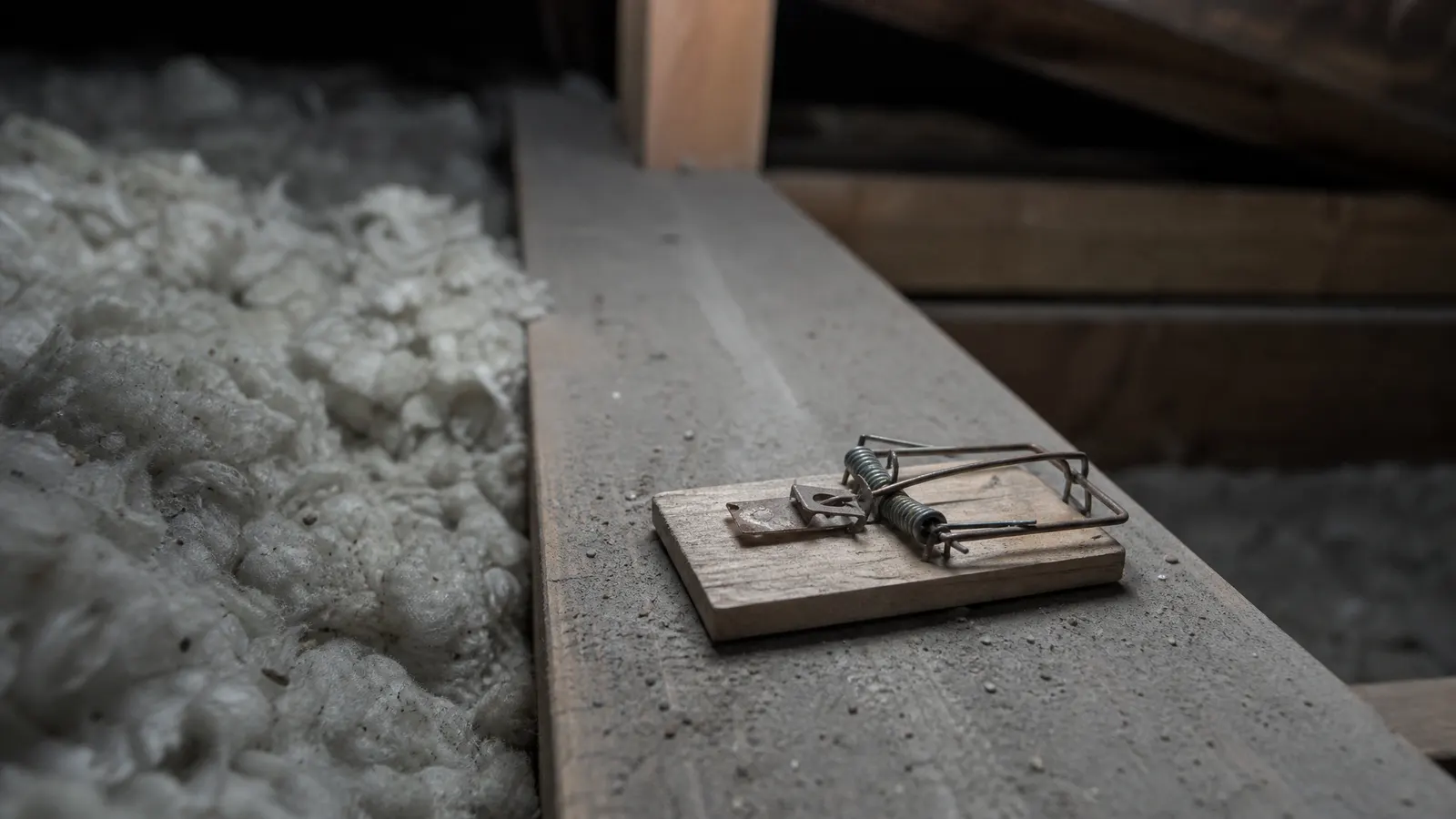
It is called neophobia. Roof rats avoid unfamiliar objects placed in their established runways, sometimes for several days, so traps set on Monday can sit untouched all week. Professionals often place traps unset first, let the rats get used to them, and only then arm them.
You set four traps in the attic on Monday night. Tuesday morning you go up with a flashlight and every one of them is exactly where you left it — bait untouched, dust undisturbed, nothing moved by so much as an inch. Wednesday is the same. And you can still hear them running across the ceiling at two in the morning.
Nothing is wrong with your traps. You are up against a specific piece of roof rat behavior, and once you understand it, most of what people do next stops making sense.
Neophobia: why they avoid your traps
Roof rats live by memory. A rat learns a route through your attic — along a rafter, over a top plate, down a pipe chase and into a soffit — and then runs it in the dark at speed, night after night, without stopping to evaluate anything. A route that has been safe for fifty nights is worth more to that animal than any single meal.
So when something new appears in the middle of it, the rat's default is not curiosity. It is avoidance. It will detour around the new object, sometimes for days, until nothing bad has happened often enough for the object to stop counting as new. That applies to your snap trap, and it applies equally to a bait station, a bucket, a camera or a box of Christmas decorations you moved last week.
This is not the rat being clever. It is a species that survives by never being the first one to touch anything unfamiliar. In a wild population, the individuals that investigate new objects in a familiar run are the ones that stop coming back.
What an empty trap actually tells you
Almost nothing — not in the first two nights. This is the part that matters, because it inverts the conclusion most people draw. An untouched trap on Wednesday morning is not evidence that you chose the wrong spot. It is the expected result of a correct placement that has not been there long enough yet.
Roof rats work at night, so you never see the avoidance happening. All you see is the outcome, which looks identical to failure.
One useful contrast: house mice behave close to the opposite way. A new object in a mouse's territory usually gets investigated within a night or two. If you have read advice promising results in twenty-four hours, it was almost certainly written about mice.

How long it really takes
Here is the loop that eats most of a month.
You set traps Monday. Nothing by Wednesday. You conclude the placement is wrong, so Thursday you move all four to a different beam. Nothing by Saturday. You move them again. Every move resets the acclimation clock back to zero, so the rats are permanently three days away from accepting a trap that never stays still long enough to become familiar. The traps are fine. The bait is fine. The schedule is the problem.
Give a placement a full week before you judge it. That single change does more for a DIY attempt than any product decision.
What professionals do goes one step further in the same direction: place the traps unset first. The animals walk over them, feed off them, and file them under scenery. Only then are they armed. It costs you several days at the front of the job and it saves you the three weeks you would otherwise spend moving hardware around an attic.
While you wait, read the floor rather than the trap. Fresh droppings beside an untouched trap, or new grease marks on the beam it sits on, tell you the runway is live and the clock simply has not run out. That is a placement worth leaving alone.
Placement beats bait
Bait is the question everybody asks and close to the least important variable in the job. Peanut butter, dried fruit, a bit of bacon — a hungry roof rat in your attic is not being held back by the menu. It is being held back by where the trap sits.
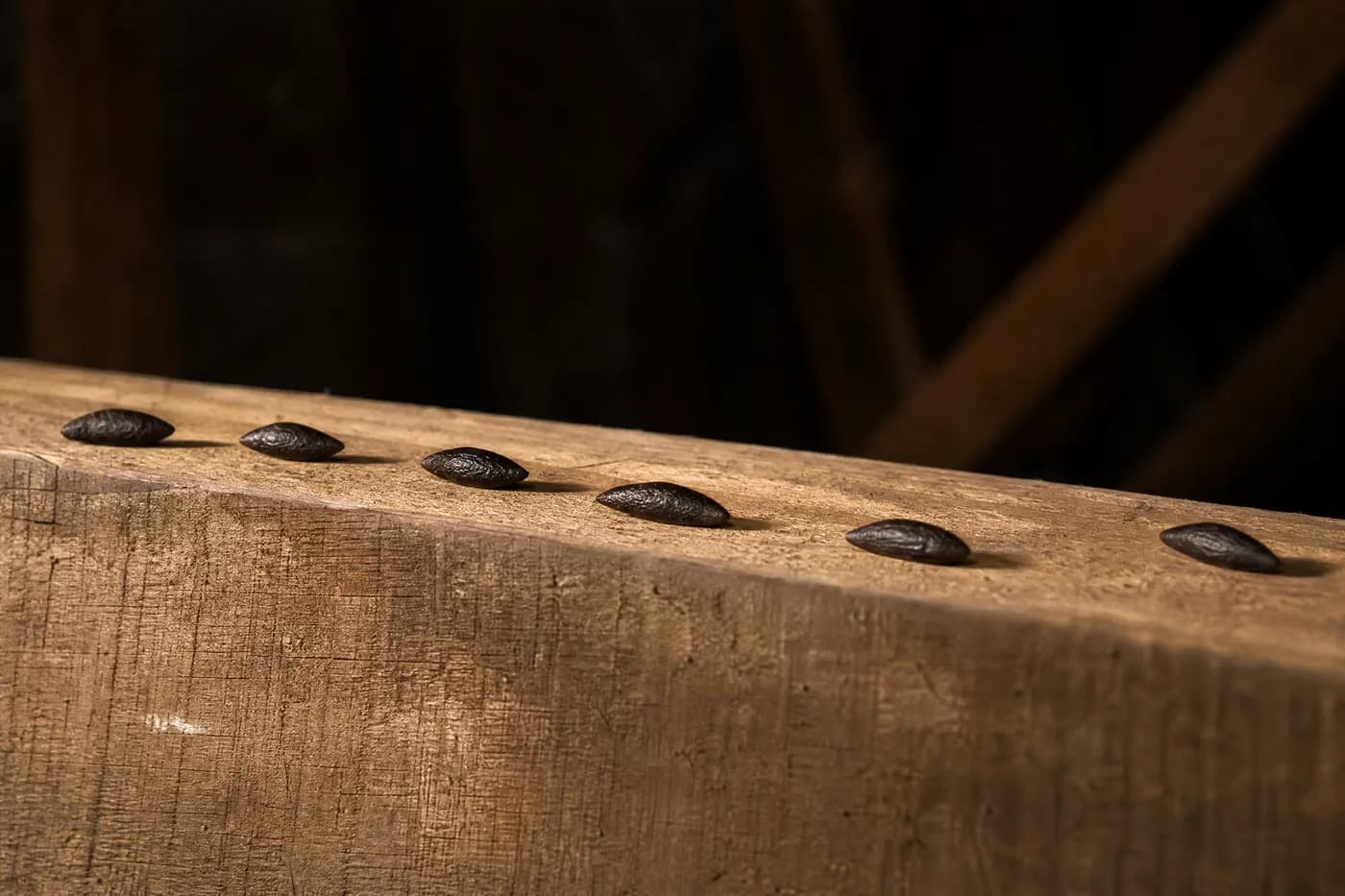
Roof rats travel established runways: the tops of wall plates, the length of a rafter, the run of a beam, the line of a pipe. They move with a flank against a surface, because contact with a solid edge is how a nocturnal animal navigates at speed without seeing much. Open floor is exposure, and they avoid it.
That gives you a rule you can act on. A trap set on the runway, perpendicular to the direction of travel, pushed tight against the timber will out-catch a better-baited trap sitting in open space every time. No gap between the trap and the wood. The rat should meet the trigger while doing exactly what it was already doing, not have to step out into the open to reach it.
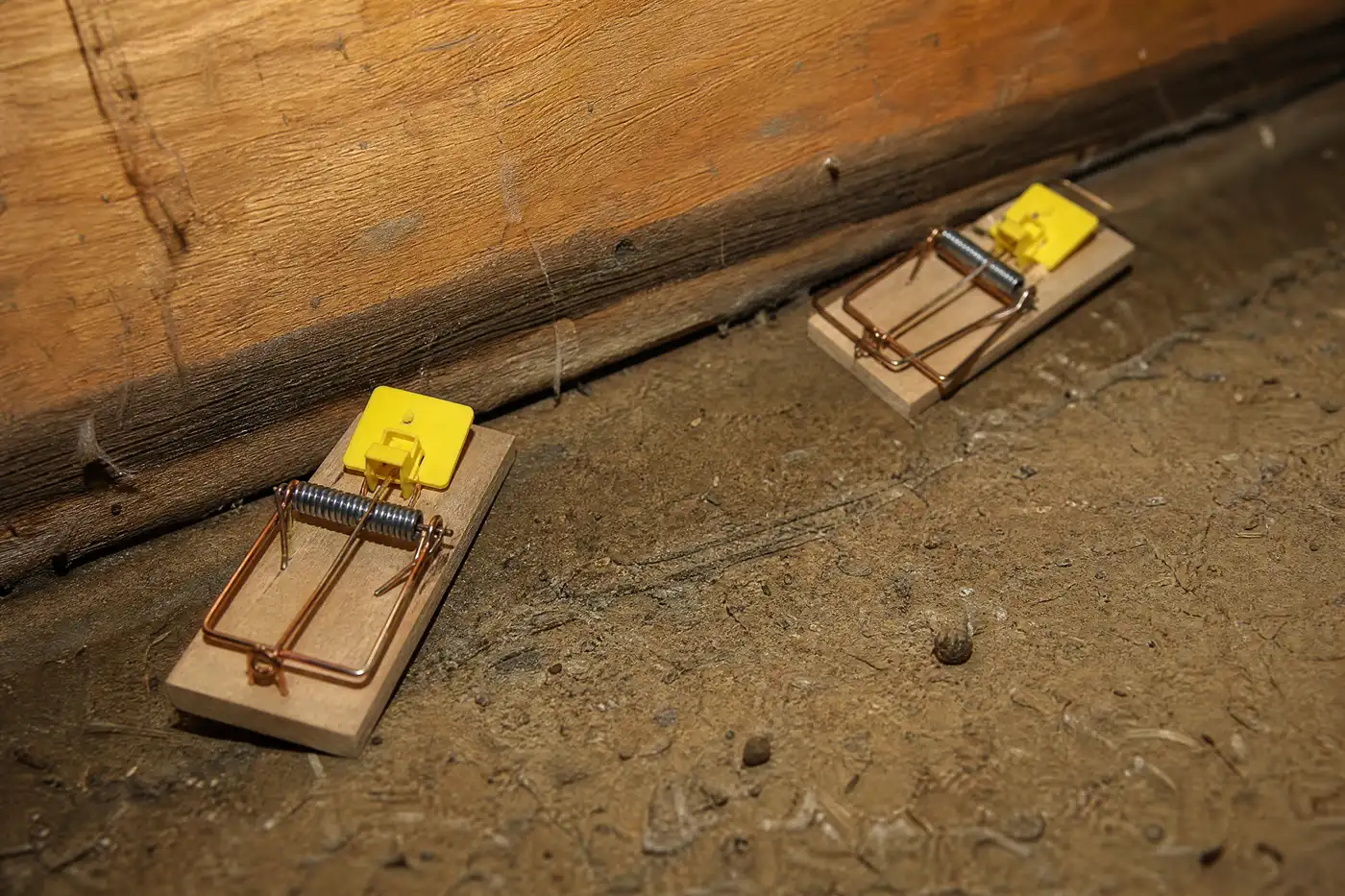
Setting traps in pairs along the same run is worth doing for the same reason. You are not trying to guess which one the rat will pick — you are trying to make the runway itself unusable without crossing a trigger.
Why poison indoors backfires
Somewhere in week two of empty traps, the hardware store bait blocks start to look reasonable. In a South Florida attic they are the classic mistake, and the reason is simple: you cannot control where the animal dies.
It will not be somewhere convenient. It will be in a wall void, a duct chase or the space above a bathroom ceiling, and you will find out about it by smell, three or four days later, followed by flies. That lasts weeks, and there is usually no practical access to remove it without opening drywall to go looking.
There is a second problem that gets less attention. Bait outside an attic belongs in exterior stations, and only after the entry points are closed. Feed a population that still has a way in and the attic simply refills. Unsecured bait outdoors also poisons dogs and wildlife, which is why Florida labels require a tamper-resistant station — and it still pulls in the rats from the yards on either side of you.
When trapping alone will never finish it
Trapping is removal. It deals with the animals that are inside the structure right now, and it does nothing whatsoever about the opening that let them in — the lifted roof return, the gap behind a fascia board, the unsealed pipe penetration, the corner of soffit that separated in a storm.
In Broward that gap will be used again. There is no version of South Florida where the last rat in the neighborhood was the one in your attic; there are fruit trees, palm lines and power lines feeding a standing population, and a known opening is an address.
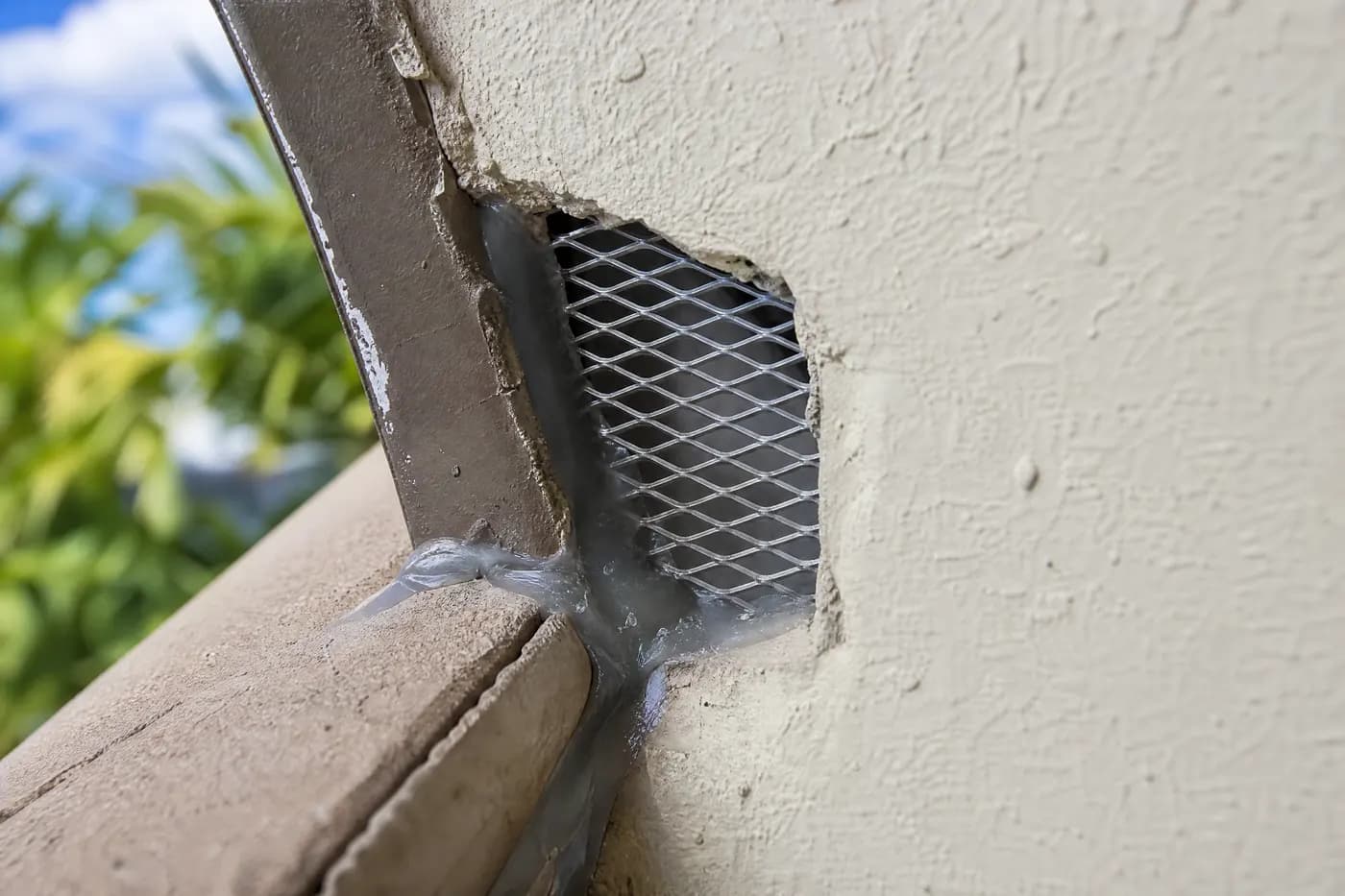
So the version that stays solved is removal plus exclusion, in that order, with the sealing done properly in steel rather than foam. Worth knowing before you call anyone: exclusion work is commonly quoted separately, after the inspection, because nobody can tell you how many openings a roofline has until they have been on it. You get your exact price on the callback during business hours (Mon–Fri 9am–5pm), before any work starts.
And the finish line is not the last full trap. It is the follow-up check that finds no fresh droppings, no new gnawing and no noise overhead after the gaps are closed. An empty trap at the start of the job tells you nothing at all. An empty trap at that point is the only one that means anything.
Frequently asked questions
Neophobia — a learned wariness of anything new in a familiar route. It is a survival trait, and it means an empty trap after two nights tells you almost nothing about whether the trap is in the right place.
Leave a placement a full week before concluding it is wrong — UF/IFAS puts it at a week for roof rats specifically. Moving traps every night resets the acclimation clock each time and is the most common reason DIY trapping stalls indefinitely.
Placement matters far more than bait. Roof rats travel the same runways along rafters and wall tops, and a trap set on that runway, perpendicular to it, outperforms a better-baited trap set out in the open.
Because you cannot control where the animal dies. In an attic that usually means a wall void or a duct chase, and the odor and the flies that follow last for weeks with no practical access to remove it.
Not while the entry point is open. Trapping removes the animals in the structure; it does nothing about the gap that let them in, and in South Florida there is always another rat in the neighborhood.
Still dealing with it?
Rodent Control across Broward County, FL, backed by follow-up visits until the activity is cleared.
Book online in a few minutes and a Broward tech calls you back with your exact price (Mon–Fri 9am–5pm) — before any work starts.
Get rats and mice out todayKeep reading
Noises in Your Attic at Night: Roof Rats or a Palm Frond?
A test you can run tonight to tell roof rats from a palm frond on the roof — plus how to rule out squirrels, and what the droppings tell you.
Your Mango Tree Is Why You Have Roof Rats in Broward
Broward's year-round fruit feeds roof rats outdoors, so they come inside for water and shelter — not food. What that changes about prevention.