
Rodents · Broward County, FL
Noises in Your Attic at Night: Roof Rats or a Palm Frond?
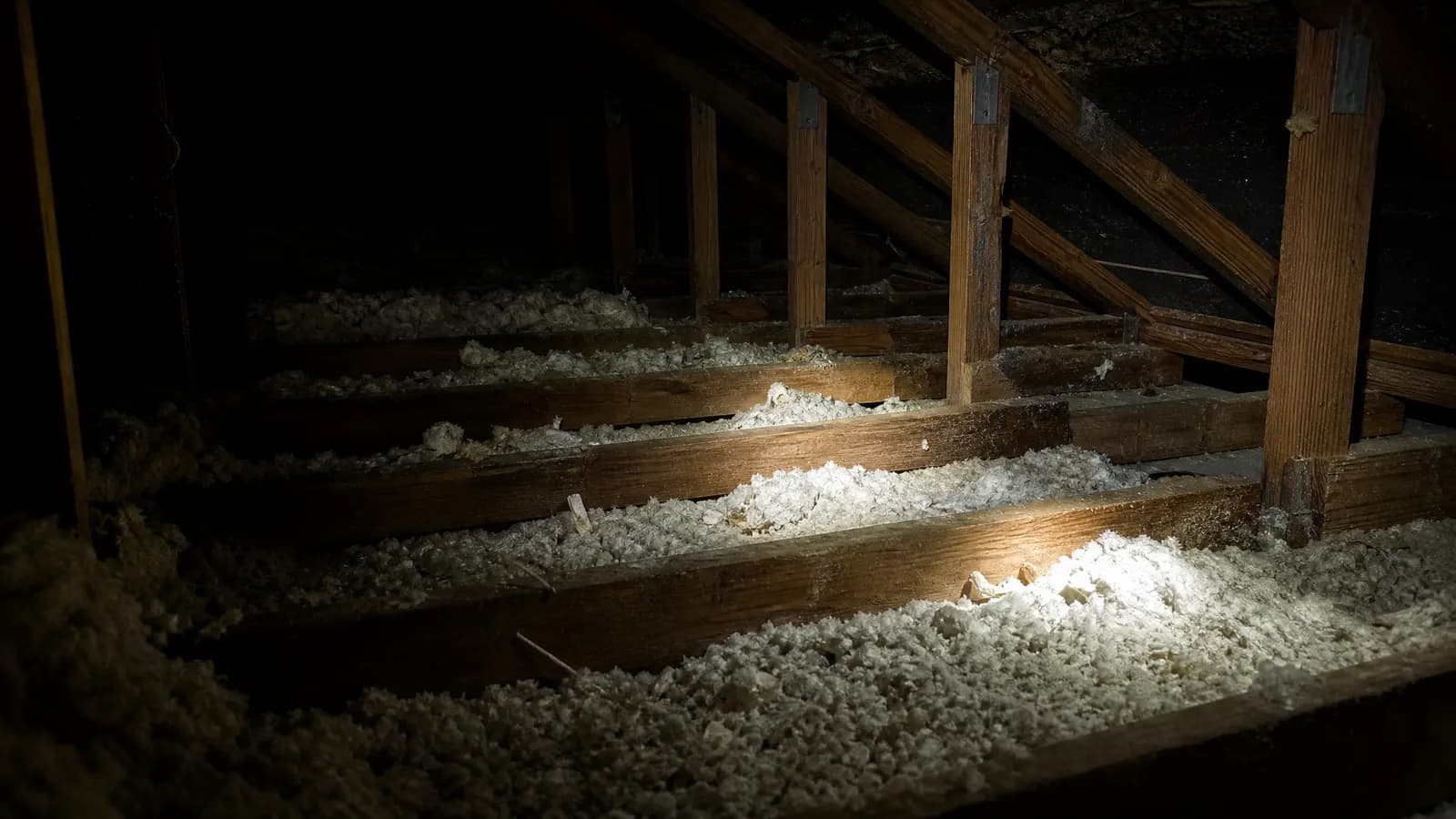
The short answer
A palm frond only makes noise when the wind moves it. If the scratching continues on a still night, and starts around the same time after dark each night, it is an animal. Roof rats are strictly nocturnal, so daytime activity points to squirrels instead.
It starts around the same time every night. The house is quiet, you are almost asleep, and something runs across the ceiling above the bed — four or five quick steps, a pause, then the same thing again a few feet over. By morning you have decided it was the palm scraping the roof. That is a reasonable first guess, and it is testable in three nights without a ladder or an attic hatch.
Is it rats or a palm frond?
There are really only two candidates over a Broward ceiling, and they sound less alike than people expect.
Something touching the roof. A skirt of dead fronds against the fascia, a ficus limb resting on the tile, a lifted soffit panel. The sound is broad and dry — a rasp or a sweep rather than a step. It arrives with a gust, falls silent between gusts, stays in one fixed place near the edge of the roof, and happens at three in the afternoon as readily as at three in the morning.
Something living above your ceiling. That sound is punctuated: a burst of small fast steps, a stop, then another burst somewhere else. Mixed into it you get gnawing, and sometimes something small dragged across the drywall. It travels in a line across the ceiling, because you are hearing an animal use a route it has already worn in. And it keeps a schedule.
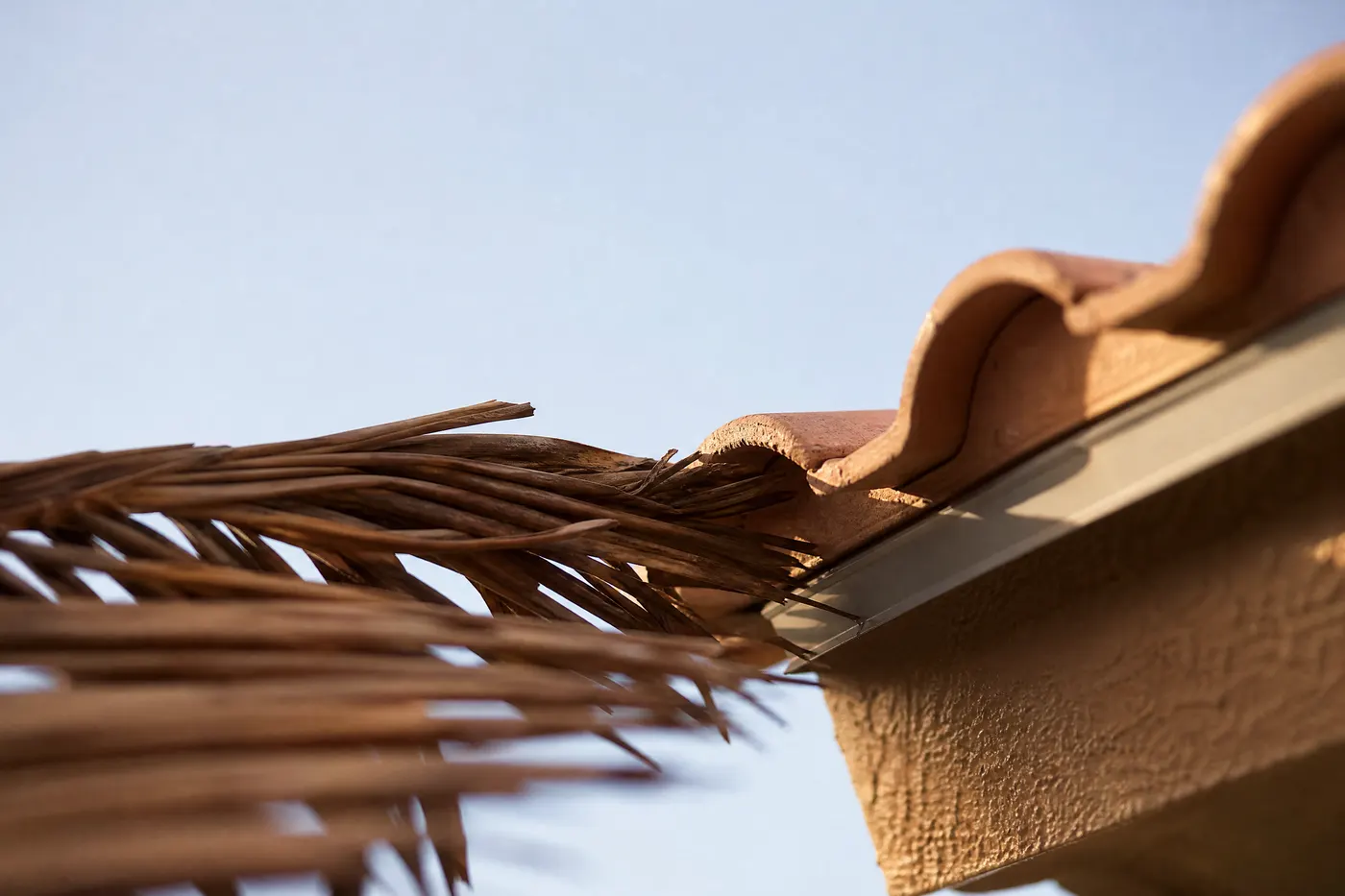
The calm-night test
A frond has no energy of its own. It moves when air moves it, and it makes noise only while it is moving. An animal's schedule comes from inside the animal — roof rats leave the nest to forage on a clock tied to darkness, not to weather. That difference is the entire test.
How to run it
- Pick a still night. Walk onto the driveway and look at the crown of the palm. If the fronds hang dead still and you can still hear the noise, the tree is no longer the argument.
- Listen at the same hour. Twenty minutes, lights off, in the room where you hear it best. The first couple of hours after full dark is the window that matters.
- Write down four things. The date, whether the air was moving, the time you first heard it, and roughly where in the ceiling.
- Do it three nights.
Noise only when it is breezy, always from the same spot near the eave: that is roof contact. Get the fronds and limbs off the roof and it ends. Noise on a still night, starting within the same half hour after dark and moving across the ceiling: that is an animal, and the timing has already narrowed down which one.
Keep the notes. Time of first activity and rough location are what decide where the traps go, and an attic is mostly empty space with a few runways in it.
Rats, squirrels or raccoons?
Timing separates the three, and it costs nothing to check.
| Roof rat | Squirrel | Raccoon | |
|---|---|---|---|
| When you hear it | Strictly nocturnal — loudest in the couple of hours after dark, again before dawn | Daylight, loudest at first light | Dusk onward, often heaviest late at night |
| What it sounds like | Light, fast scurrying, gnawing, small objects moved | Heavier scurrying and louder chewing, in daylight | Thumps, dragging, slow heavy walking |
| How it gets in | A gap about the size of a quarter at a soffit seam, vent or pipe penetration | An opening at the fascia or soffit, usually enlarged by chewing | Tears open a soffit panel, vent or roof return |
| Who handles it | Rodent control | Rodent control, sometimes wildlife | Wildlife removal — not a rodent job |
Daylight is the giveaway. Roof rats work at night. A racket over the bedroom in full daylight, an hour after sunrise, is a squirrel until something proves otherwise, and rat traps set for a squirrel catch nothing for weeks.
Weight is the other one. A thump, a drag, or anything that makes the ceiling flex is not a rodent. Raccoons are a wildlife job.
The species actually in your attic
Most national articles about rats in the attic open with Norway rat biology. In Broward that is the wrong animal. The attic rat here is the roof rat (Rattus rattus), known locally as the palm rat, fruit rat or citrus rat, and it dominates South Florida attics.
Norway rats do live in Florida, but they are a ground and burrow animal — canal banks, garages, slab level. If the noise is over your head, advice written for one points you at the wrong half of the building.
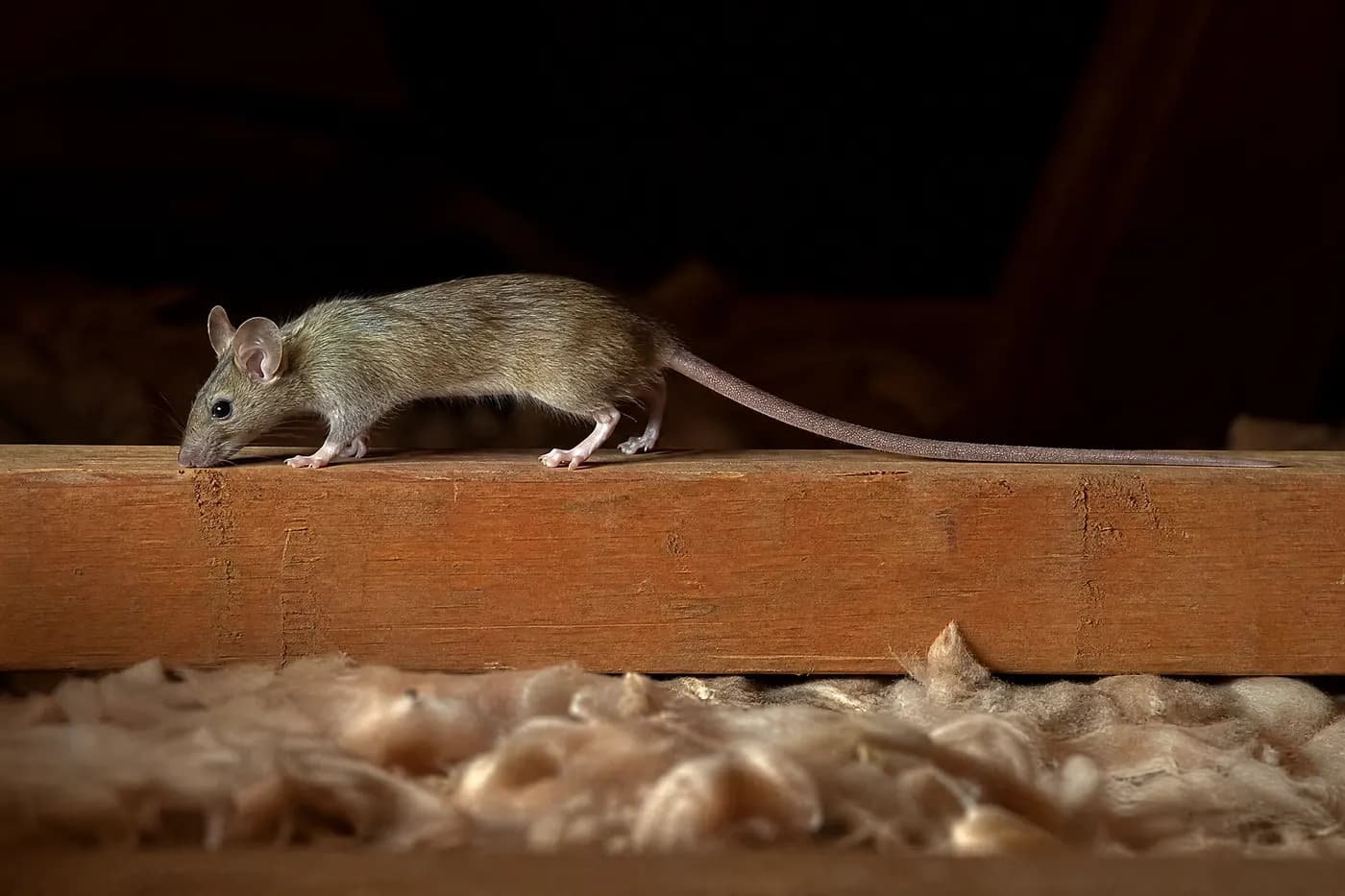
What the droppings tell you
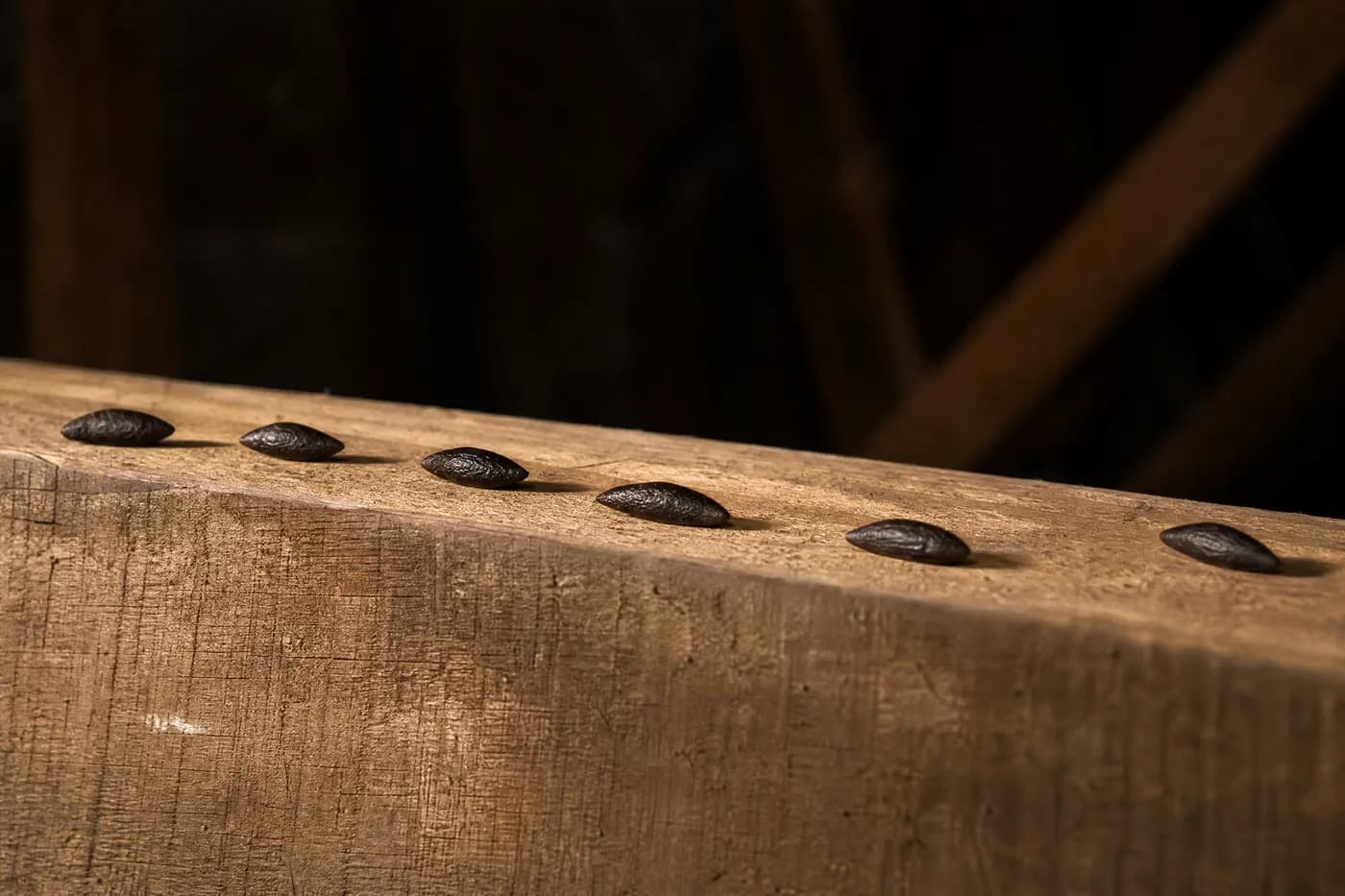
Droppings are the one piece of evidence you can read yourself, and they settle two things: which animal is up there, and where it travels.
Look along the runways, not the open middle of the attic. Roof rats travel edges — the top of the joists, the top plate of the walls, stored boxes, the insulation near the eaves.
- Roof rat — spindle-shaped, tapering to a point at the ends, dark, scattered along a line rather than piled.
- Norway rat — larger and blunter, more capsule than spindle. Usually a garage finding, not a ceiling one.
- Mouse — much smaller and thinner, easy to dismiss as dirt until you look closely.
The mouse call is not a footnote. Rats need a gap roughly the size of a quarter, about half an inch; mice get through about a quarter of an inch. An exclusion scoped for rats alone leaves every mouse-sized gap in the building open, and the house goes quiet for a few weeks before something smaller moves in.
Do not sweep them up before anyone has looked. Where they concentrate is where the animals travel, and that decides trap placement.
Where they got in
Roof rats arrive from above, and the route has three parts.
The bridge. Palm fronds, tree branches and power lines running to the house. A roof rat is a climber, and it does not need to scale a wall when the landscape hands it a ramp.
The gap. Once it is on the roof, it works the seams:
- Roof returns, where a roof plane meets a wall and the soffit dead-ends.
- Soffit seams and panels that have dropped or been lifted.
- Gable and roof vents with torn or bent screen.
- Pipe and AC line-set penetrations where old sealant has failed.
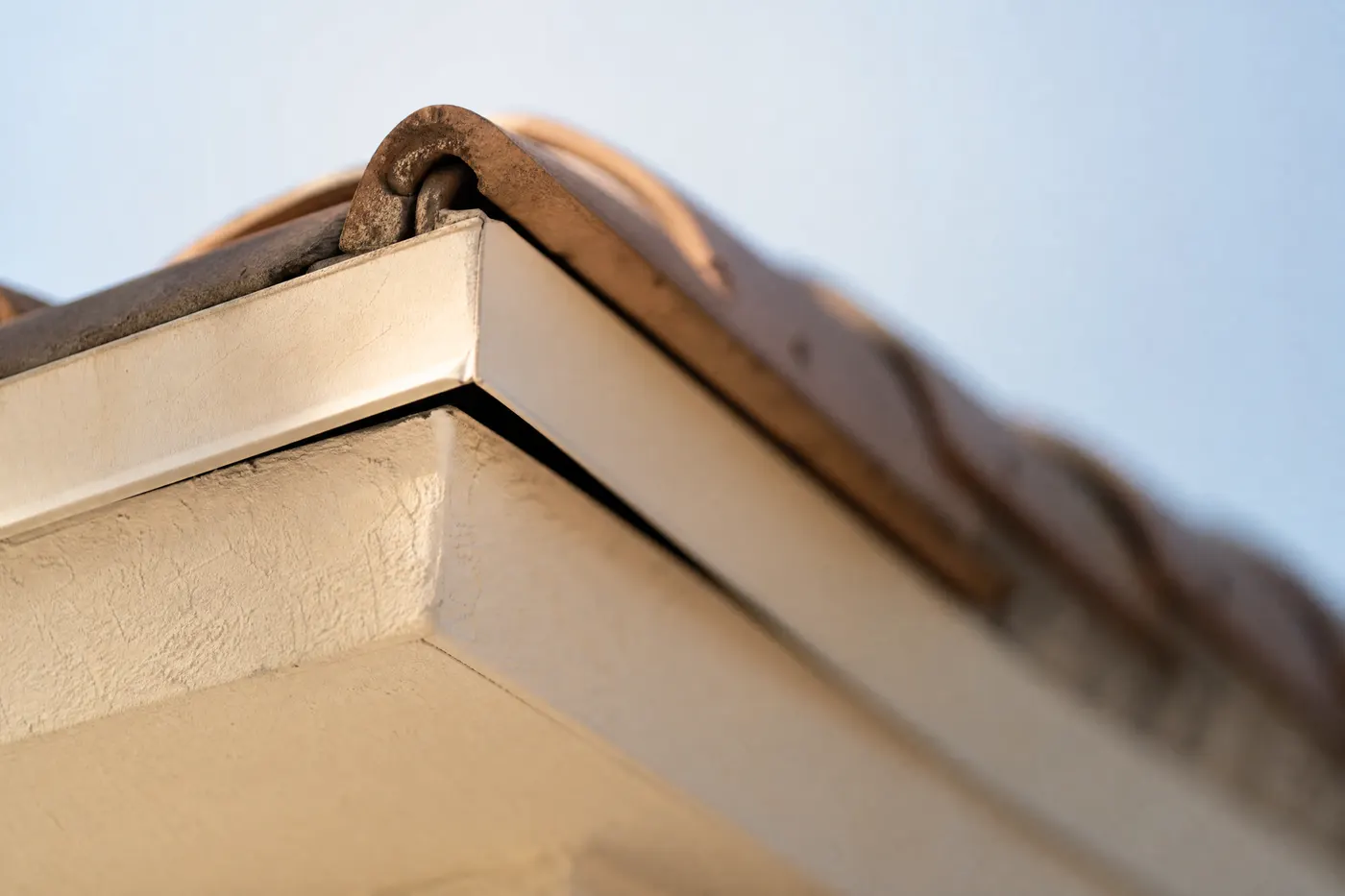
- The gap where a tile roof meets the fascia.
The runway. Inside, it follows the same fixed lines every night, which is why the sound tracks across your ceiling on a schedule.
Most of that you can check yourself at midday with binoculars: anything touching the roof, a dark line where a soffit panel has dropped, a vent screen bent at a corner. From inside the attic in daylight, look for daylight along the eaves.
Trimming is worth doing regardless. Pull the frond skirt and any limbs back so nothing touches the roof and the bridge is gone for the next animal. It does not remove the ones already inside, and on its own it can push existing traffic onto a different route.
Sealing is what makes the result hold, and it gets scoped to your actual roof rather than sold off a list. Your technician walks the roofline, marks what has to be closed with steel mesh and sealant, and explains the plan after the inspection. Exclusion work may be quoted separately once that scope is known.
What to do tonight
- Check the air first. Step outside and look at the palm. Still fronds plus a noise indoors settles it in about thirty seconds.
- Note the clock, three nights running. First sound, last sound, how long it went on. Timing is the species identification.
- Mark where it runs. Stand under it and put a sticky note on the ceiling. Two nights of marks give you a line instead of a guess.
- Do not put poison up there. A poisoned rat dies inside a wall void or a duct chase, the odor runs for weeks, and there is no practical way to reach it. Trapping keeps the animal somewhere it can be removed.
- Leave the droppings where they are. They are the map.
- If you go up, go in daylight. Stay on the joists, and look for droppings, rub marks and gaps at the eaves — not for the animal. It will not be where you are.
Wind, clock, droppings. Three nights of notes answer a question a flashlight in the attic usually will not.
Frequently asked questions
Wind. A frond or branch touching the roof only makes noise when the air is moving. Note the weather the next time you hear it — if it happens on a completely still night, something is up there.
Timing is the cleanest tell. Roof rats are strictly nocturnal and are loudest in the couple of hours after dark and again before dawn. Squirrels are active in daylight, especially early morning. Daytime scurrying is almost never rats.
Small, dark, spindle-shaped pellets that taper to a point, usually found in runways along rafters, on top of stored boxes and in insulation. Norway rat droppings are blunter and larger; mouse droppings are much smaller and thinner.
Usually from above. Roof rats travel palm fronds, branches and power lines onto the roof, then use gaps at roof returns, soffit seams, vents and pipe penetrations. A gap of about half an inch is enough.
It's the classic South Florida mistake. A poisoned rat dies inside a wall void or duct, and the smell lasts for weeks with no practical way to reach it. Trapping keeps the animal where you can remove it.
Still dealing with it?
Rodent Control across Broward County, FL, backed by follow-up visits until the activity is cleared.
Book online in a few minutes and a Broward tech calls you back with your exact price (Mon–Fri 9am–5pm) — before any work starts.
Get rats and mice out todayKeep reading
Your Mango Tree Is Why You Have Roof Rats in Broward
Broward's year-round fruit feeds roof rats outdoors, so they come inside for water and shelter — not food. What that changes about prevention.
Why Your Rat Traps Aren't Catching Anything in a Florida Attic
Roof rats avoid new objects in their runways for days. Why that makes DIY trapping stall, what professionals do differently, and when traps can't finish the job.