
Rodents · Broward County, FL
Your Mango Tree Is Why You Have Roof Rats in Broward
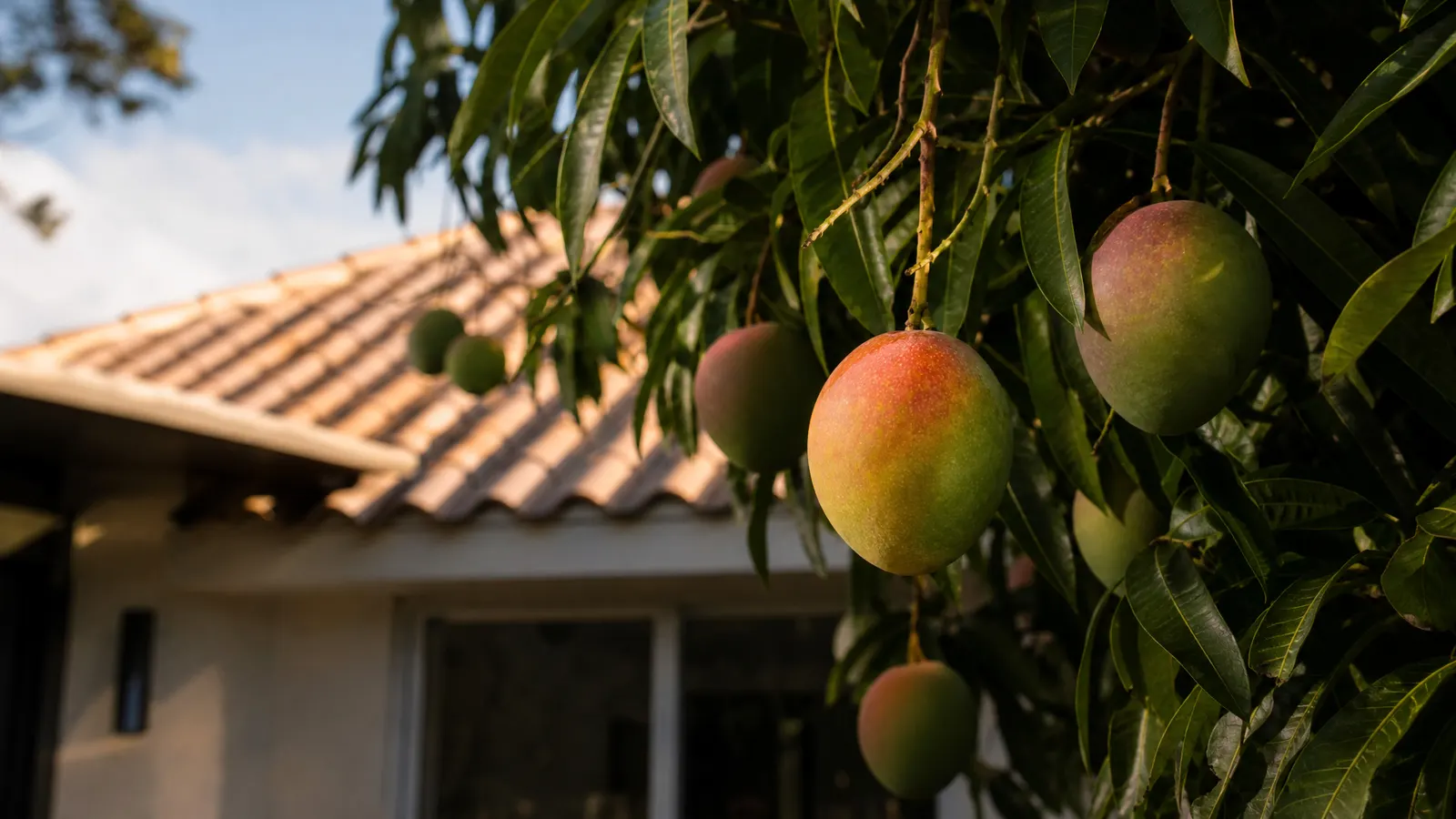
The short answer
Broward yards produce fruit year-round — mango, avocado, citrus, guava, sapodilla — which sustains a roof rat population outdoors with no need to enter a house to feed. They come inside for water and shelter instead. That single fact changes what prevention has to target.
The scratching starts around nine at night, somewhere above the hallway. So you set traps, you check the pantry, you pull everything out of the lower cabinets — and there is nothing. No chewed bag, no droppings behind the cereal, no sign they have touched a single thing you own.
That is not a mystery. They already ate. Dinner was the mango tree.
Why Broward has a roof rat problem
The animal in your attic is almost certainly a roof rat (Rattus rattus). Around here it gets called a palm rat, a fruit rat, a citrus rat, a black rat or a ship rat, and every one of those names describes the same species doing the same thing. It is the dominant attic rodent in South Florida.
It is not a Norway rat. Norway rats are heavier, blunter animals that live at ground level and burrow — under slabs, along canal banks, behind dumpster pads. They exist in Broward, but they are not what people hear over the bedroom ceiling at midnight. Roof rats climb, and they nest high.
What makes Broward different from Ohio is not the rat. It is the yard.
A typical residential lot here is carrying some combination of mango, avocado, citrus, guava, sapodilla and starfruit, and the seasons are staggered enough that something is producing for most of the year. Add the ornamental palms, the ficus hedge along the property line and the irrigation that keeps all of it green through the dry season, and an ordinary suburban street is functionally an orchard with houses in it.
That is the whole difference. A roof rat population in a Broward neighborhood is not scraping by on what it can steal from a garage. It is well fed, outdoors, year-round, and it was well fed before it ever found your roofline.
They don't come inside for food
This inverts most of the advice you will read.
National rodent content is written for a climate where winter shuts the food supply off. There, the pantry is the prize and sealing your dry goods in plastic bins is meaningful prevention. Here, your landscaping has already solved their food problem better than your pantry ever could. They are not coming in to eat.
They come in for three other things.
Water. Fruit carries some, but not enough, and Broward's dry season runs months long. An air handler drips. A hose bib weeps. Condensation collects on cold ductwork in a hot attic. A rat choosing between a trip to the canal and a leak fifteen feet from its nest takes the leak — and if the water is inside a line rather than on top of it, it opens the line.
Shelter. An attic is dry, dark, warm, structurally stable and completely free of hawks, owls, raccoons and the neighbor's cat. Outdoors, a roof rat lives its whole short life being hunted. Your soffit is the most secure real estate on the block.
Nesting material. Blown insulation shreds beautifully. So does cardboard, and so does the fiber at the base of a palm frond.
Notice that not one of those is affected by how clean your kitchen is. This is also why a snap trap baited with peanut butter can sit untouched for a week in a Broward attic — though the bigger reason is that rats avoid anything new in a runway for days, which is its own subject.
Palm fronds are the highway
Roof rats do not usually climb your wall. They arrive on something.
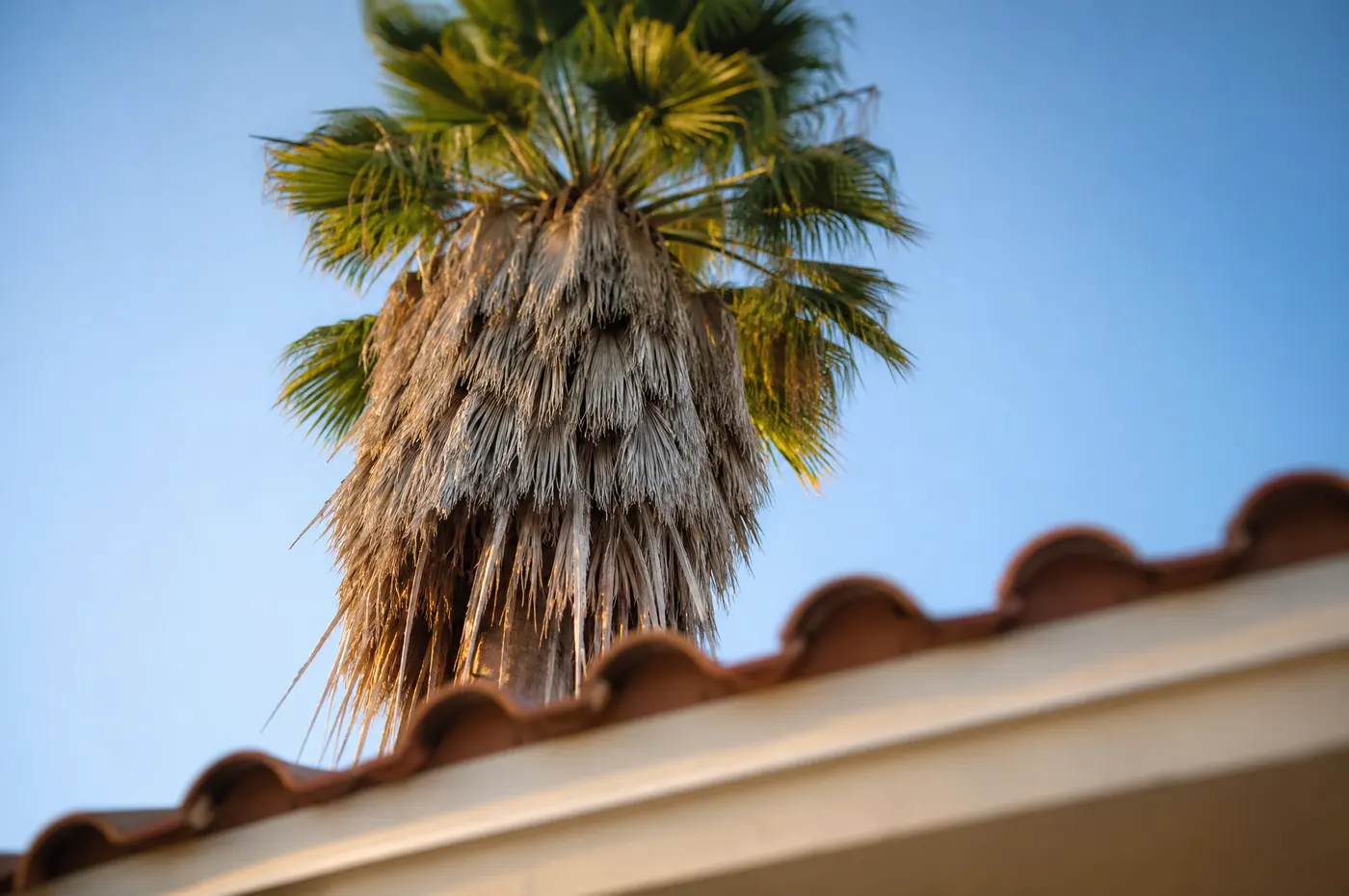
Across Fort Lauderdale, Hollywood, Pembroke Pines and Coral Springs, the same landscaping decision repeats on street after street: a palm planted close to the house, grown up past the eave, its crown now sitting within a few feet of the roofline. That is not a tree anymore. That is an on-ramp. A rat travels the trunk, moves out along a frond, and steps onto your fascia without ever touching the ground.
The specific culprit is the dead frond skirt — the collar of brown, hanging fronds that builds up under the green crown when a palm goes untrimmed. It is two things at once, which is what makes it so effective: dense, dry, hidden shelter to nest in, and a ladder that ends at your roof. Rats live in the skirt and commute to your attic, or live in your attic and commute to the fruit. Removing the skirt takes away half of the arrangement.
Fronds are not the only bridge. Ficus hedges grown into the eave, mango and avocado limbs overhanging the roof, fence lines that dead-end at the house, utility lines, and trellises all do the same job.
Trim distances get quoted as three feet or six feet, and the spread is just safety margin: a roof rat clears about four feet from a standing surface, and farther jumping downward. The rule that matters is the same either way — roof rats jump and climb far better than the numbers suggest. The rule that actually holds is simpler: trim so that nothing bridges to the roof. If you stand in the yard and can trace a continuous path from ground to roofline without a break, so can a rat.
Where the highway ends
At the roof, they need surprisingly little. A roof rat gets through an opening of about half an inch — a gap you could slide two stacked quarters through edgewise. They rarely need to find one that size, because they enlarge what is already weak: a lifted barrel tile, the seam where soffit meets fascia, an unscreened roof vent, a torn plumbing stack boot.
Worth knowing when someone hands you an exclusion scope: a mouse needs about a quarter of an inch. Work scoped only for rats leaves every mouse-sized gap in the building open. Ask which standard is being sealed to.
Signs in the yard, not the house
Most people go looking for confirmation indoors — droppings on a shelf, a chewed wire, something in the garage. In Broward the earlier and more reliable evidence is outside, and you can walk it yourself in ten minutes with a flashlight after dark.
| What you find | What it tells you |
|---|---|
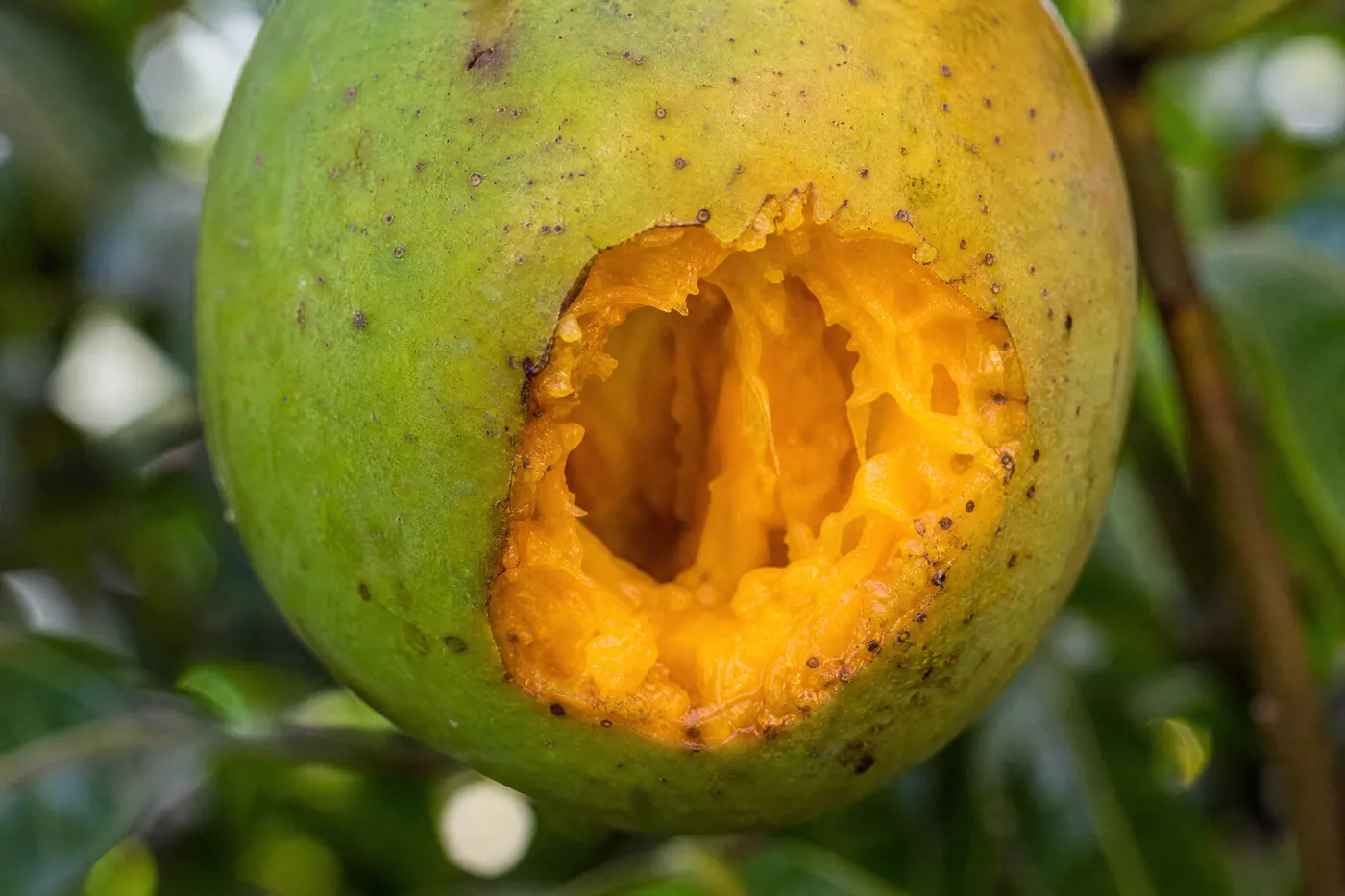
| Hollowed-out fruit still hanging on the branch — a clean round hole on citrus, a ragged excavation on mango and avocado | Roof rats feeding in the canopy. Squirrels typically knock fruit down and eat it on the ground; rats often eat in place. |
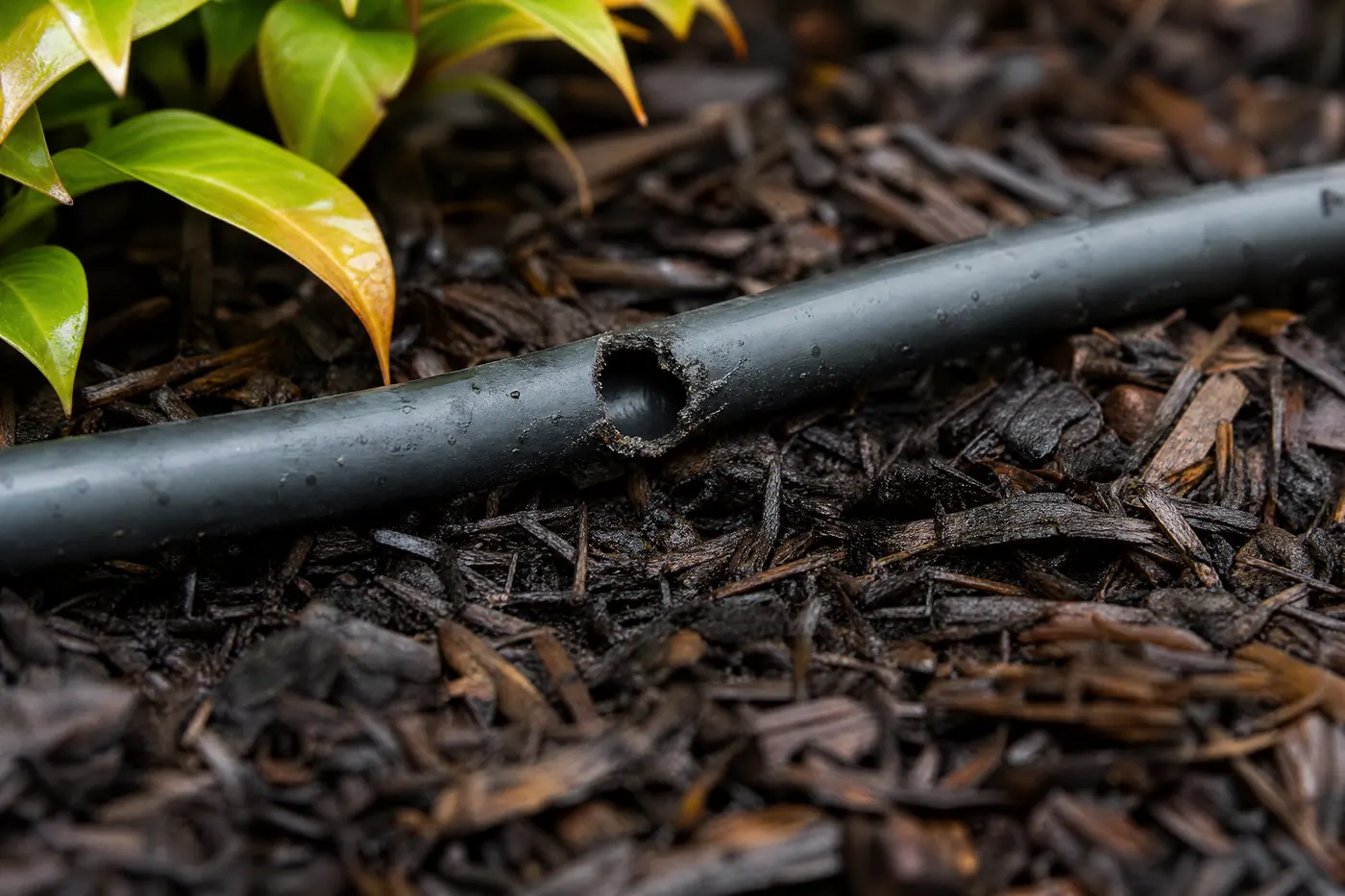
| Gnaw marks or pinhole leaks in drip and irrigation line | They are drinking from your irrigation. The water source is on your property. |
| Bark stripped from young branches or a citrus trunk | Sustained rodent activity in that specific tree, not a one-time visitor. |
| Droppings on fence rails and along the top of a block wall | A runway. Rats travel edges and repeat the same route nightly. |
The fruit sign is the one worth learning: unmistakable once you have seen it, and almost nobody looks up. A grapefruit hanging with its side opened and the inside eaten out is not storm damage and not birds.
Walk the perimeter wall, the fence rails, the base of every palm and the ground under each fruit tree. Note where the droppings are: that is what tells a technician where the runways run, and runways determine trap placement.
What actually reduces the population
Order matters here more than product does. Sealing the house while the yard is still producing food, water and cover just redirects pressure to the next gap.
- Pick fruit as it ripens, and clear what falls. Not the tree — the buffet. Fruit on the ground under a mango is a renewing food supply that resets every few days in season. This is the single highest-yield thing a homeowner does, and it is the one that requires no equipment.
- Trim so that nothing bridges to the roof, and strip the dead frond skirts off every palm on the property. Shelter and ladder, gone in one afternoon of work.
- Fix the water. Weeping hose bibs, broken drip emitters, gnawed irrigation line, a clogged AC condensate line, a leaking pool fill. Water is the reason they came inside; leaving it running undoes the rest.
- Then seal the entry points. Steel mesh and sealant at soffit and fascia gaps, roof returns, vents, stack boots and utility penetrations. Exclusion is often quoted separately after the inspection, so ask what is and is not included — you get your exact price on the callback, Mon–Fri 9am–5pm, before any work starts.
- Trap on the mapped runways, and keep clearing them. Traps are how the animals currently inside get removed. They are not how the problem ends.
That last distinction is the one that decides whether you do this once or every year. A yard with fruit on the ground, a palm skirt against the eave and a half-inch soffit gap is good territory. Trapping empties good territory; it does not stop being good territory. Remove ten rats and leave the conditions in place, and you have opened ten vacancies in the best address on the street.
Frequently asked questions
They sustain them. A mango or avocado tree with fallen fruit under it is a reliable, renewing food source, and in South Florida something is fruiting most of the year. That supports a far larger population than a yard without it.
Water and shelter. An attic is dry, warm, undisturbed and safe from hawks and cats, and there is usually condensation or a drip line nearby. Food is already handled by your landscaping.
No. What matters is picking fruit as it ripens, clearing what falls, and keeping the canopy from touching the roof. The tree is not the problem; the standing buffet under it and the branch bridging to your fascia are.
Far enough that nothing bridges to the roofline — roof rats jump and climb well, so a branch that merely looks close usually is. Dead frond skirts on palms matter as much as branches, because they are both shelter and ladder.
Hollowed-out fruit still hanging on the branch, with a neat opening gnawed into it. Squirrels knock fruit down; roof rats often eat it in place. Gnaw marks on irrigation line and stripped bark are the other two.
Still dealing with it?
Rodent Control across Broward County, FL, backed by follow-up visits until the activity is cleared.
Book online in a few minutes and a Broward tech calls you back with your exact price (Mon–Fri 9am–5pm) — before any work starts.
Get rats and mice out todayKeep reading
Noises in Your Attic at Night: Roof Rats or a Palm Frond?
A test you can run tonight to tell roof rats from a palm frond on the roof — plus how to rule out squirrels, and what the droppings tell you.
Why Your Rat Traps Aren't Catching Anything in a Florida Attic
Roof rats avoid new objects in their runways for days. Why that makes DIY trapping stall, what professionals do differently, and when traps can't finish the job.