
Ants · Broward County, FL
Pharaoh Ants in Florida Homes: Why They’re the Hardest to Kill
The short answer
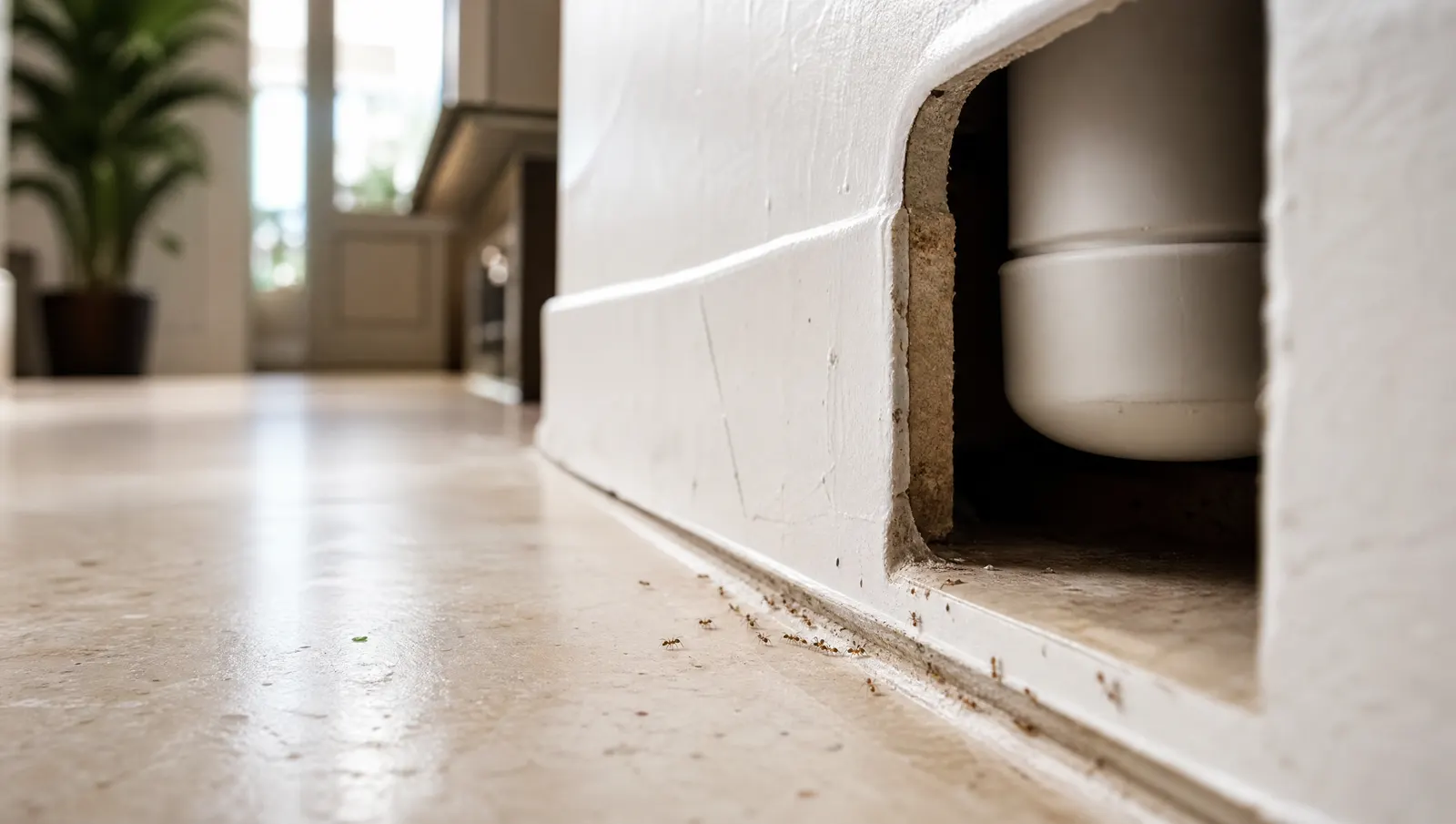
Pharaoh ants are very small yellowish household ants that nest in warm wall voids, cabinets and utility spaces. Repellent spray can scatter a colony into multiple budding nests, making activity appear in new rooms. The practical response is careful identification, baiting and patience rather than chasing trails.
Pharaoh ants are tiny indoor ants that can be difficult to eliminate because a building may contain several nest sites at once. A trail across a counter is only the visible part. The colony can use warm wall voids, cabinets, utility spaces and appliance gaps, then reappear after a treatment changes its route.
What pharaoh ants look like
They are very small, usually yellowish to light brown, and easy to confuse with other household ants. Size alone is not enough. Photograph the body, note the trail and describe where the workers disappear. A specimen gives an inspector more information than a name guessed from a moving line.
Why they spread through buildings
Pharaoh ants can use protected building routes that connect rooms and units. Warmth, water and small food residues keep those routes active. In an apartment, shared walls, plumbing chases and utility penetrations can allow activity to return after one cabinet is cleaned.
Why spray can backfire
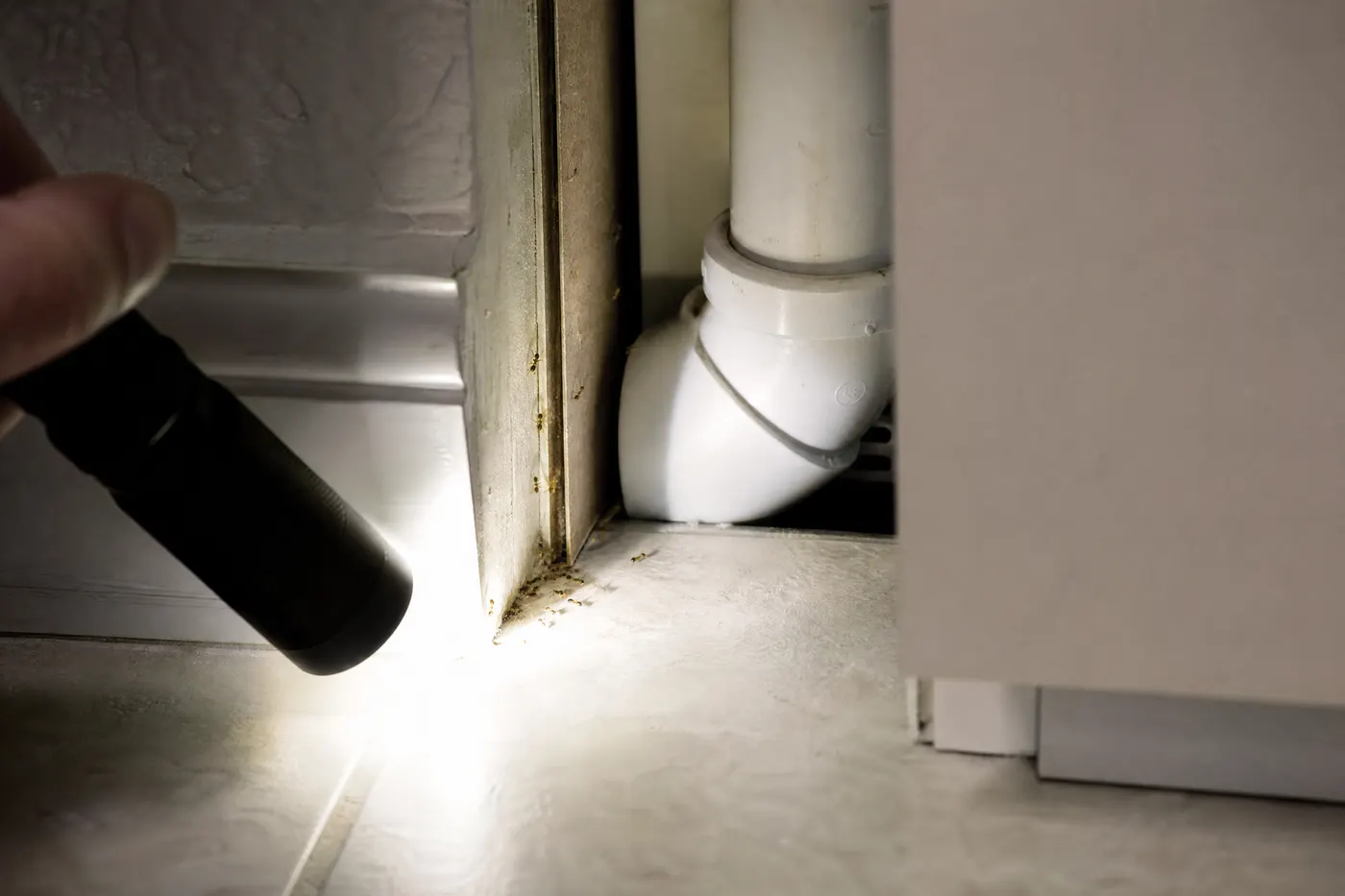
Repellent spray may kill exposed workers while disturbing the colony. A queen and workers can move into a nearby void, producing trails in a bathroom, bedroom or adjacent unit. The original counter then looks better for a short time while the building has a wider pattern to solve.
This is called budding or colony splitting. It is why a new trail after spray is not automatically a new infestation. It may be the same population using new routes.
What a treatment plan must control
The first requirement is identification. The second is mapping: where do trails begin, where do they end, and which rooms share a wall or utility path? The third is removing easy water and food while preserving enough activity to learn the route. A baiting plan must match the ant's current acceptance and be kept away from unplanned repellent products.
When to recheck
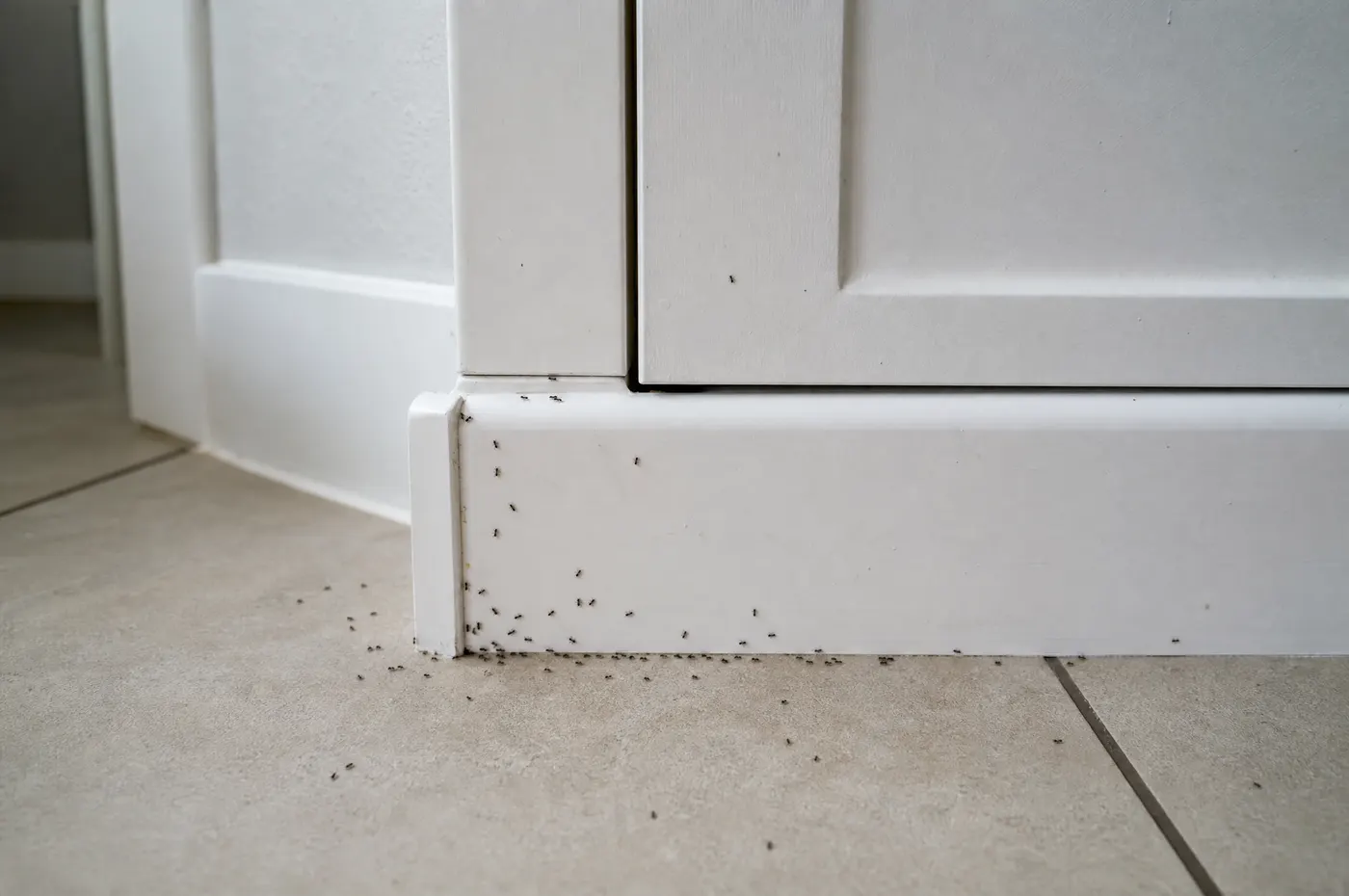
Expect the pattern to be observed, not judged from one quiet day. Record the number of trails, the rooms and any new moisture. If activity moves after spray, stop applying products at random and share the full history. The most important question is whether the active nests and routes are being reduced together.
Frequently asked questions
They can maintain several nest sites and move through protected building routes. Disturbance may make the visible trail shift or split. A plan that only kills exposed workers can leave the queens and satellite nests untouched.
They can. Repellent disturbance may cause a colony to divide and establish new nest sites. The result is often a temporary quiet period followed by trails in bathrooms, cabinets, wall edges or another unit.
They use warm, protected spaces such as wall voids, cabinet gaps, electrical routes, appliance spaces and stored items. The trail on a counter is usually a foraging route, not the nest itself.
Still dealing with it?
Ant Control across Broward County, FL, backed by a 30-day guarantee.
Book online in a few minutes and a Broward tech calls you back with your exact price (Mon–Fri 9am–5pm) — before any work starts.
Get rid of ants todayKeep reading
Ghost Ants: The Tiny Kitchen Invader You Can't Kill With Spray
Ghost ants are the #1 kitchen ant in South Florida. What they look like, why spraying multiplies them, and what actually ends the colony.
Ant Budding: Why Spraying Makes Your Ant Problem Worse
Ant budding is colony splitting triggered by stress. Learn why one trail can become several after spraying, which Florida ants do it, and what to change.
8 Types of Ants in Florida Homes (and How to Tell Them Apart)
Use size, color, nesting location and behavior to separate ghost, carpenter, pharaoh, fire, crazy, white-footed, big-headed and sugar ants.