
Mosquitoes · Broward County, FL
Mosquitoes Biting You in Broad Daylight? That's Aedes aegypti
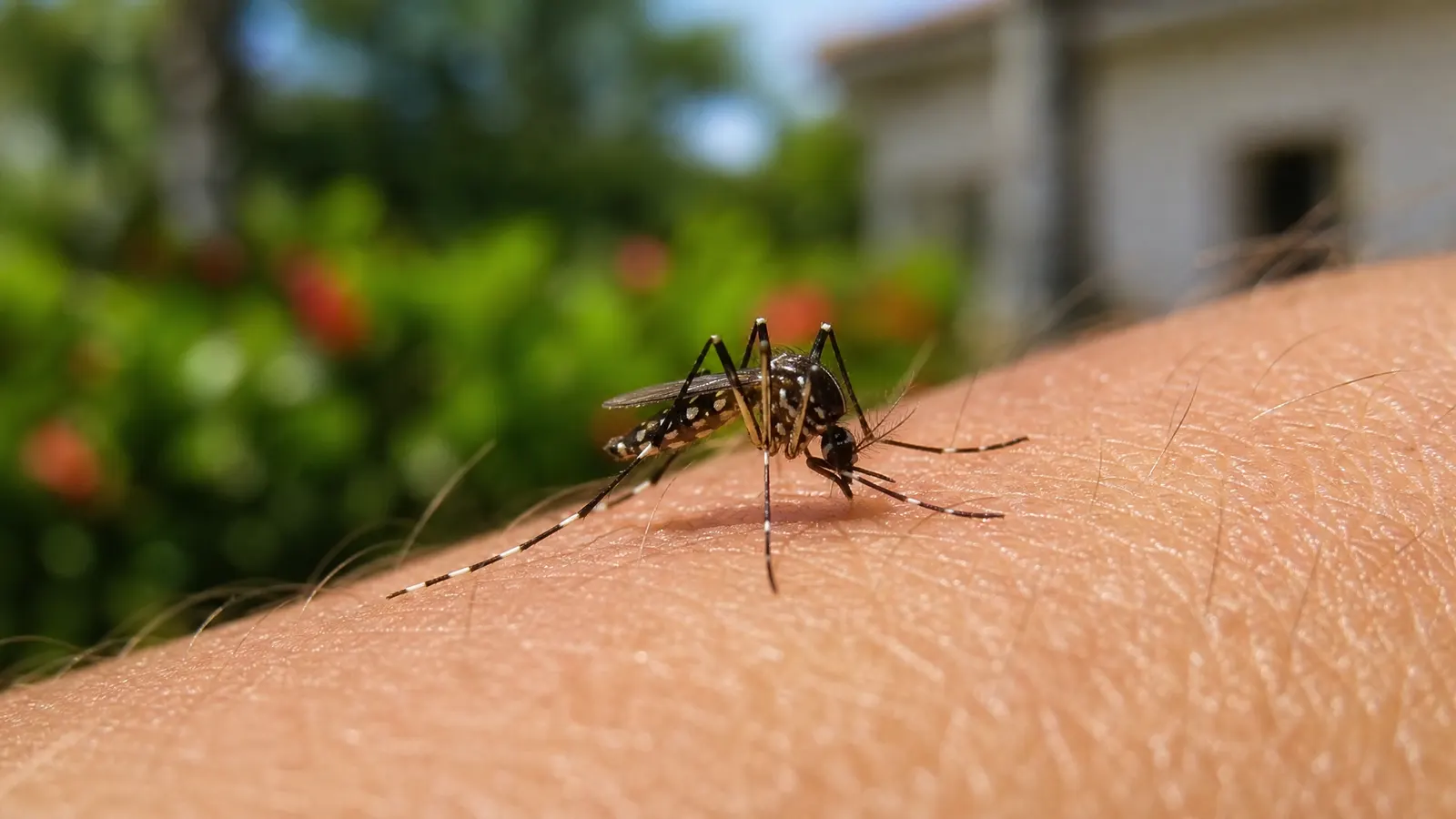
The short answer
The dusk-and-dawn advice everyone repeats describes Culex mosquitoes. The one biting your ankles at three in the afternoon is almost certainly Aedes aegypti, a daytime biter that dominates urban South Florida, breeds in tiny artificial containers, and rarely travels more than a couple hundred yards.
It is three in the afternoon, full sun, nowhere near dusk, and something is working on your ankles while you refill the dog bowl. You look down and see nothing — the welts show up ten minutes later, three of them on one calf.
Every guide that tells you to stay inside at dawn and dusk is describing a different mosquito with a different schedule. Follow that advice here and you are unprotected during the exact hours you actually use the yard.
Why the dusk-and-dawn advice is wrong here
The advice is not invented. It accurately describes Culex — the plain brown mosquito that shows up on the patio at sunset, collects around the porch light, and is gone by mid-morning. Most general mosquito guidance was written with that species in mind, and across much of the country it is a reasonable default.
South Florida runs a second mosquito on an entirely different clock. Aedes aegypti, the yellow fever mosquito, is a daytime biter. It peaks in the morning and again in the late afternoon, and it will bite straight through the middle of the day. There is no quiet window to schedule around. That is why "we only go out in the afternoon" does nothing for the people it is supposed to protect, and why so many homeowners conclude their yard is somehow uniquely bad.
Why it is still here
Florida's Aedes picture changed in 1986, when the Asian tiger mosquito (Aedes albopictus) arrived and spread. Ae. aegypti declined dramatically across the state afterward — but not evenly. UF/IFAS still finds it thriving in urban South Florida, where dense housing, year-round warmth and a container in every yard give it precisely what it needs. Statewide decline, local persistence. If you live in Broward, the statewide trend is not the one biting you.
It is also the species entomologists track most closely, because Aedes aegypti is the mosquito associated with dengue, chikungunya and Zika transmission. Treat that as a reason to take the water in your yard seriously, not as a statement about what is happening on your street. The rest of this article is about the biting.
Aedes aegypti vs Culex
The two get lumped together as "mosquitoes," and that is where the wasted effort starts. They bite at different times, breed in different water, and rest in different places, so the work that reduces one barely touches the other.
| Aedes aegypti | Culex | |
|---|---|---|
| When it bites | Daytime — morning and late-afternoon peaks, and through the middle of the day | Dusk and after dark |
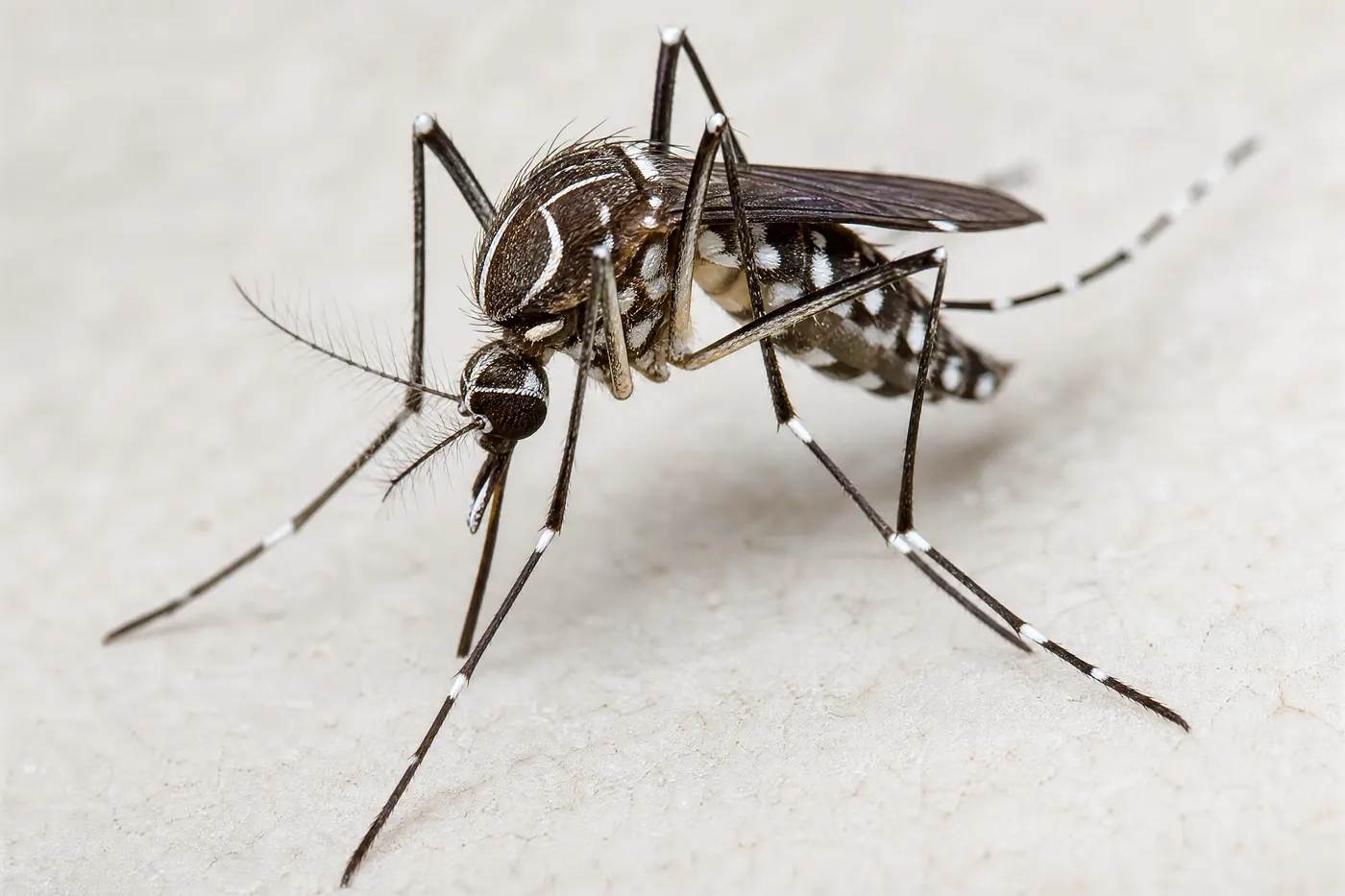
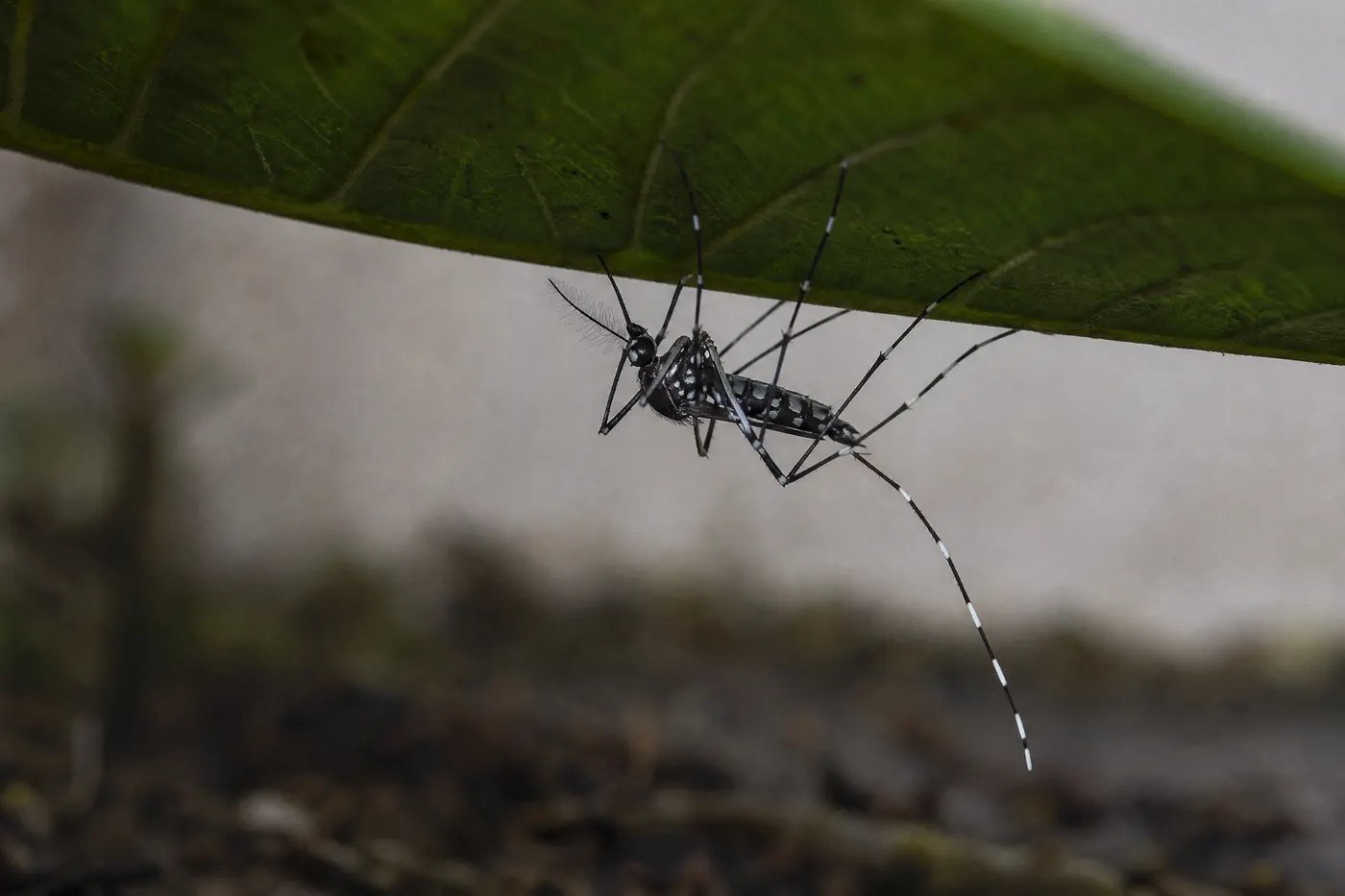
| What it looks like | Dark body with bright white banding on the legs; pale lyre-shaped marking on top of the thorax | Plainer brown, no striking leg banding |
| Where it breeds | Small artificial containers: plant saucers, toys, bromeliads, gutters, tarps, bottle caps | Larger standing water: drains, ponds, neglected pools |
| How far it flies | Rarely more than about 200 yards | Considerably farther |
| Where it rests by day | Shaded vegetation, under decks, cool wall surfaces | Dense shrubs |
The one-second field check
Look at the legs. Bright white bands on a dark leg means Aedes. A uniform brown mosquito with no banding, arriving at sunset, is Culex.
The behaviour gives it away just as fast. Aedes aegypti flies low and comes in from below and behind — which is exactly why the bites cluster on ankles and calves while you are standing, and why you rarely see the mosquito that got you. It is a stealthy, interrupted feeder: disturbed mid-bite, it leaves and comes back, so one mosquito can leave you several welts. Culex is the one you swat off your neck under the porch light.
The source is closer than you think
About 200 yards. That is the number that changes what you do next.
Aedes aegypti is a weak, short-range flier that spends its whole life near where it emerged. If it is biting you in your own yard at two in the afternoon, it developed on your property or immediately beside it — not in the canal, not in the retention pond, not in the wetland a mile away. That is inconvenient in one sense and extremely good news in another: property-level work actually moves the number, because the population you are fighting is a local one.
Container breeder, not swamp breeder
This species does not lay on open water. The female lays her eggs one at a time on the inside wall of a container, just above the waterline. The next rain raises the level, wets the eggs, and they hatch.
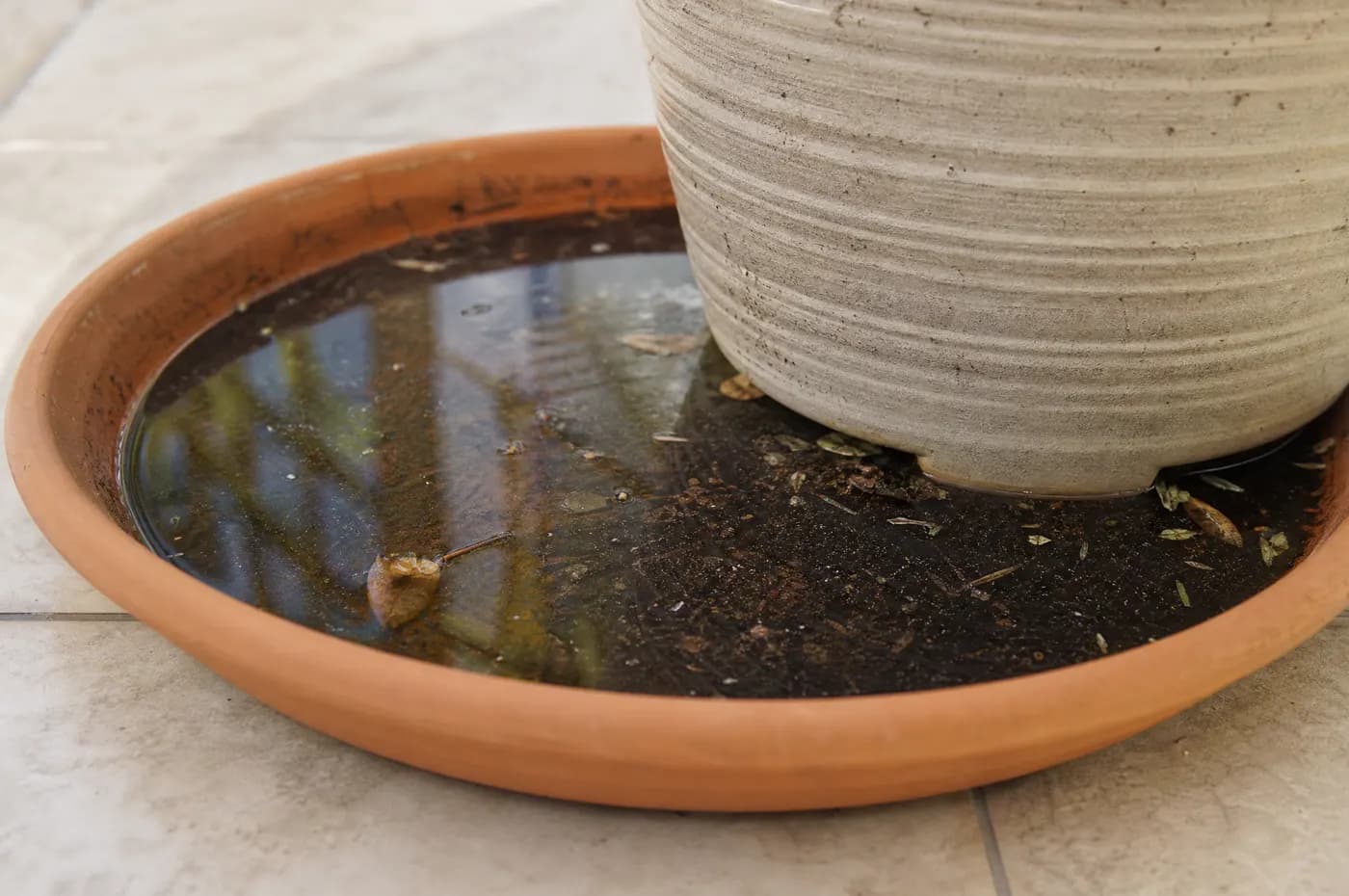
The container can be almost nothing. A plant saucer. A kid's toy left face-up. A bromeliad holding water in its leaf axils. A clogged gutter, a fold in a tarp, a bottle cap in the recycling bin, the tray under the AC condenser, a birdbath, a wheelbarrow, a boat cover.
Why dumping it once fails
Here is the part that catches everyone. Aedes eggs survive drying out. They can sit glued to the dry wall of an empty container for months and hatch when water returns.
So when you tip out the saucer, you pour off the larvae and leave the eggs exactly where they were. The pot gets watered on Saturday, the level comes back up, and the container restocks itself from eggs that were already there. Nothing new had to fly in.
That is why the instruction is scrub, not dump. A stiff brush on the inside wall is what removes the eggs. Dump, scrub, and then decide whether the container needs to exist at all — the ones you eliminate are the ones you never have to remember again.
What actually reduces daytime biting
Four things, and they only work together.
- Remove and scrub the containers. Everything that holds water either gets eliminated, stored upside down, or scrubbed on a weekly cycle. Weekly is not arbitrary — it is shorter than the time it takes a larva to become a biting adult.
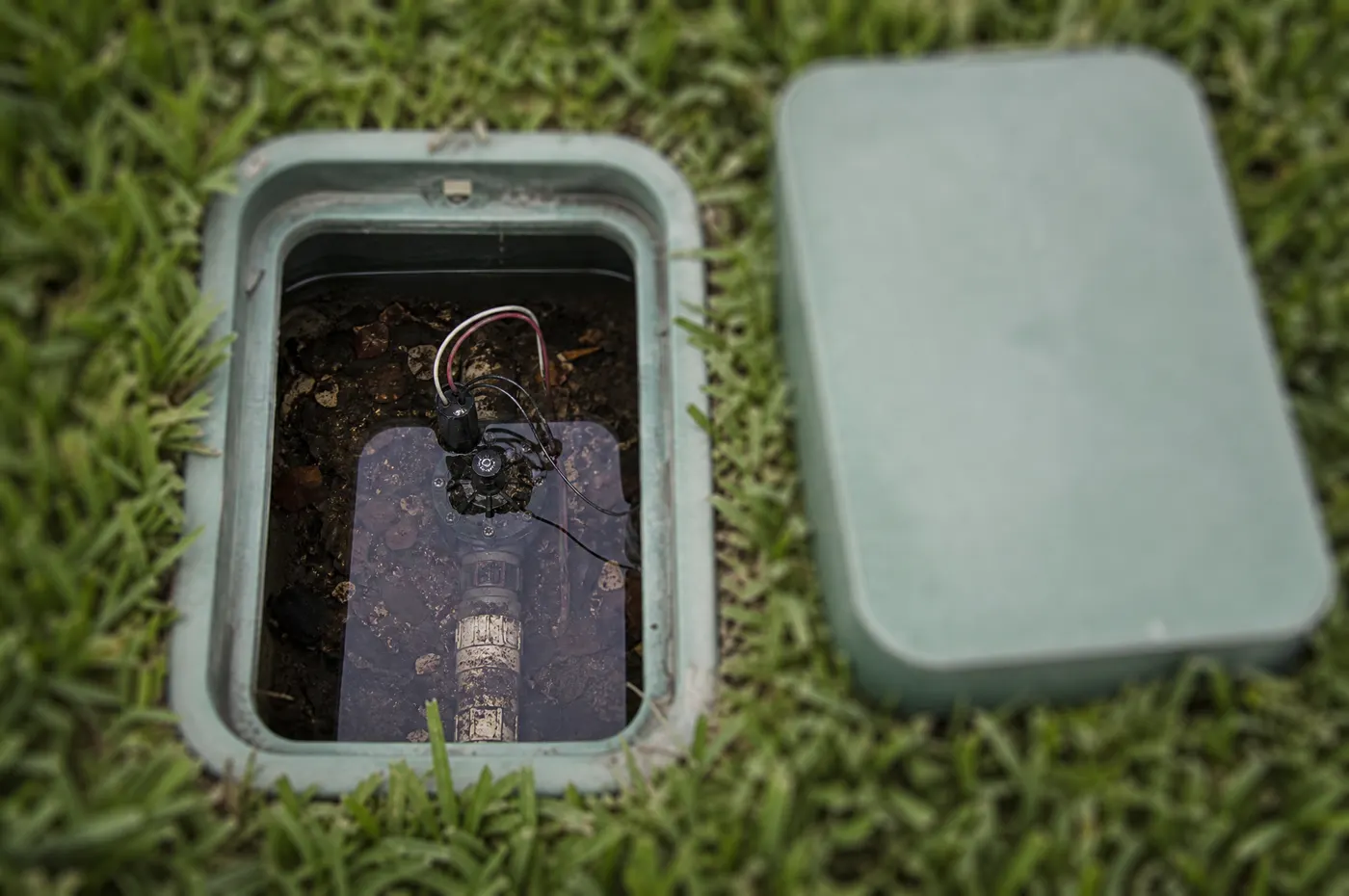
- Correct the drainage and the gutters. The container you cannot dump is the one that refills itself: a gutter run holding water at the low end, a sunken irrigation box, a low spot beside the slab, a downspout going nowhere. These are repairs, not chores, and they are the ones that hold.
- Treat where the adults rest. Adults spend the day on the underside of shaded foliage, under decks, and on cool wall surfaces. Targeted material goes into those low, shaded places where the mosquitoes actually sit — not broadcast over open lawn, where they are not.
- Repeat it. South Florida's wet season does not pause, and every rain resets the containers you missed. A yard walked once is a yard with a fresh generation in it a few weeks later.
What repellent does and does not do
Repellent protects the person wearing it, for as long as they are wearing it. It has no effect whatsoever on the population. That is a real and useful thing on a hike; it is not a plan for a backyard you want to use every afternoon without thinking about it.
The same logic applies to citronella candles and hardware-store foggers. A fogger knocks down whatever happens to be flying at that moment. The eggs on the saucer wall and the larvae in the gutter are untouched, and by the weekend the yard is restocked from water you never found.
Mosquito control is pressure management, not extermination — new mosquitoes hatch after every rain. What decides whether that pressure is livable is whether someone is finding the water, scrubbing the containers, fixing the drainage that keeps making new ones, and treating the shade on a schedule that matches the season. The containers are on your property. So is the fix.
Frequently asked questions
Because the species biting you is a daytime feeder. Aedes aegypti is most active in the morning and late afternoon and will bite through the middle of the day, which is the opposite of the Culex behaviour most general advice is written around.
Look at the legs. Aedes aegypti is dark with bright white banding on the legs and a lyre-shaped marking on the thorax. Culex is a plainer brown, bites at dusk and after dark, and is the one drawn to porch lights.
Aedes aegypti flies low and approaches from below, which is why the bites cluster around ankles and calves while you are standing. It is also a stealthy feeder that tends to bite from behind.
From something small. A plant saucer, a bottle cap of water in a recycling bin, a clogged gutter, a bromeliad, a tarp fold. Aedes aegypti breeds in artificial containers, not in lakes or canals.
It protects you while you wear it and does nothing to the population. Because this species rarely travels more than about 200 yards, reducing the containers and treating the resting sites on your own property has a measurable effect.
Still dealing with it?
Mosquito Control across Broward County, FL, backed by a free re-treatment if the knockdown doesn't hold.
Book online in a few minutes and a Broward tech calls you back with your exact price (Mon–Fri 9am–5pm) — before any work starts.
Take your backyard back todayKeep reading
Where Mosquitoes Actually Breed in a South Florida Yard
Not the lake — the plant saucer, the bromeliad and the palm boot. The containers people miss, and why emptying them once doesn't work.
What Broward County Mosquito Control Will and Won't Do for You
The county treats standing water and sprays when surveillance warrants, free, on request. What it won't touch — and where its job ends and yours begins.