
Ants · Broward County, FL
How to Kill Carpenter Ants (and Why Bait Alone Usually Fails)
The short answer
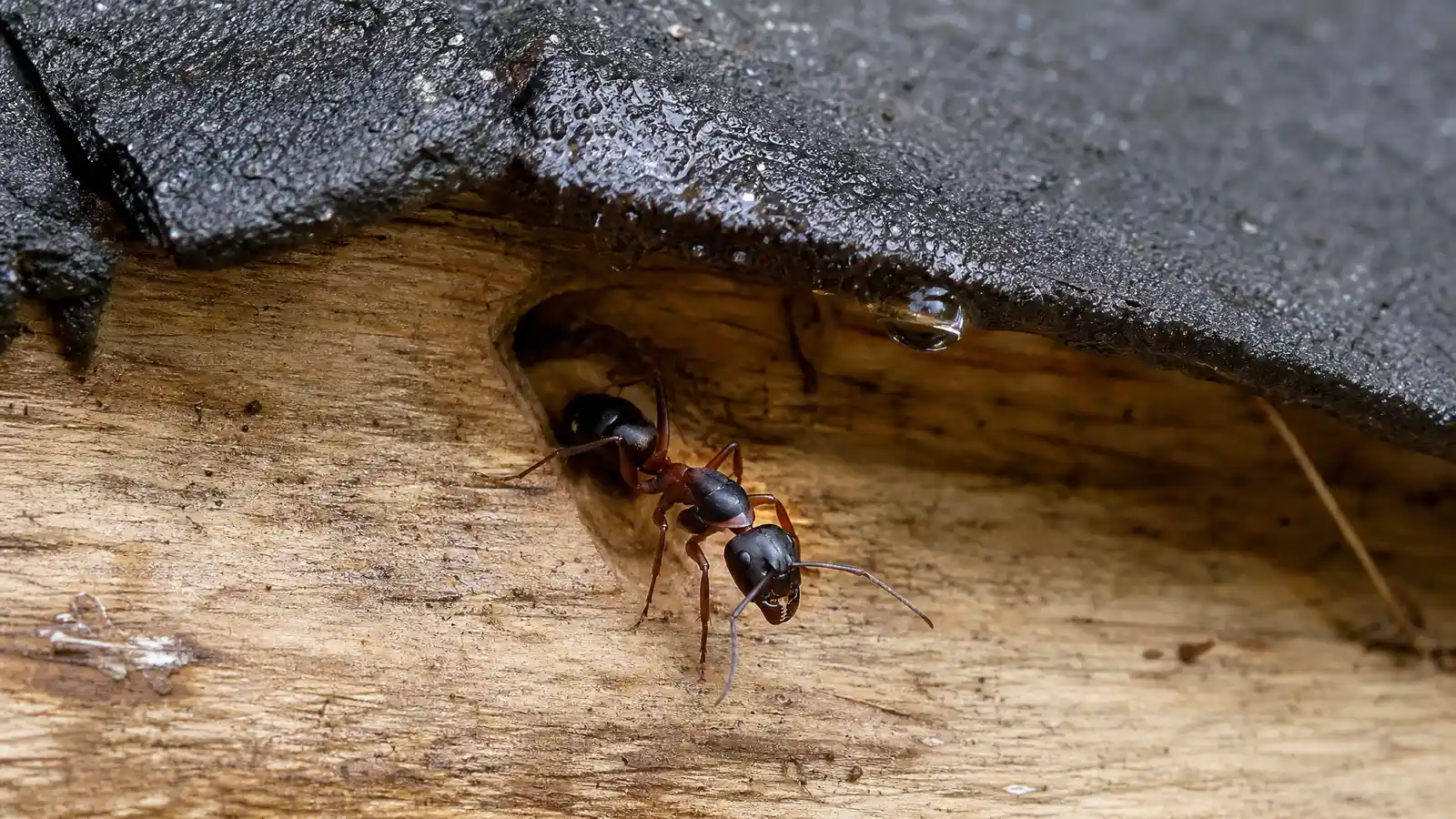
Killing carpenter ants requires finding the parent or satellite nest and correcting the moisture that made the wood usable. Bait can reduce foragers but often fails alone when the colony is in a wall, roof edge, tree or damp beam. The nest location is the missing piece.
Carpenter ant bait can reduce the workers crossing a counter while the colony continues inside a damp beam, tree, roof edge or wall. That is why bait alone often disappoints. The missing task is usually locating the parent or satellite nest and correcting the moisture that made it useful.
Why bait alone can fail
Foragers are the part of a carpenter-ant colony easiest to see. A bait may be carried away by some workers while the queen and nest remain protected. The colony may also have a different food preference or a second nest that is not using the same route.
Find the parent and satellite nests
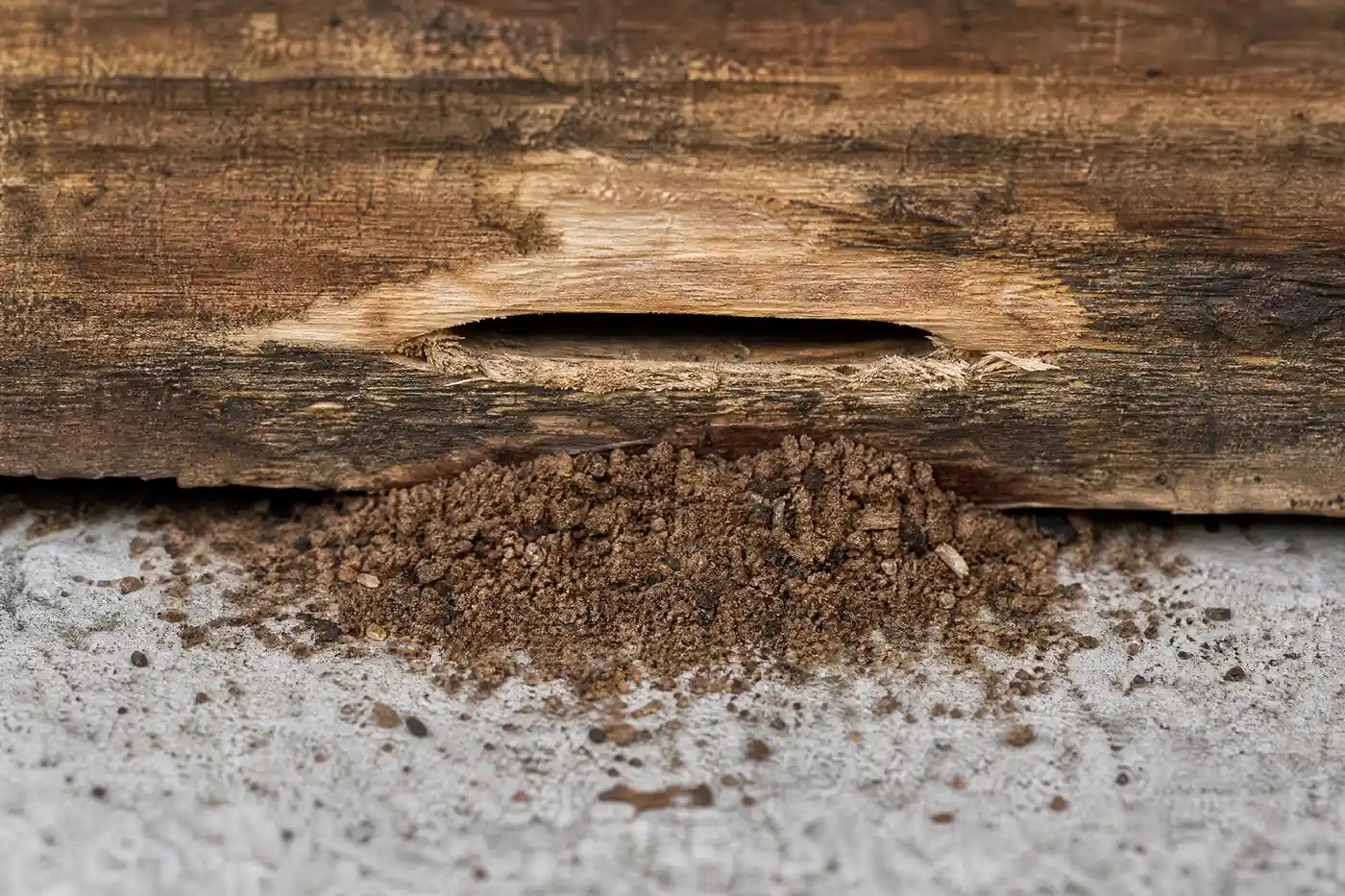
Start with the strongest evidence: coarse frass, rustling, winged ants, a damp beam or activity after rain. Trace toward roof edges, fascia, windows, tree limbs, plumbing and wall voids. The loudest trail is not always the nest; ants can travel along a long hidden route.
Follow the frass and sound
Carpenter-ant frass is usually coarse and wood-like, sometimes mixed with insect parts. It can collect below a beam, window frame, fascia or tree cavity. Night rustling in a wall is another clue, but it should be paired with the wood condition and entry route rather than treated as proof.
Fix the moisture route
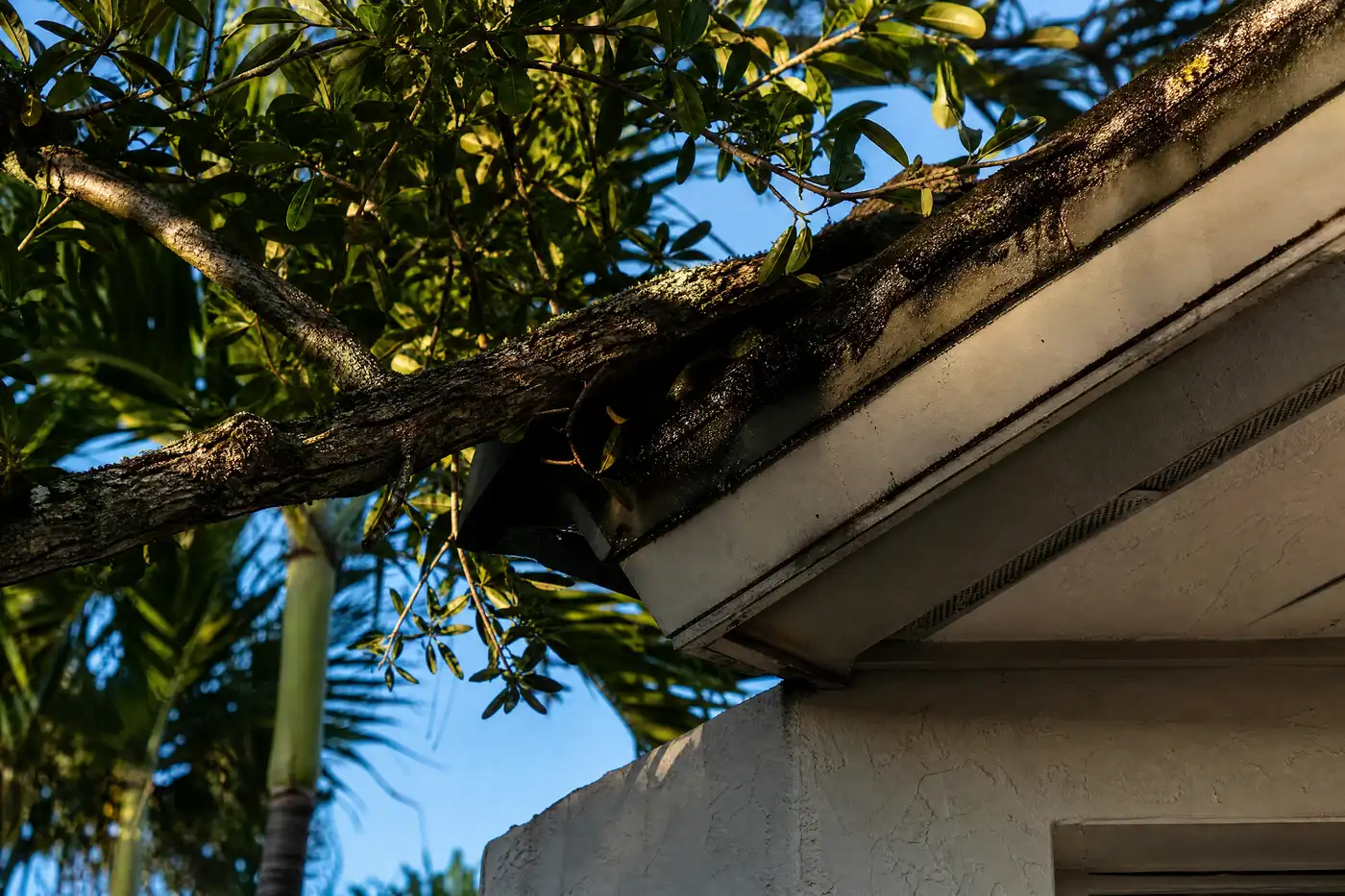
Repair roof or plumbing leaks, correct condensation, improve drainage and keep branches from touching the roof. Damp wood can support a nest and also create the conditions that attract replacement colonies. Treatment without the water correction leaves the same habitat available.
What treatment can and cannot do
A useful plan identifies the ant, locates nest options, maps the route and addresses moisture. Bait may be one tool. It cannot tell you whether the wood is damp, whether a termite is present or whether a second nest remains in a tree. Save a specimen and the frass location before cleaning so the inspection starts with evidence.
UF/IFAS and FDACS distinguish carpenter-ant excavation from termite feeding by the insect body and the wood evidence. That is why a technician should not infer termites from the word "wood" or carpenter ants from a dark winged insect alone. Photograph the gallery, save the debris and document moisture before making a large treatment decision.
Frequently asked questions
Bait may remove workers without reaching the colony, or the ants may have a different food preference. If the nest is in a damp beam, wall void or tree, the active source can continue replacing foragers.
Follow activity toward damp or damaged wood, roof edges, window frames, fascia, tree limbs, plumbing routes and wall voids. Coarse frass below an opening is useful evidence, but the nest can be nearby rather than directly above it.
No. Carpenter ants excavate wood and termites consume cellulose, but both can indicate a structural or moisture issue. Compare the insect body and the wood evidence before choosing a treatment.
Still dealing with it?
Ant Control across Broward County, FL, backed by a 30-day guarantee.
Book online in a few minutes and a Broward tech calls you back with your exact price (Mon–Fri 9am–5pm) — before any work starts.
Inspect carpenter ant activityKeep reading
Carpenter Ants in Florida: Damage, Signs and Treatment
Learn where Florida carpenter ants nest, what their frass means, how moisture changes the risk and why bait alone can miss a satellite nest.
Carpenter Ants vs Termites: 5 Ways to Tell What You Have
Carpenter ants and termites can both show up around damaged wood. Compare waist, antennae, wings, frass and damage patterns before deciding what to do.
Why Ants Invade Your House After It Rains in Florida
Rain can flood shallow nests, change soil moisture and push ants toward higher, drier routes. Learn what to check in the first day after a storm.