
Ants · Broward County, FL
Carpenter Ants vs Termites: 5 Ways to Tell What You Have
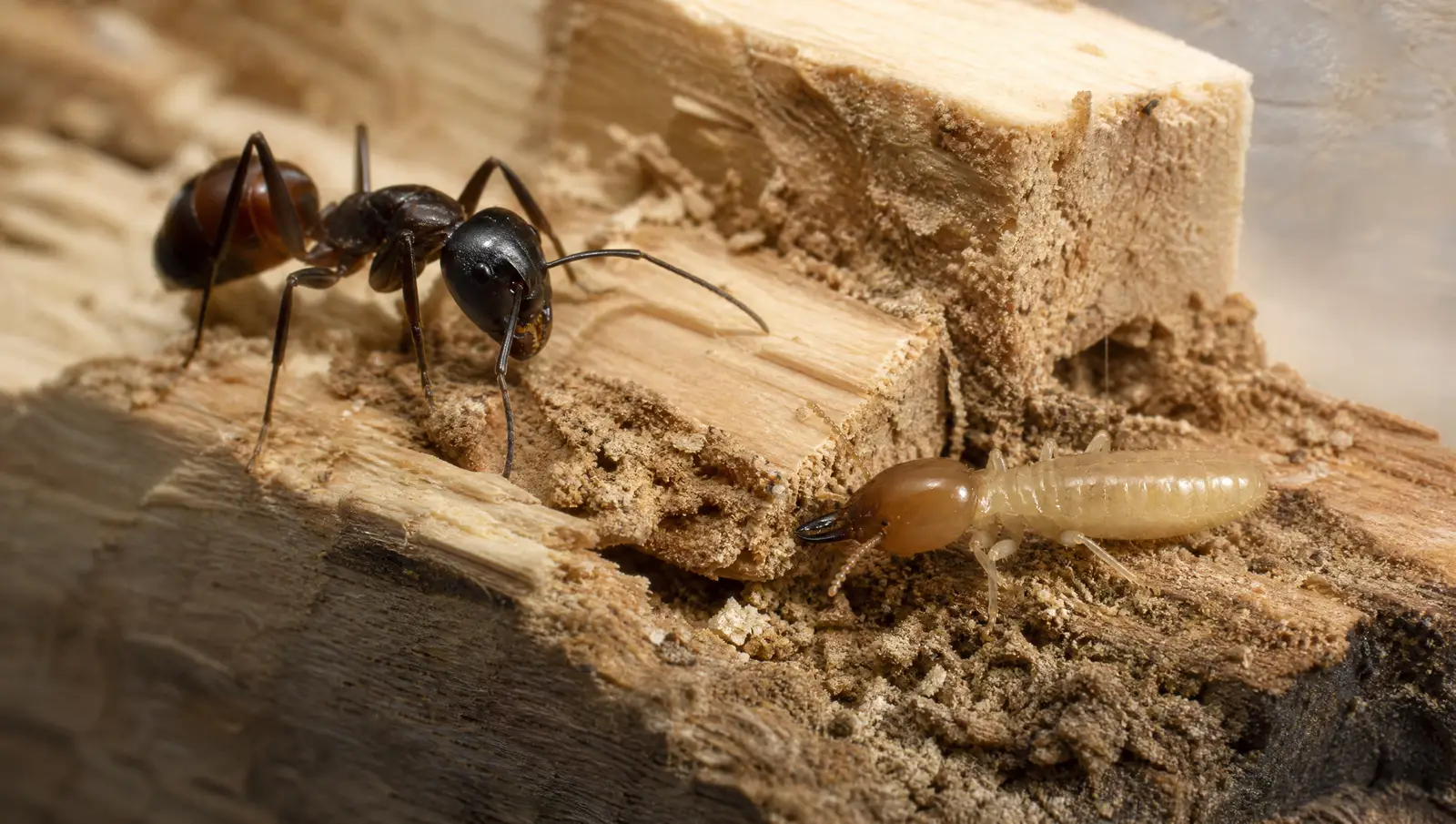
The short answer
Carpenter ants and termites both damage wood, but their bodies and evidence differ. Carpenter ants have a pinched waist, elbowed antennae and unequal wings; termites have a straight waist, straight antennae and four wings of similar length. Carpenter ants push coarse sawdust from galleries, while termites often leave soil-packed channels or fine frass.
Winged insects around damaged wood trigger the same question every time: is this a carpenter ant or a termite? The answer matters because the insects use wood differently and the next inspection is not looking for the same evidence.
The fastest comparison uses the body first, then the wings and finally the wood. Do not identify an insect from color alone. Lighting, age and camera quality can make a dark ant look like a termite and a pale termite look like an ant.
The five fastest differences
| Feature | Carpenter ant | Termite |
|---|---|---|
| Waist | Narrow and pinched | Broad and straight |
| Antennae | Elbowed | Straight or gently beaded |
| Wings | Front wings longer than hind wings | Four wings of similar length |
| Wood evidence | Coarse sawdust-like frass | Soil-packed channels or fine material, depending on group |
| Food source | Excavates wood but does not eat it | Feeds on cellulose in wood |
The table gives you a starting point, not a final diagnosis. A swarm of winged insects, a pile of debris or a soft section of trim deserves a closer look at the structure around it.
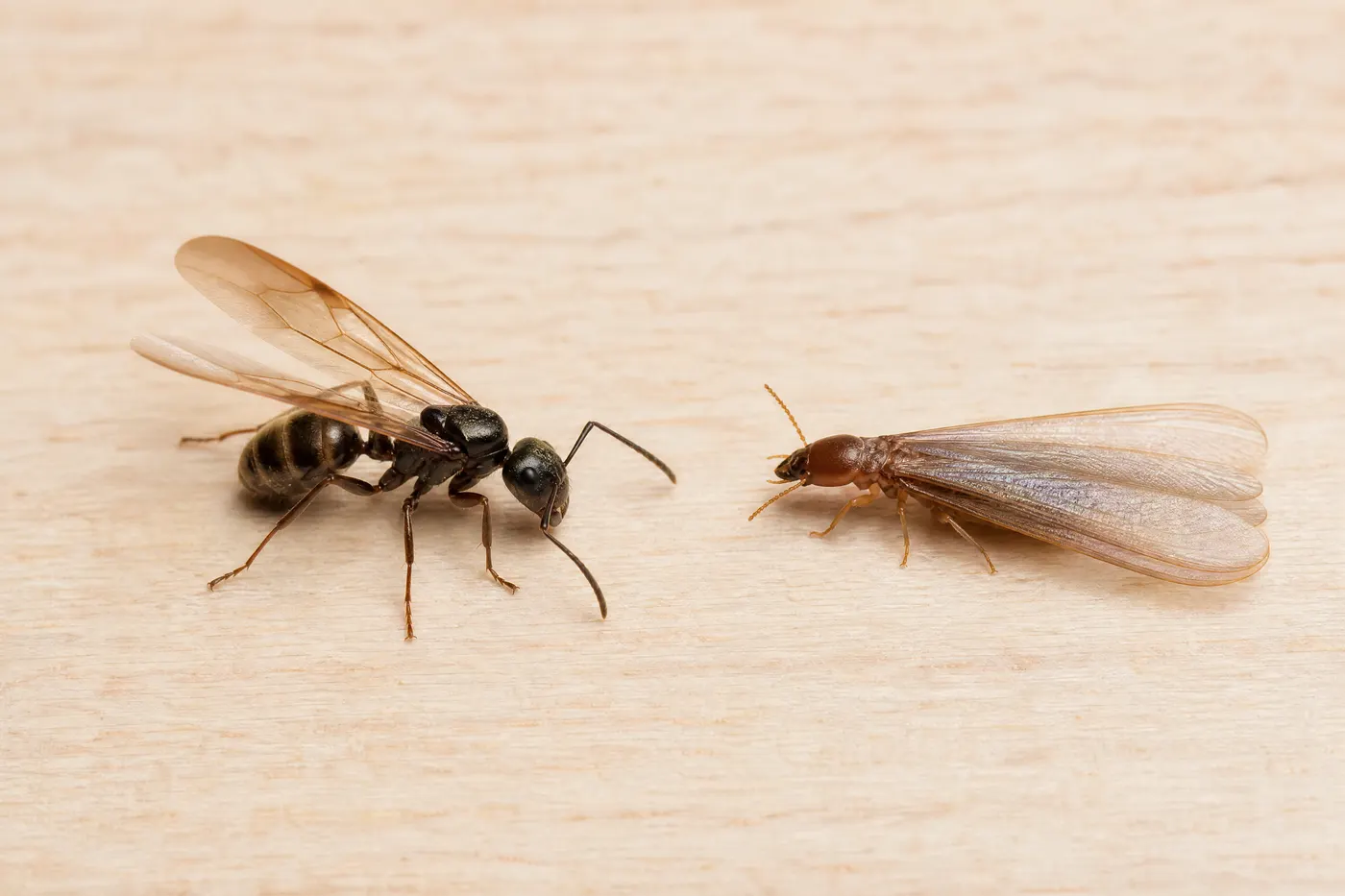
1. Waist and body shape
A carpenter ant looks like an ant even when it has wings. Its thorax and abdomen are joined by a narrow waist, giving the body a pinched profile. A termite has a more uniform, straight-sided body with no narrow waist between the sections.
This is easiest to see in a side view or a sharp photograph from above. Do not judge a fast-moving insect by the silhouette of its wings alone. If the insect is covered in dust or the image is blurry, save the specimen rather than relying on a guess.
2. Antennae
Carpenter ant antennae have an elbow: the first segment extends away from the head and the rest bend at an angle. Termite antennae are straight or made of small segments that continue forward without that sharp elbow.
Antennae are small, so they disappear in most phone photos. Use the highest resolution image available and photograph the head from the side. The waist and wings should still be checked alongside them.
3. Wings
Winged carpenter ants have two pairs of wings with different lengths. The front pair is longer and the hind pair is shorter. Termite swarmers have four wings that are approximately equal in length and extend beyond the body in a similar way.
Discarded wings on a windowsill tell you that a swarming insect was present, but they do not identify the insect by themselves. Pair the wings with a body photo or the location where the swarm was found.
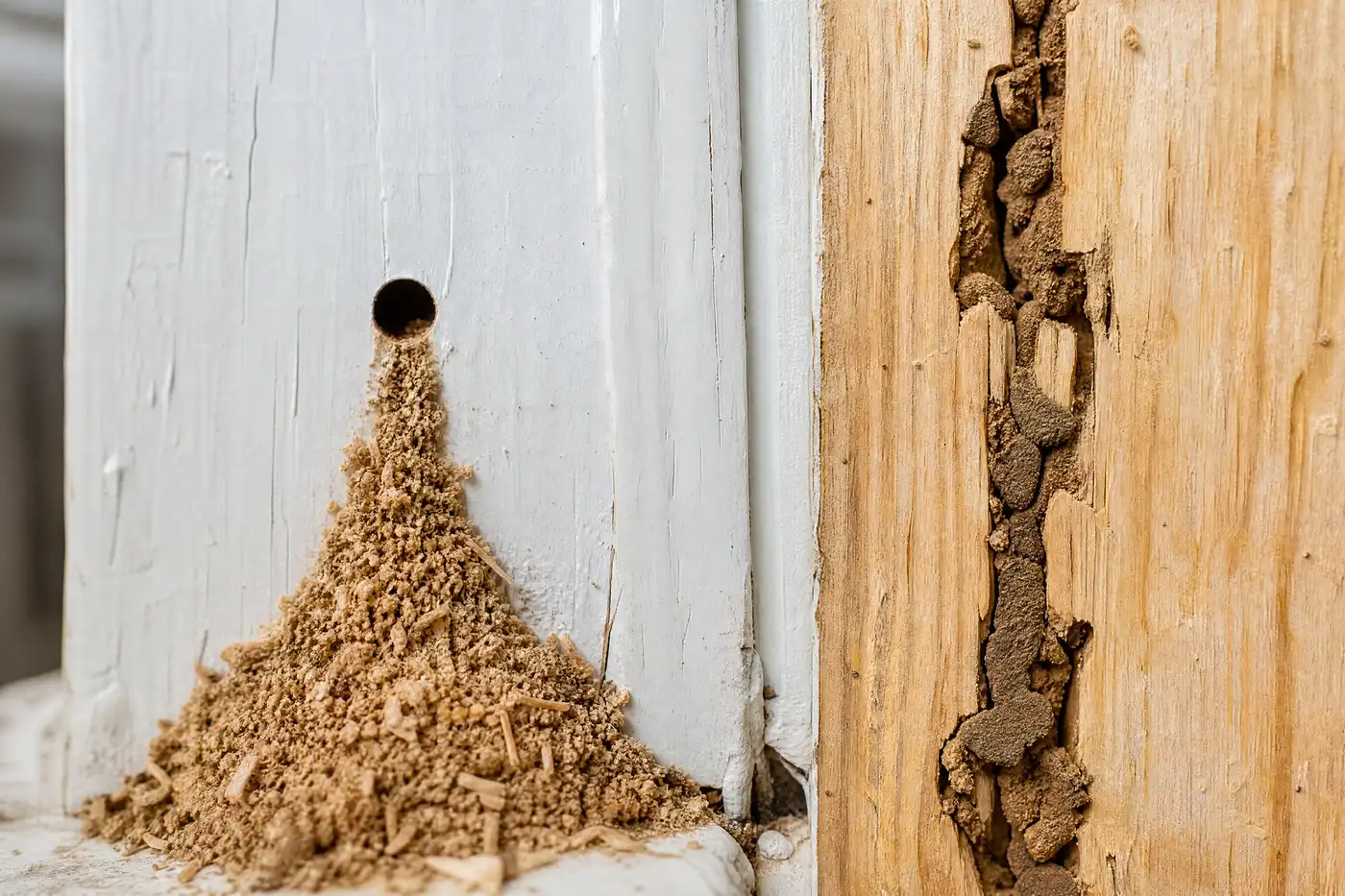
4. Sawdust, frass and soil
Carpenter ants do not eat wood. They excavate it to make nesting galleries and push the waste out through openings. The material can look like coarse sawdust, wood shavings or small debris mixed with insect parts. It may collect below a beam, window frame, fascia or tree cavity.
Termite evidence depends on the group. Subterranean termites commonly create channels containing soil and moisture, including mud tubes along foundations. Drywood termites can leave small, hard pellets below kick-out holes. A pile of material is a clue, not a species result; the surrounding gallery matters.
5. Damage pattern
Carpenter ant galleries are often smooth and clean because the insects excavate the softer sections of wood. The nest may be in a damp beam, roof edge, window frame, tree or wall void. Finding ants does not prove the wood is being eaten.
Termite galleries are feeding routes through cellulose. Subterranean galleries often follow the grain and contain soil, while drywood evidence can appear as pellets below isolated kick-out openings. The response depends on whether the activity is subterranean or drywood and how far it has spread.
What to do with uncertain evidence
Save a specimen, photograph the insect and photograph the wood without cleaning away the debris. Record whether the insect was winged, where it appeared and whether the wood was wet, hollow or connected to soil.
Do not assume that every winged insect means termites, and do not assume that every ant near wood is unrelated. Carpenter ants can signal a moisture or structural issue, while termites require a different inspection path. HONEX handles ant service across Broward County. Book online and a technician calls you back with the exact price during business hours (Mon–Fri 9am–5pm), before any work starts.
Frequently asked questions
Check the waist, antennae and wings first. Carpenter ants have a narrow waist, elbowed antennae and unequal wings. Termites have a straight waist, straight antennae and four wings of roughly equal length. The wood debris and gallery pattern provide a second check.
No. Carpenter ants excavate wood to create nesting galleries but do not use it as food. Termites consume cellulose and can build soil-packed galleries or other evidence depending on the group. Both can be serious findings, but the treatment decision is not the same.
Carpenter ant frass usually looks like coarse sawdust or small wood shavings pushed from a gallery opening. It may include insect parts and can collect below a damaged beam, window frame or tree. Fine dust alone is not enough for a positive identification.
Not automatically. Both carpenter ants and termites produce winged swarmers. A termite swarmer has a straight body and four wings of similar length; a flying ant has a pinched waist, elbowed antennae and shorter hind wings. A close photo or specimen helps.
Save a specimen if you can do so without disturbing the area, photograph the insect and the wood evidence, and note where it appeared. Do not cover or destroy the evidence before an inspection. In Broward, the distinction between ant and termite changes the next question to ask.
Still dealing with it?
Ant Control across Broward County, FL, backed by a 30-day guarantee.
Book online in a few minutes and a Broward tech calls you back with your exact price (Mon–Fri 9am–5pm) — before any work starts.
Get rid of ants todayKeep reading
Ghost Ants: The Tiny Kitchen Invader You Can't Kill With Spray
Ghost ants are the #1 kitchen ant in South Florida. What they look like, why spraying multiplies them, and what actually ends the colony.
Palmetto Bug vs Cockroach: What South Florida Homeowners Are Actually Seeing
A palmetto bug is a cockroach — here's which one, how to tell it from the kitchen roach, whether they fly, and what each one means for your home.