
Ants · Broward County, FL
How to Get Rid of Ants in Florida: The Complete Guide
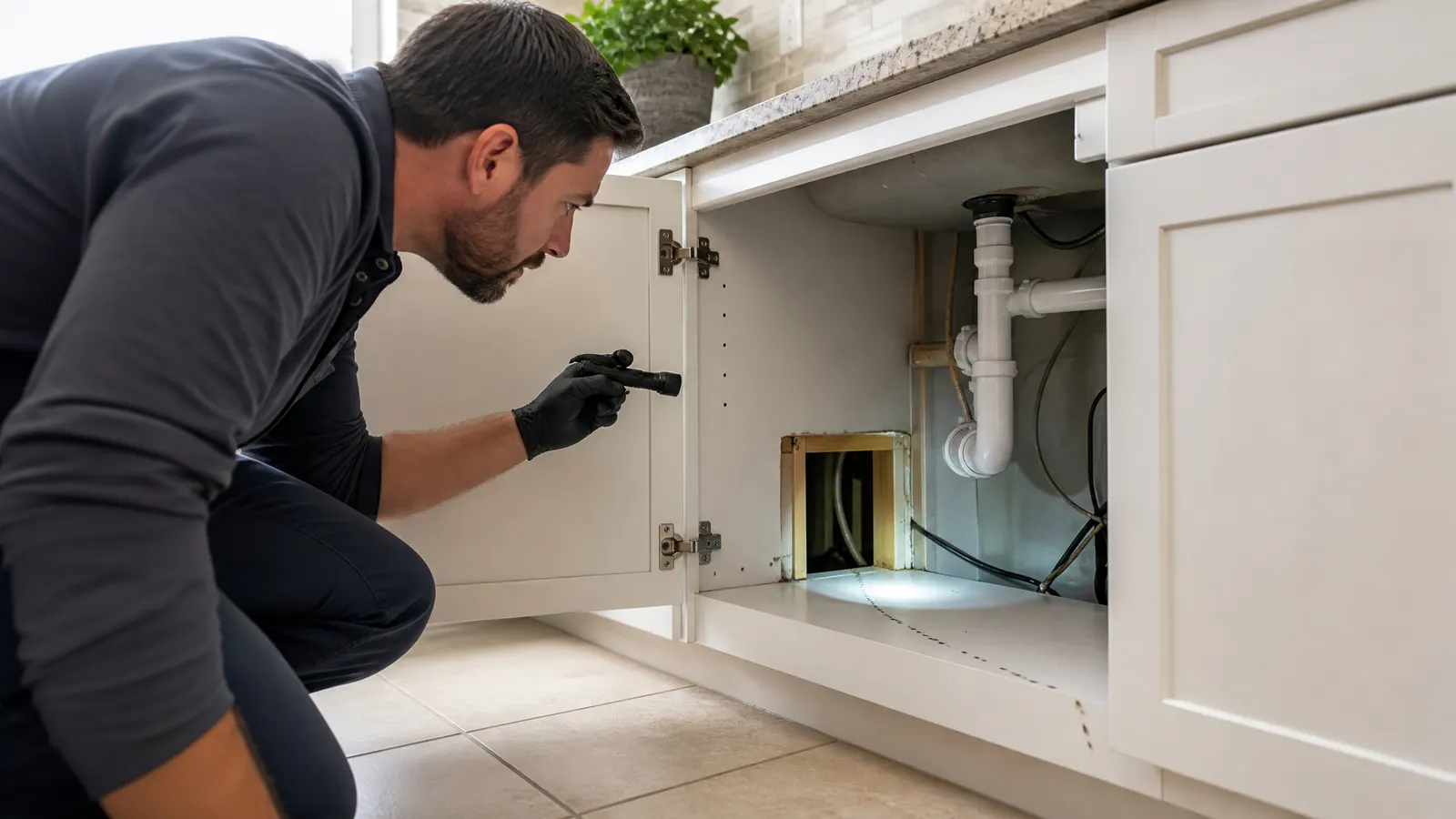
The short answer
To get rid of ants in Florida, identify the species, follow the trail to its entry or nest, remove food and moisture, then use a method that fits its behavior. Ghost and pharaoh ants may bud after repellent spray; carpenter ants require nest and moisture work; fire ants need mound-focused control.
The right way to get rid of ants in Florida depends on what kind of ant is using the home and where its nest is. A tiny kitchen trail, a carpenter ant in wet wood and a fire-ant mound each need a different answer. The four steps below keep a clean counter from being mistaken for a solved colony.
Step 1: identify the ant
Record size, body color, pale feet, waist shape and movement. Ghost ants have a dark front and pale rear. Carpenter ants are larger with a pinched waist. Fire ants build mounds and sting. Pharaoh ants are tiny indoor ants that may use multiple protected nest sites. A clear specimen is more valuable than a common name.
Step 2: follow the trail
Follow the line toward the sink, cabinet, plant, window, door or wall. Look for the point where it disappears. The visible counter is usually a food or water destination, not the nest. Outside, inspect mulch, irrigation, tree limbs, foundation cracks and landscape debris.
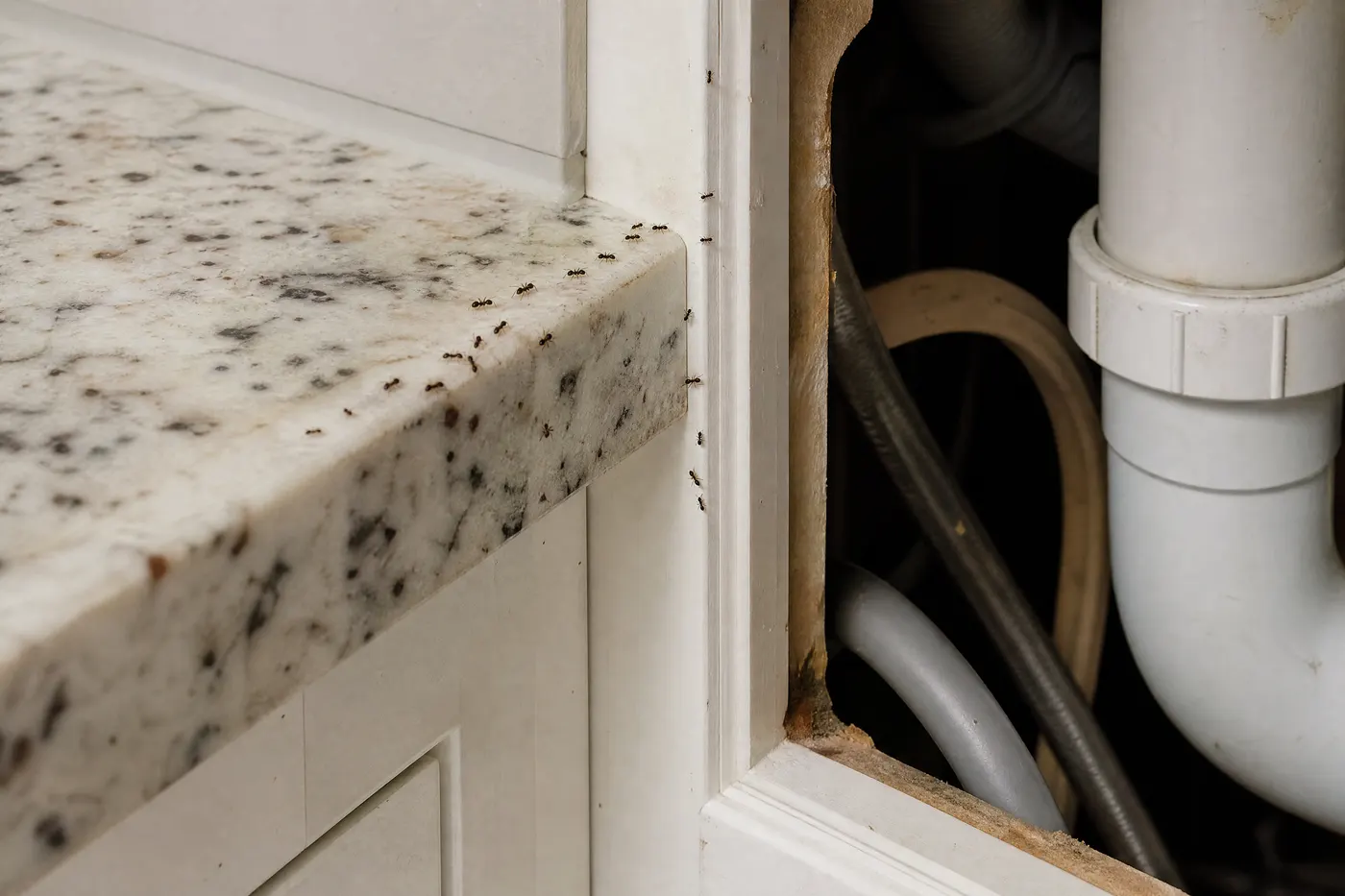
Step 3: remove food and moisture
Seal sweet and greasy food, clean residue, empty pet dishes as directed and dry leaks or condensation. Outdoors, remove fallen fruit and reduce leaf litter against the structure. These steps reduce pressure but do not prove the colony is gone.
Step 4: match the method to the species
Ghost and pharaoh ants can bud after disturbance, so repeated repellent spray may widen the pattern. Carpenter ants need the parent or satellite nest and the moisture route located. Fire ants need mound mapping and outdoor treatment that follows its label. There is no single best ant product for all three.
Why repellent spray can fail
An aerosol can kill workers in view while leaving the queen, nest and entry route untouched. The trail may disappear and return in another room. That is not evidence that ants were created by the spray; it is evidence that the colony's behavior and the building route were not addressed.
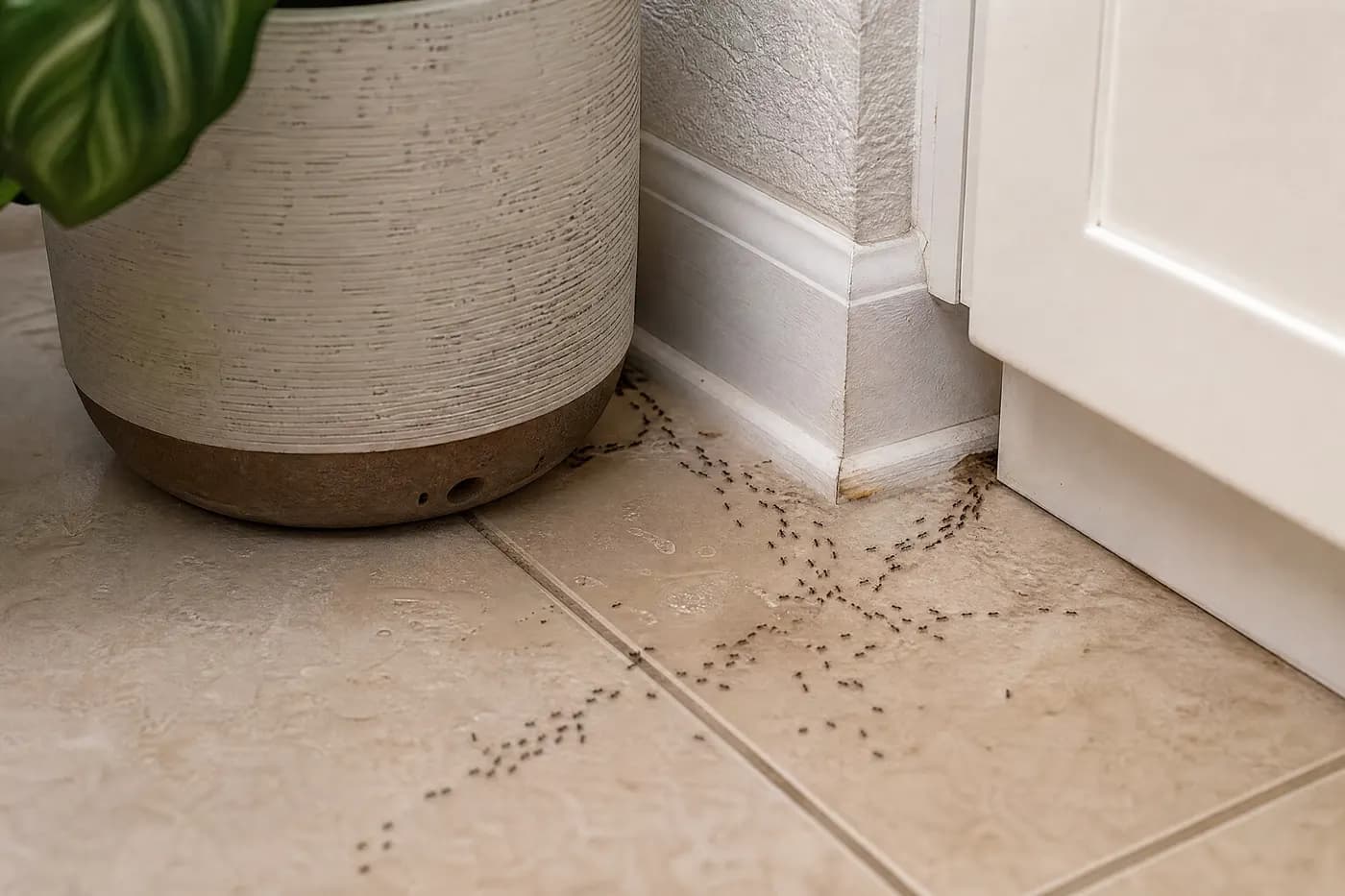
When to get help
Ask for an inspection when trails repeat, move through several rooms, appear in an apartment, emerge from wet wood or follow rain. Bring photographs and note the date, weather, room, food source and treatment history. The goal is to find the species, nest options and access route, then measure whether activity is actually declining.
Frequently asked questions
Start with species and route rather than treating every visible worker. Follow the trail, correct moisture, protect food and determine whether the nest is inside, outside or in a wall. The method must fit the ant’s nesting and feeding behavior.
Cleaning removes food residue but usually does not remove the nest or close the entry route. Ants can return through plumbing gaps, window seams, door thresholds, wall voids and landscaping connections after the counter looks clean.
A repellent spray can interrupt the visible trail and may scatter certain small household ants into new nest sites. Record the route, remove food and water sources, and identify the species before choosing a treatment.
Still dealing with it?
Ant Control across Broward County, FL, backed by a 30-day guarantee.
Book online in a few minutes and a Broward tech calls you back with your exact price (Mon–Fri 9am–5pm) — before any work starts.
Get rid of ants todayKeep reading
Ghost Ants: The Tiny Kitchen Invader You Can't Kill With Spray
Ghost ants are the #1 kitchen ant in South Florida. What they look like, why spraying multiplies them, and what actually ends the colony.
Pharaoh Ants in Florida Homes: Why They’re the Hardest to Kill
Pharaoh ants are tiny indoor ants that can split into multiple nests after disturbance. Learn the signs and why a species-first plan matters.
8 Types of Ants in Florida Homes (and How to Tell Them Apart)
Use size, color, nesting location and behavior to separate ghost, carpenter, pharaoh, fire, crazy, white-footed, big-headed and sugar ants.