
Termites · Broward County, FL
What Florida Law Requires Your Termite Contract to Say

The short answer
Florida rule 5E-14.105 requires a termite contract to state on its first page whether it covers subterranean termites, drywood termites, or both. If Formosan or other invasive species are excluded from coverage, the species has to be named as excluded.
You get handed two or three pages at a kitchen table, and most of it is boilerplate. Maybe six lines in the whole document decide what you actually bought. This is how to find them — and one note before any of it: nothing here means the state requires you to buy a termite contract. Florida's rules govern what a contract has to disclose if you are offered one.
Page one must name the termite
Two termites matter in South Florida, and they are not the same problem. Drywood termites live inside the wood itself. Subterranean termites live in the soil and travel up into the structure. A plan built for one does nothing about the other, which is why a document that only says "termite protection" tells you nothing.
That is the gap FAC 5E-14.105(2)(e) closes. The coverage type belongs on the first page — subterranean, drywood, or both — not in the definitions on page three. If you have to hunt for it, that is already useful information about the paperwork.
One contract usually means one termite
FDACS notes that termite protection contracts are usually written for one type of termite only, and that a separate contract is usually required for the other. "Termites are covered" and "this contract covers drywood termites" are very different sentences, and only one of them is the contract.
Broward makes that concrete. A house here can have both, which means a homeowner can hold a valid, fully performed contract and still be uncovered for the thing in the attic.
What the builder already did, and did not do
If the house is newer, part of this may already be settled. The Florida Building Code requires preventive treatment for subterranean termites in new construction. It does not require it for drywood termites.
That asymmetry explains a common surprise: a house built to code was treated against the termite that comes up out of the soil, and nothing in that addresses the one that arrives by air.
Your attic may already have the answer
Florida Statute 482.226 requires an inspection or treatment notice sticker of at least 3 inches by 5 inches, posted near the attic or crawl space access, durable enough to last at least three years, carrying the licensee's name, address and the date. A treatment notice has to carry two more things: the pesticide used and the target organism.
That last item is the useful one. The target organism is your home's treatment history in two words. Before you take a single quote, go up with a flashlight and read whatever is stapled near the access hatch.
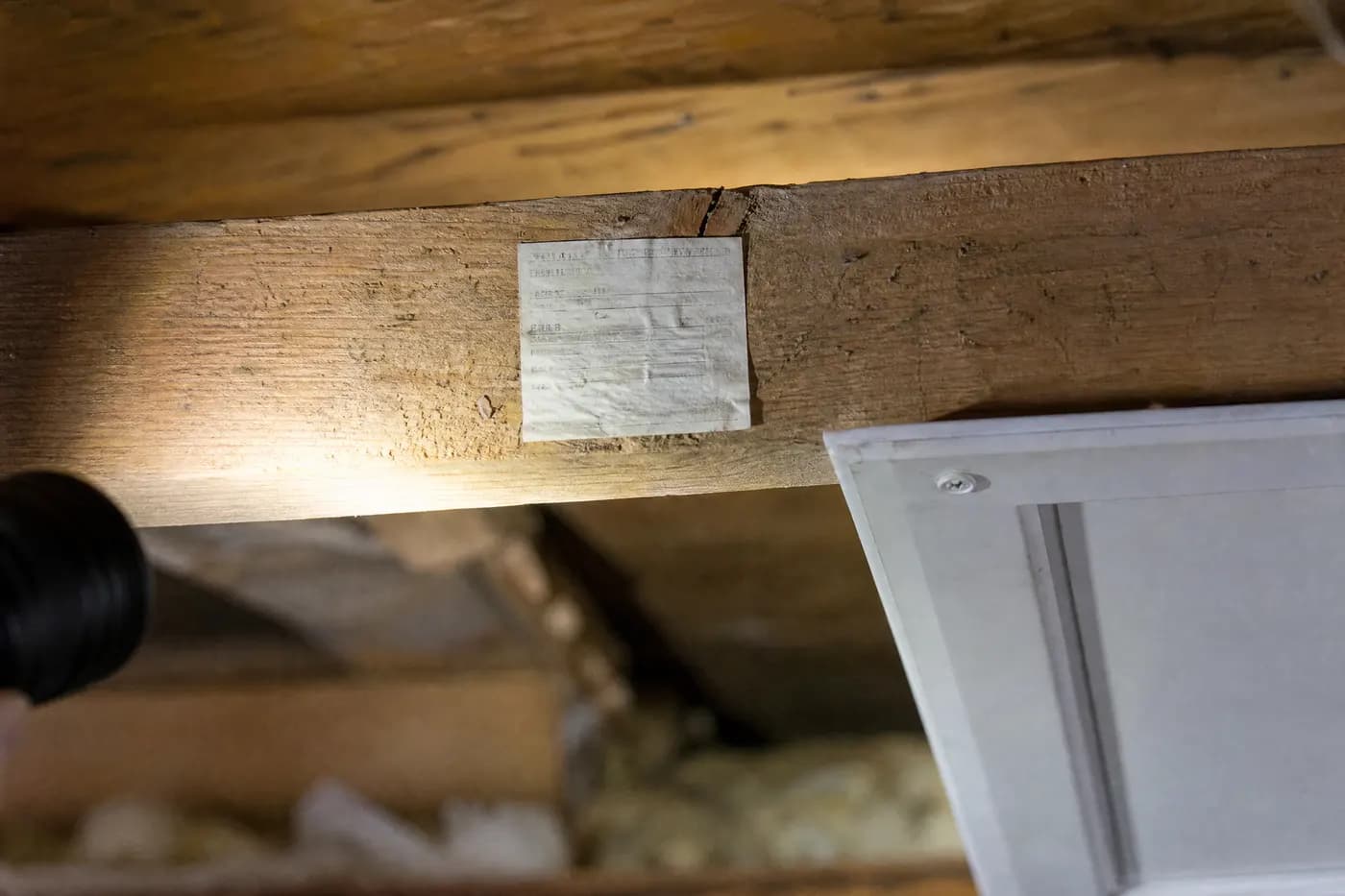
One more piece of paper belongs to the same moment. FAC 5E-14.105(1) requires signed consent on Consumer Notice Form FDACS-13692 before a treatment is performed — a separate document that deserves its own read.
Named exclusions
The same subsection also governs what is left out. If Formosan termites (Coptotermes formosanus), or other invasive termite species, are to be excluded from coverage, the species must be named as excluded.
The word "named" does all the work there. A general clause about species not addressed by this agreement does not satisfy it — the species goes on the paper, by name, inside the exclusion. In Broward that matters, because Formosan and Asian subterranean termites are established in South Florida. An exclusion naming one of them is excluding something that actually lives here.
An exclusion is not automatically a red flag
Scope limits are normal, and worth saying plainly because the internet treats every exclusion as a trick. A contract that covers less is still a legitimate product, and a company that writes its limits clearly is easier to deal with than one that writes nothing.
The problem is never that a contract has an exclusion. It is a homeowner who did not know it was there. Read the exclusions beside the coverage section, across all three quotes, and the differences surface in about ten minutes.
Reinspections and fees
FAC 5E-14.105(2)(g) requires a termite contract to specify whether reinspections will be performed, at approximately what intervals, and any fees other than the renewal fee.
Three separate items, and the third is where quotes quietly diverge. The renewal fee is the one everybody asks about. "Any fees other than renewal fees" is the category almost nobody asks about — inspection charges, trip charges, charges tied to a service call — and the rule puts those on the paper too. If a quote is silent on any of the three, the silence is the finding.
New construction has its own floor
For preventive treatments on new construction, FAC 5E-14.105(3) sets a minimum term: a warranty of no less than one year from the date of treatment, renewable annually for no less than four additional years.
Note what that is and is not. It is a floor the rule places on that specific kind of contract — not a description of what any particular company offers, and not applicable to a treatment on an existing home.
A real estate inspection is a different document
Florida Statute 482.226 covers the wood-destroying-organism inspection — one made for the purposes of a real estate transaction, where a fee is charged or a written report is requested. It is reported on form FDACS-13645, and the report has to disclose which areas were inaccessible, any prior treatments or infestations, the organisms found, visible damage, and a certification that the inspector holds no financial interest in the property. Records are kept for not less than three years.
Two things get misread. The statute describes what applies when a WDO inspection is made in a real estate transaction; it is not a rule that a house cannot be sold without one. And a WDO inspection is broader than termites — it covers decay fungi and wood-boring beetles too, so a report can come back clean on termites and still hand you something.
What happens if termites come back
FAC FAC 5E-14.105(9)(a) sets the clock — but only where the contract already provides for re-treatment. Where it does, written notification of a suspected infestation starts a 30-calendar-day inspection window and a 90-day re-treatment window from discovery, or 180 days for a commercial or multiunit structure. The clock stops if access to the property is denied or the owner postpones in writing. A contract with no re-treatment provision starts no clock at all, which is why the conditions under which retreatments will be made are the line to read first.
The load-bearing words are written notification. A phone call on a Tuesday is something everyone can remember differently six weeks later. An email with a date on it is not. Put it in writing and keep the copy.
FDACS takes complaints at (850) 617-7996 and AESCares@FDACS.gov. Know the limit before you need it, though: FDACS does not have authority to arbitrate damage claims or adjudicate settlements between a consumer and a company. Who pays for a damaged floor joist is a different fight in a different forum — one more reason to read the coverage language while there is nothing yet to argue about.
Your insurance does not cover this
FDACS states it without qualification: your homeowners insurance does not cover damage caused by termites.
That changes how the rest of the document should be read. There is no claim waiting behind a termite contract. Whatever the paper says is the entire extent of it, and the exclusions are the part you are least likely to have read carefully.
So one question for every company you talk to, answered on the document rather than in conversation: does this contract cover retreatment only, or repair of damage as well? Those are two different products.
Get three estimates
FDACS recommends obtaining at least three opinions and cost estimates from properly licensed companies. Not one. Three.
We sell termite inspections, so take that with the conflict of interest it carries: we would still rather you followed it. A homeowner who has read three contracts side by side knows what a named exclusion looks like, knows which of the three actually specified reinspection intervals, and knows what they bought. That person is a better customer for years afterward than someone who signed the first document put in front of them.
Verify licensing while you are at it. FDACS answers licensing questions at (850) 617-7997, and the Termites section of fdacs.gov, under Consumer Resources, is the state's consumer-facing termite site.
Take this to the quote
Before the appointment:
- Read the sticker. Attic or crawl space access, at least 3 by 5 inches. Note the date, and on a treatment notice, the pesticide name and the target organism.
- Know the construction date. New construction carries code-required preventive treatment for subterranean termites, and none for drywood.
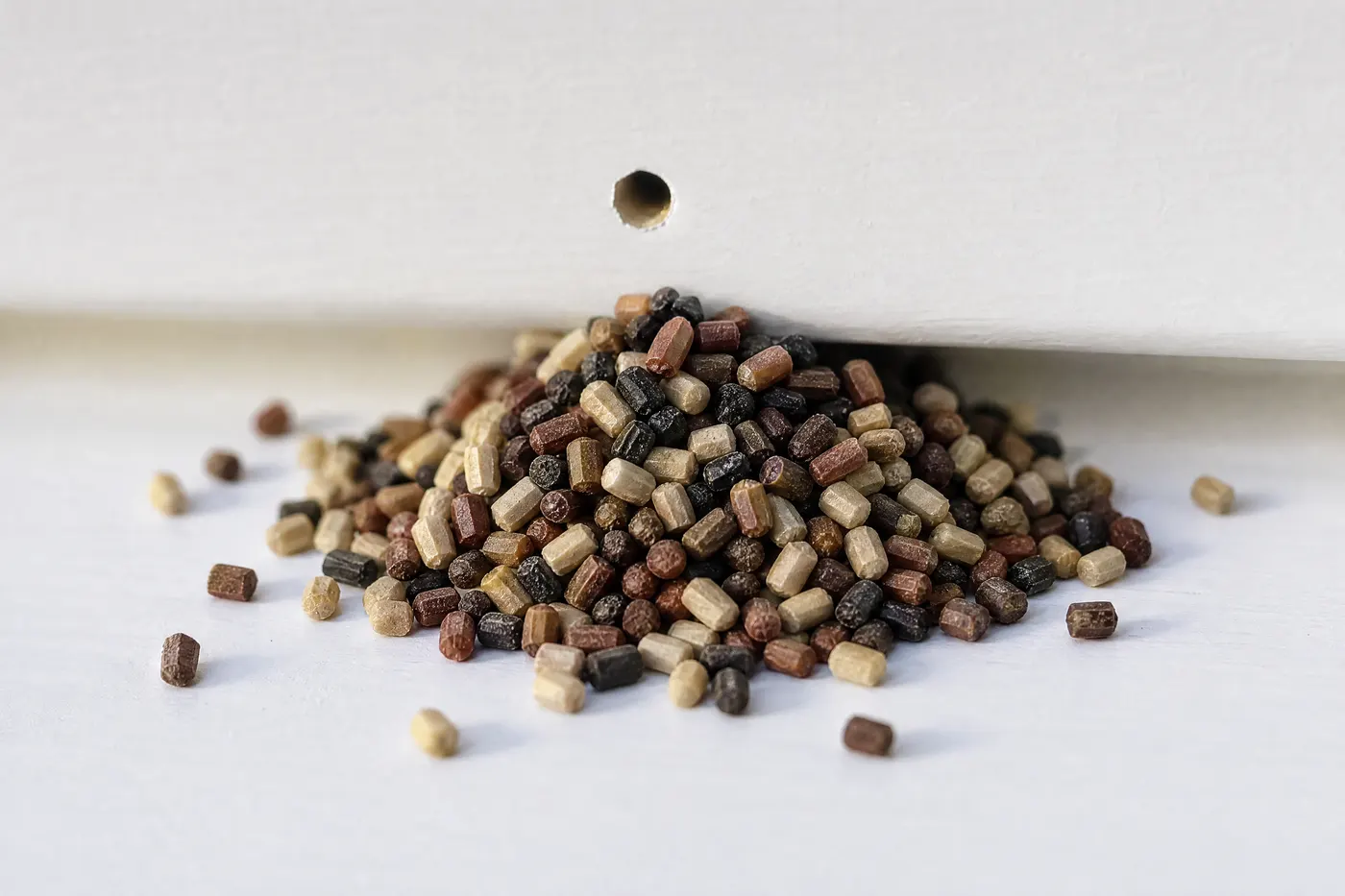
- Write down what you saw and where — pellets, wings, mud tubes, damaged wood — with dates. Every inspector will ask.
On page one and in the terms:
- Which termite. Subterranean, drywood, or both, on the first page. If it is not there, that is your first question.
- The exclusions. Formosan (Coptotermes formosanus) or another invasive species named as excluded. Read that section beside the coverage section, not separately.
- Reinspections. Whether they happen, at approximately what intervals, and every fee other than the renewal fee.
- Notification terms. How a suspected infestation has to be reported, in writing, and what the contract says about the response.
- Repair or retreatment. Ask which one you are buying, and get the answer on the document.
- Renewal. What it costs, when it is due, and what happens to coverage if it lapses.
- The consent form. Signed consent on Consumer Notice Form FDACS-13692 comes before treatment. Separate paper. Read it as its own document.
Then do it twice more. Three quotes on a kitchen table is a slow afternoon, and it is the only way to find out whether the first one was any good.
Frequently asked questions
Usually not. FDACS notes that termite protection contracts are typically for one type only, and a separate contract is usually required for the other. Florida rule requires the first page to state which one you are buying.
If a company excludes Formosan or another invasive termite species from coverage, the rule requires that species to be named as excluded — not buried under general language. It is one of the fastest things to check on a quote.
No. FDACS states plainly that homeowners insurance does not cover damage caused by termites. That is the whole reason the contract terms matter as much as the treatment does.
FDACS recommends obtaining at least three opinions and cost estimates from properly licensed companies. We would rather you follow that advice than not — a homeowner who compared three plans understands what they bought.
The rule requires it to specify whether reinspections will be performed, at roughly what intervals, and any fees beyond the renewal fee. If a quote is silent on that, ask before signing.
Still dealing with it?
Termite Control across Broward County, FL.
Book online in a few minutes and a Broward tech calls you back with your exact price (Mon–Fri 9am–5pm) — before any work starts.
Book a termite inspectionKeep reading
Termite Swarm Season in South Florida: A Month-by-Month Guide by Species
Broward's swarm season starts weeks before the rest of Florida. Which species flies when, how to tell a swarmer from a flying ant, and what it means.
Hybrid Termites Confirmed in Broward County: What It Actually Means for Your Home
UF/IFAS confirmed hybrid Coptotermes colonies in Broward. The honest version: they're rare, the damage is comparable, and the treatment doesn't change.