
Ants · Broward County, FL
Fire Ants in Your Florida Yard: Mounds, Stings and Control
The short answer
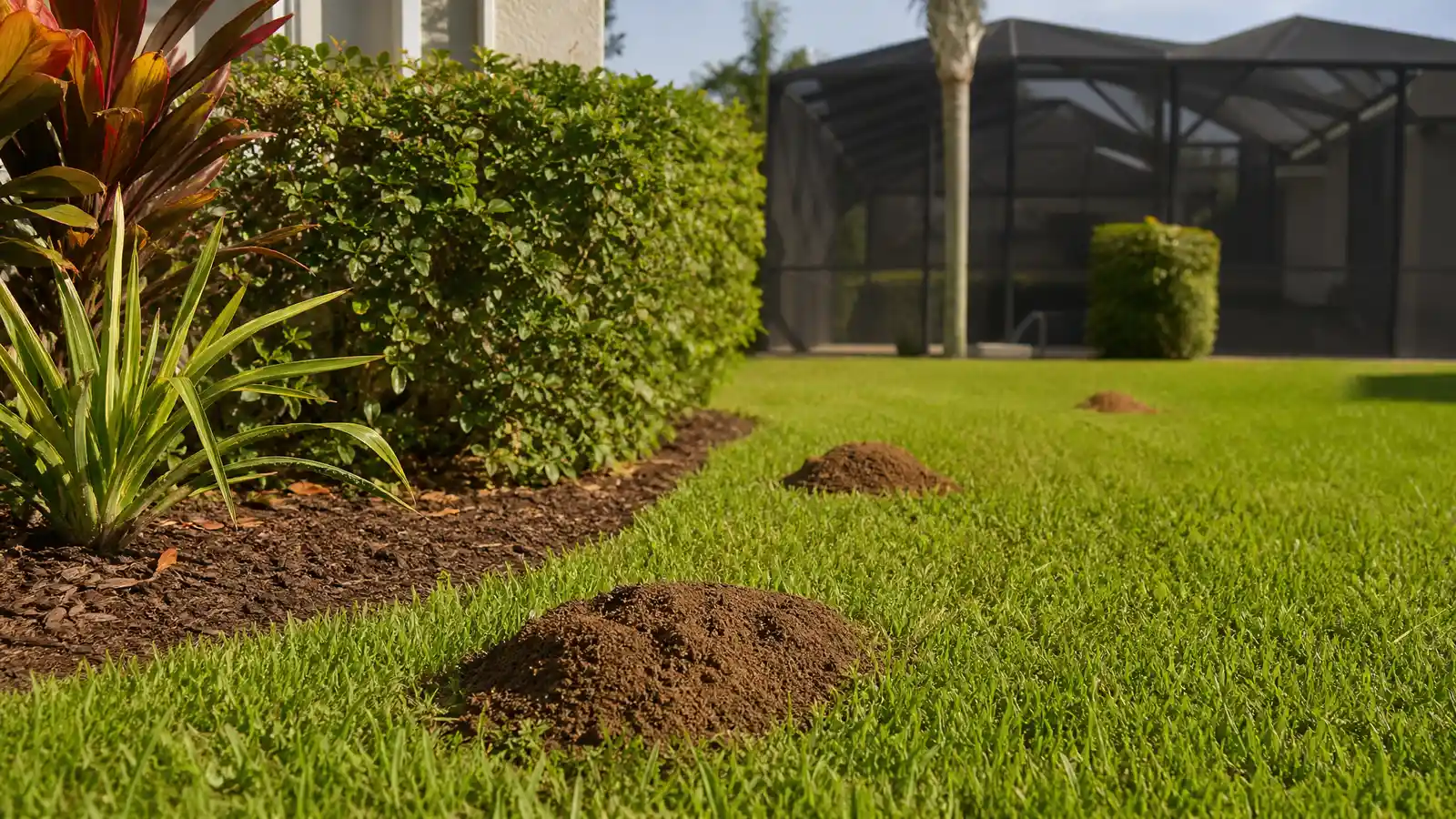
Fire ants build loose soil mounds in sunny lawns, landscaped beds and disturbed ground. Mounds can reappear after spot treatment because nearby colonies or satellite activity remain. A useful yard plan maps all mounds, follows label directions, accounts for weather and checks whether activity returns.
Fire ants turn a yard into a pattern rather than one isolated mound. They can appear in sunny lawn, landscape beds, irrigation edges and disturbed soil. A mound that returns after a spot treatment is a clue to look across the property, not simply to apply more material to the same pile.
How to recognize fire-ant mounds
Mounds are loose soil piles in open, sunny areas and often have no obvious hole in the center. Workers move quickly when the mound is disturbed. Because fire ants can sting, use distance and a photograph rather than kneeling beside an active mound.
Why mounds reappear
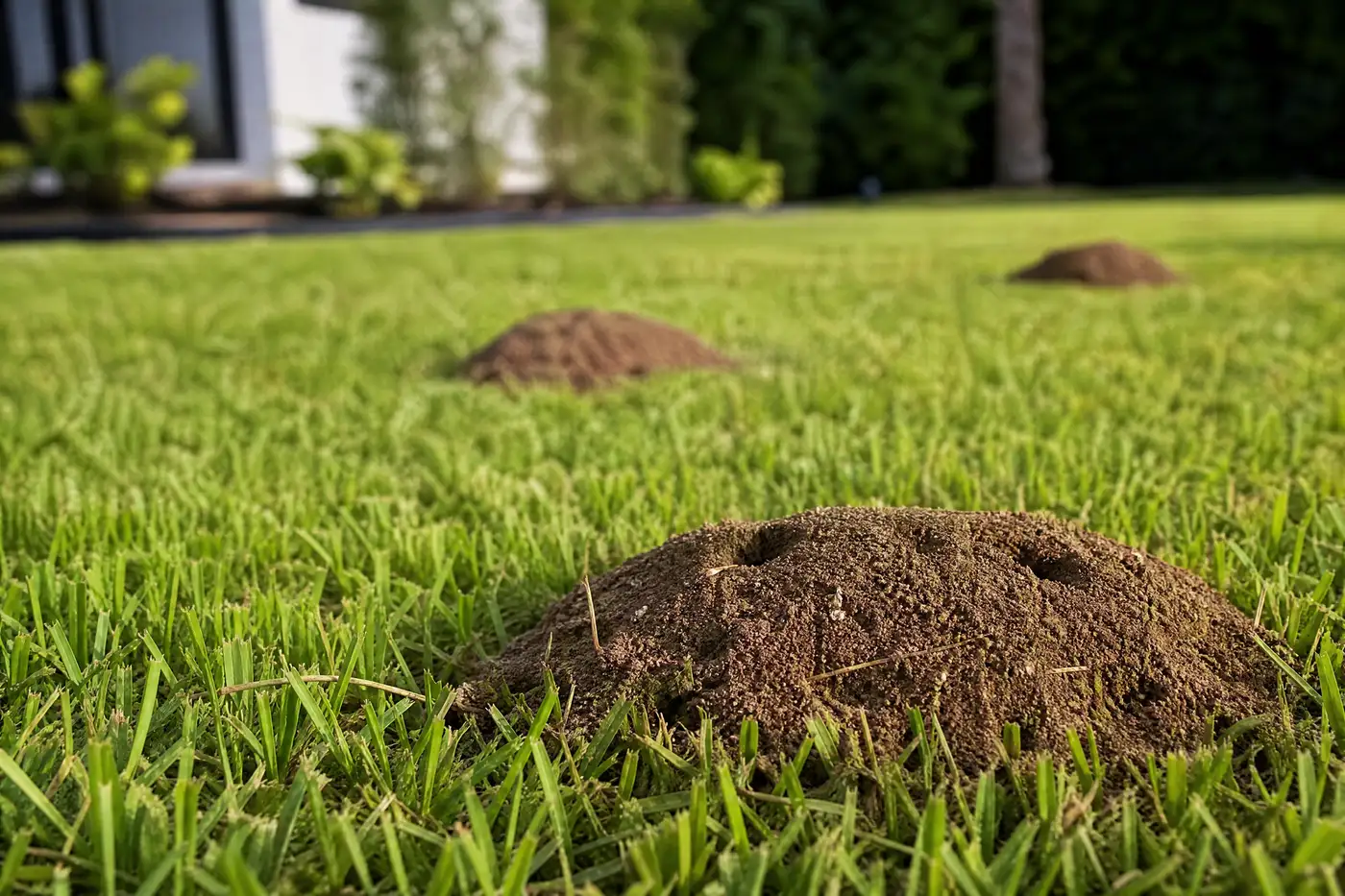
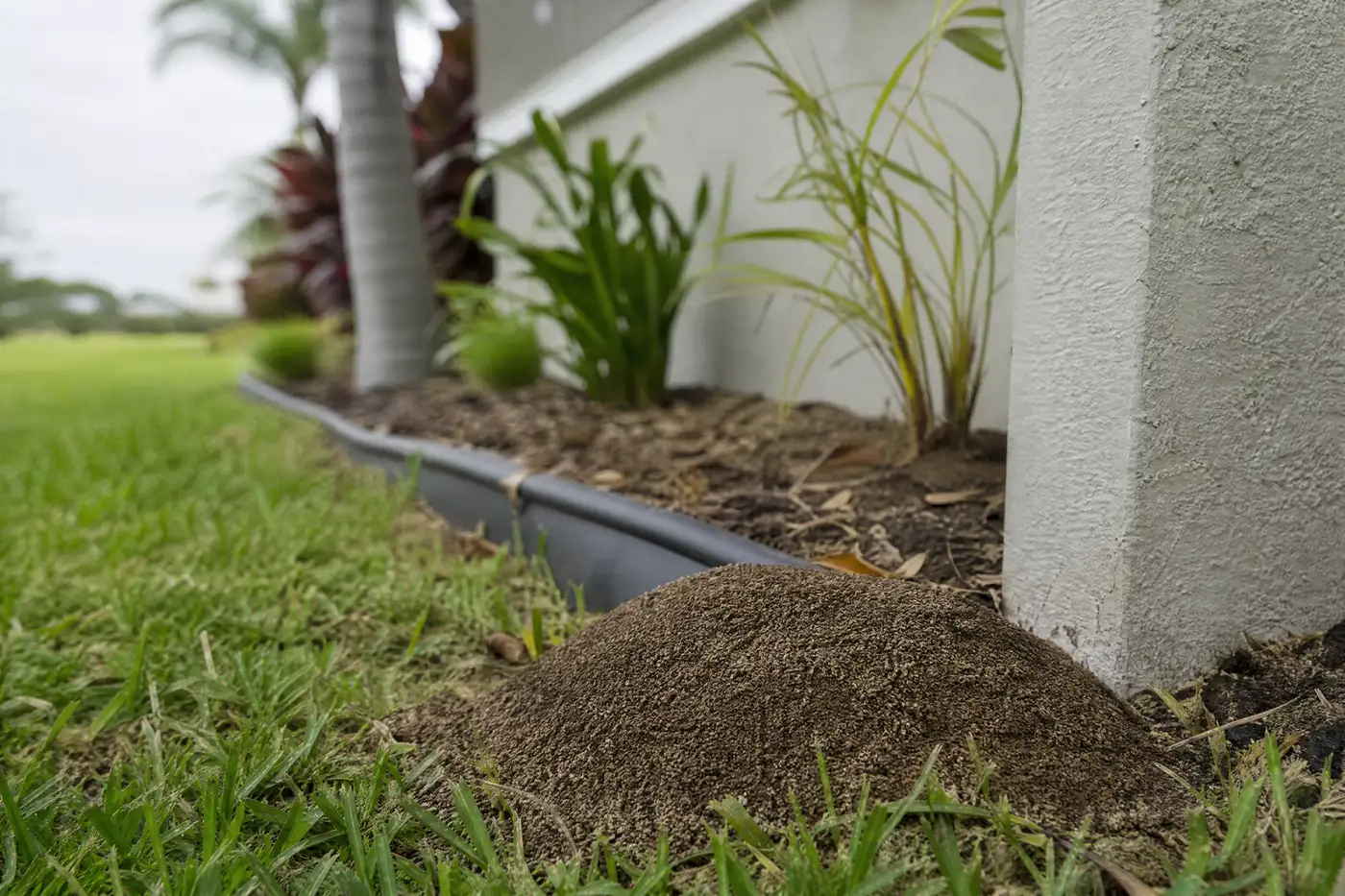
One visible mound may sit within a wider population. Nearby colonies, connected soil routes, irrigation and new disturbance can produce new mounds after the first is treated. Map every mound, including small ones near walks, foundations and landscape borders.
What rain changes
Heavy rain and irrigation change soil moisture and where workers surface. A mound can be abandoned, rebuilt or noticed in a higher part of the yard. Record the weather and date because a storm-linked pattern helps explain why activity seems to move.
Spot treatment vs yard management
Spot work addresses a known mound. Yard management starts with a map, label directions, weather and a monitoring plan. Keep treatment away from areas where children or animals can disturb it and follow the product label for the actual site. Do not mix methods based on a neighbor's recipe.
Stings and what to record
Move away from the mound, clean the affected area and monitor the reaction. Seek medical attention for breathing difficulty, extensive swelling or other signs of a serious allergic response. For control, record mound locations, weather, irrigation and whether activity returns. The result should be judged across the yard, not from one treated pile.
The product label determines the site, timing and amount of an outdoor application. Do not mix products based on social-media advice or disturb a mound to obtain a closer photograph. A property map, rain, irrigation and new activity provide a better basis for deciding whether the problem is local or needs a yard-wide plan.
Frequently asked questions
A mound may be one visible part of a wider yard population. Spot treatment can miss nearby colonies, and weather can change where ants surface. Map every mound and monitor the area instead of treating only the largest pile.
They favor sunny lawns, landscape edges, disturbed soil, sidewalk joints, irrigation features and open areas. A mound can shift after rain or irrigation, so the pattern across the property matters more than one mound’s exact shape.
Move away from the mound, clean the area and monitor the reaction. Seek medical attention for breathing trouble, swelling beyond the sting area or other signs of a serious allergic response. Do not disturb a mound to inspect it closely.
Still dealing with it?
Ant Control across Broward County, FL, backed by a 30-day guarantee.
Book online in a few minutes and a Broward tech calls you back with your exact price (Mon–Fri 9am–5pm) — before any work starts.
Take back your yardKeep reading
8 Types of Ants in Florida Homes (and How to Tell Them Apart)
Use size, color, nesting location and behavior to separate ghost, carpenter, pharaoh, fire, crazy, white-footed, big-headed and sugar ants.
Natural Ant Repellents: What Actually Works in a Florida Kitchen
An honest verdict on vinegar, cinnamon, coffee grounds, essential oils, cleaning, exclusion and moisture control for Florida ants.
Why Ants Invade Your House After It Rains in Florida
Rain can flood shallow nests, change soil moisture and push ants toward higher, drier routes. Learn what to check in the first day after a storm.